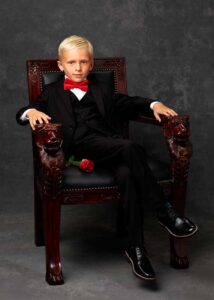
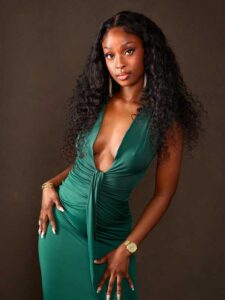
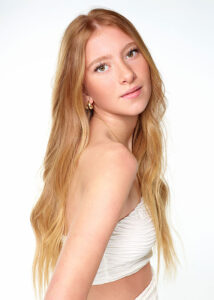
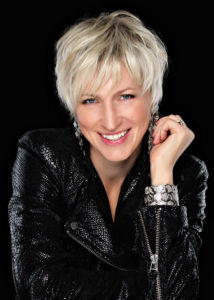
Minneapolis Modeling Photographer: Digitals, Comp Cards, and Portfolios
A modeling photographer is a portrait specialist who shoots the three things agencies and clients actually ask for: model digitals, comp card images, and a working portfolio. Our Minneapolis studio does all three. Digitals are the plain, unretouched frames an agency uses to see your real face and proportions. Comp card images are the printed set handed out at castings. Portfolio work is where styling, light, and mood come in. They are not interchangeable, and sending the wrong one is the fastest way to get passed over. Brand new to this? Start with our guide on how to become a model, then come back for the photo side.
What a Modeling Photographer in Minneapolis Actually Delivers
Three deliverables, in the order most people need them. Digitals come first, because almost nobody looks at anything else until they have seen you plain. Comp cards follow, once you have frames strong enough to print. Portfolio work is ongoing and never really finishes. You don’t need experience for any of it. A photographer who directs out loud (posture, chin, hands, weight shift) captures usable frames from a first-timer and a signed model in the same amount of studio time.
Model Digitals: The Six Frames Agencies Ask For
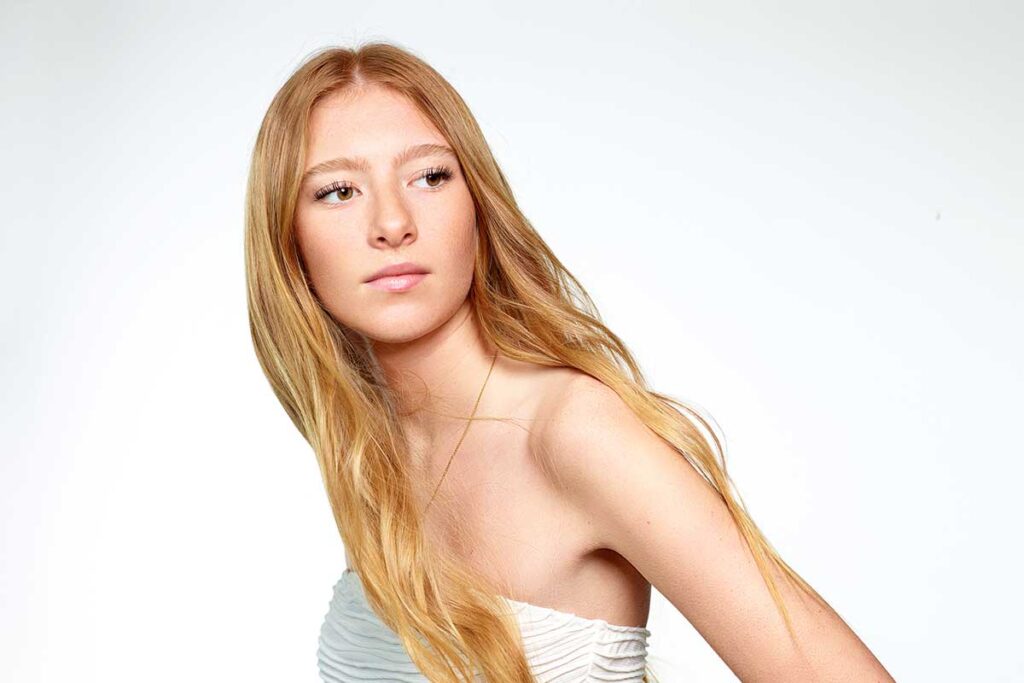
Model digitals (still called polaroids in plenty of agency emails) are unretouched photos taken against a blank wall in even light. Accuracy is the point, not flattery. The standard set runs six frames: full body front, full body side profile, full body from the back, a headshot straight on, a headshot in profile, and one smiling headshot with teeth.
What agencies expect in all six:
A clean, plain background. White or light gray wall, nothing else in the frame.
Little or no makeup. Skin, brows, and lips as they actually are.
Hair down, flat, and off the face. No styling and no volume.
Fitted clothing. A plain tank or tee with jeans or leggings so your line reads.
Bare feet or simple heels, arms relaxed, and no posing.
Soft, even light with no heavy shadow across the face.
One thing we tell every new face before a session: bring the plainest clothes you own. Digitals that look styled get thrown out.
How Digitals Differ From Portfolio Images
They answer two different questions. Digitals answer what this person actually looks like. Portfolio images answer what this person can do. Retouching, dramatic light, and a committed styling point of view belong in the second group and will sink you in the first.
Element
Digitals
Portfolio images
Purpose
Verify look and measurements
Show range and marketability
Hair and makeup
Minimal to none, hair down
Styled, full application
Retouching
None
Skin and color work as needed
Background
Plain wall
Studio sets or location
Wardrobe
Your own fitted basics
Pulled or styled looks
What Makes a Model Portfolio Strong
Range, shown in as few images as possible. A working book opens with a clean beauty headshot, then moves through a full-length shot that reads your proportions, one commercial look, one editorial look, and something with movement in it. Ten to fifteen strong frames beat forty average ones, because a weak image drags down everything next to it. We build variety inside one session by changing light and wardrobe instead of chasing locations. Not sure which market fits you? Our post on types of modeling breaks the categories down.
Comp Card Layout and Standard Sizing
A comp card (short for composite card, also called a zed card) is the printed marketing card handed to clients at castings. The standard size is 5.5 by 8.5 inches, half a sheet of letter paper, printed on both sides.
The front carries one image and your name, usually a clean beauty shot or a strong full-length, with nothing competing against it. Once you are signed, the agency logo goes there too. The back carries three or four images plus your stats: height, bust or chest, waist, hips, dress or suit size, shoe size, hair color, and eye color. Ask your photographer for the front image at full resolution, because printers need it. Pick frames that look like the same person on a different day. Four wildly different images read as inconsistent, not versatile.
Inside a Session at Our Minneapolis Studio
Most sessions run 1 to 2 hours for digitals plus a look or two. A full portfolio day runs closer to half a day, leaving room for outfit changes, hair adjustments, and breaks. We shoot digitals first, while the face is fresh and the hair is still flat, then build up from there. Reversing that order means undoing the hair for the plain frames, and it never falls the same way twice. Models drive in from across the Twin Cities metro, and downtown parking is easier before 10am, so early call times save everyone a headache. Our Minneapolis photo studio page shows the space.
Working With New Faces and Signed Talent
Both, and the session runs differently for each. A new face needs more spoken direction and more frames per look, because we are still finding what your face does before we can repeat it. Signed talent arrives with a shot list and a specific gap in the book to fill, so we work faster and tighter. Either way the room stays calm. Nobody poses well while being rushed.
Editorial and Fashion Photography for Your Book
Editorial images are the stylized, story-driven frames that sit at the front of a book and hold a client’s attention. They get built from a concept, not a pose list. One strong light, a committed wardrobe choice, and a mood you can hold for twenty minutes will out-perform an expensive set. Fashion brands look here first, so it’s worth having two or three even in a starter book.
Hair, Makeup, and Styling: When to Use Them
Skip both entirely for digitals. Use them for everything else. That one rule saves more rejected submissions than anything else on this page, and it is the part first-timers get backwards most often.
Working With Hair and Makeup Artists
A good makeup artist builds a camera-ready face, not a party face. Ask for clean skin, defined brows, and a neutral lip on commercial looks, then push color for the fashion frames. Hair matters more than people expect: one change in the part reads as a whole new look on camera and costs nothing. Bring your own artist or use ours.
What a Stylist Adds to a Shoot
A stylist decides the story, not just the clothes. They pull pieces that fit your real measurements, which is why we ask for sizes ahead of time instead of on the day. Good styling gets three distinct looks out of one rack. Agencies read that as versatility.
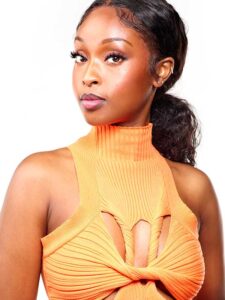
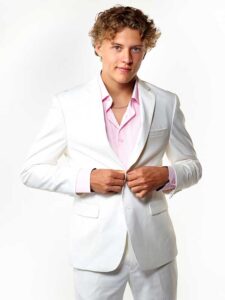
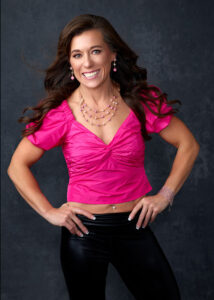
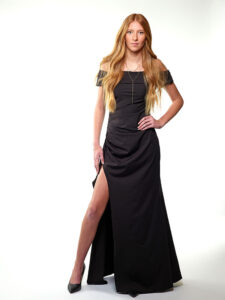
Recent Model Tests From Our Studio
What a Model Test Is and Who It Is For
A model test is a low-pressure shoot built to add frames to a book rather than to sell a product. Agencies send new signings out on tests constantly, and unsigned models book their own. A photographer who shoots tests regularly plans around what’s missing. All beauty in the book? We shoot full-length commercial. All soft light? We shoot hard. Every set on this page started with digitals.
What to Bring to a Modeling Photoshoot
Pack light and pack plain. This is the list we send before every session:
Two fitted basics: a plain tank or tee and skinny jeans or leggings, solid colors, no logos.
One simple dress or a fitted button-down for a commercial look.
Nude and black seamless undergarments, plus a strapless bra.
Simple heels and one pair of clean flats.
A robe for changes, a comb, and any hair tools you actually use.
Your measurements written down, if you already know them.
Leave the busy prints, the statement jewelry, and the fresh spray tan at home. Sleep matters more than any of it, and it shows up on camera whether you want it to or not.
Ready to Book a Modeling Photoshoot in Minneapolis?
Who We Work With
New faces, agency-signed models, actors who need a clean look book, and dancers building a movement reel. We photograph adults, and minors with a parent present. If you mainly need a business or acting headshot rather than a model book, our business headshots page is the better fit.
Book Your Session
Start with digitals. Send your height and general availability, and we’ll tell you honestly whether you need a full portfolio day or just the plain set to begin with. Sessions run out of our downtown studio in Minneapolis, MN, and we can bring in hair and makeup when the shoot calls for it. When you’re ready to book a modeling photographer in Minneapolis, contact Inna and we’ll get you on the calendar.
No. We work with people who have never been in front of a camera as often as we work with signed models. You get spoken direction the whole way: where to put your weight, what to do with your hands, where to look. The first twenty minutes are the stiffest, for everyone.
Sometimes. Plenty of agencies accept phone digitals for a first look. The problem is usually light, not resolution. A dim bedroom with an overhead fixture flattens the face and hides jawline and posture, two of the things being evaluated.
We can help you pick which images to send and size them correctly, and we’ll tell you if a set isn’t ready. We don’t place models and we won’t promise representation. Submission requirements differ from one agency to the next, so check the current guidelines on the agency’s own site first.
Simple, form-fitting clothing. Jeans and a fitted tee or tank, solid colors, no loud patterns or logos. Agencies want to see you, not the outfit. Bring a second option in a different color for contrast between looks.
Most shoots take 1 to 2 hours depending on how many looks you’re doing. If we’re building a full portfolio, plan for half a day so we have time for outfit changes, hair adjustments, and breaks.
You’re welcome to, but we can also bring in a pro who works with models regularly and keeps it camera-ready instead of heavy. For digitals, skip hair and makeup altogether.