Here is the short answer to how to become a model. Get a set of clean, unretouched digitals taken. Put together a small book that shows range. Research agencies that actually represent your look, then submit the way each one asks or walk into an open call. Nothing in that sequence should cost you a large fee.
The rest is patience. This guide walks the real modeling career path: digitals, your first portfolio, agency submissions, what happens at a casting, how commission works, and the scam signals that catch new talent every year. Still deciding which lane fits you? Read our breakdown of the types of modeling first, then come back here.
The Seven Steps to Becoming a Model
Almost every path into this business runs through the same seven moves, in this order. Doing them out of order is what costs beginners money.
- Take digitals. Plain, unedited photos in daylight. Agencies want to see you, not a retouched version.
- Pick a lane. Commercial, fitness, runway, parts, print, promotional. Your look points toward some and away from others.
- Build a small book. Six to twelve strong images beat forty average ones.
- Research agencies near you. Check whether your category is thin on their board.
- Submit, or go to an open call. Follow their instructions exactly. A surprising share of rejections are format errors, not looks.
- Read the contract first. Term length, exclusivity, and commission decide everything.
- Keep your day job for year one. Bookings arrive in clusters, then stop for weeks.
Step 1: Take Your Own Digitals First
Digitals, also called polaroids, are plain photos an agency uses to see your true proportions, skin, and face with no styling. They are the most requested item in any submission, and you can shoot them yourself for nothing.
A usable set includes:
- Front, both profiles, and back, standing straight with arms down
- One smiling and one neutral headshot, little or no makeup
- Hair down in one frame, pulled back in another
- Fitted clothing (a tank top or bodysuit with jeans) so your frame reads clearly
- Flat shoes or bare feet, blank wall, daylight from a window, no filter
A phone camera is fine. What ruins a set is heavy editing, a busy background, or a pose that hides your shape.
One thing we tell everyone who calls our studio: bring the digitals already on your phone first. If they do the job, we say so. If you would rather have digitals, a comp card, and portfolio frames shot in one sitting, a modeling photographer covers all three at our Northeast Minneapolis studio.
Step 2: Build a Portfolio That Shows Range
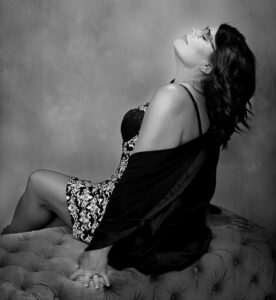
A portfolio is a curated set of six to twelve images proving you can deliver different looks on request. Range beats volume. An agent flipping through wants evidence that you photograph well in a clean beauty frame, a commercial shot, and something with movement.
What belongs in a beginner book:
- A clean beauty headshot, minimal makeup, direct eye contact
- A full length frame showing your real proportions, no heavy posing
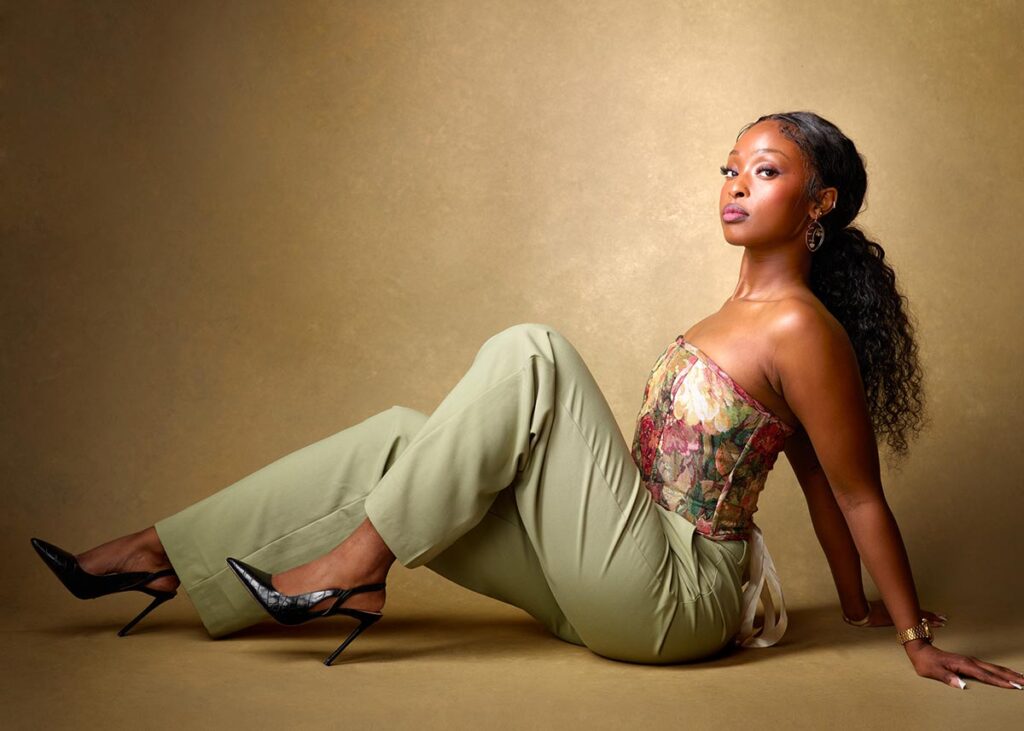
- One commercial or lifestyle frame, the kind of image advertising clients buy
- One high fashion or editorial frame, only if that is the direction you want
- One movement or runway frame if you are chasing catwalk work
Test shoots are how most beginners get there. A test shoot is an unpaid or low cost collaboration where a photographer, and sometimes a stylist, trade time for images everyone can use. Trades are normal. Being told to pay one specific photographer before an agency will look at you is not.
Expect an agency to replace most of your beginner images inside the first year. That is how boards work, and it is why you should not spend thousands before anyone signs you.
Step 3: Approach Agencies the Way They Ask
A modeling agency is a licensed business that finds paid work for the talent it represents and earns a percentage of what you book. It does not sell you classes, photo packages, or a listing. If the revenue comes from you rather than clients, it is not one.
Read the board on their website first. A roster with no male models, no plus size talent, or nobody over thirty tells you where you fit. Then submit the way they ask, usually a short email:
- Subject line with your name, height, and city
- Four to six digitals attached, compressed, no album links
- Stats and contact details in two lines of body text
- No life story, no explanation of why you want this
Submissions get read in bulk. Two lines and five photos get opened. A five paragraph email does not.
An open call is a walk in window, often one afternoon a week, where anyone can be seen without an appointment. Bring printed digitals, wear fitted clothes and flat shoes, and ask for feedback if they pass.
Scouts do watch Instagram and TikTok, and getting noticed there is a genuine route into the modeling industry. Treat it as a supplement to submitting, not a replacement. We tell every client the same thing: submit to ten agencies before deciding the answer is no.
Model Agencies in Minneapolis
These Twin Cities agencies accept submissions from local talent. Check each website for open call times first. You do not need to live in a fashion capital to start, and plenty of commercial, catalog, and e-commerce work gets booked here.
Agency Models and Talent: 700 Washington Ave. Suite 210 Minneapolis, MN 55401 Phone: 612.664.1174
Caryn Models: 4229 Excelsior Boulevard Minneapolis, MN 55416 Phone: 952.945.660
Ignite Models Inc.: 610 9th Street Southeast Suite 11 Minneapolis, MN 54414 Phone: 612.339.2117
Meredith Model & Talent Agency: 1209 Tyler Street Northeast Suite 110 Minneapolis, MN 55413 Phone: 612.345.5827
Moore Creative Talent, Inc.: 3130 Excelsior Boulevard Minneapolis, MN 55416 Phone: 612.827.3823
Wehmann Models and Talent, Inc.: 1128 Harmon Place Suite 202 Minneapolis, MN 55403 Phone: 612.333.6393
This list is neither an endorsement nor complete. Verify addresses and submission rules directly.
What Modeling Agencies Actually Look For
Requirements vary by market, category, and agency, and they have loosened considerably over the past decade. Anyone quoting one universal height or measurement is working from an old rulebook.
What holds true almost everywhere:
- You photograph well from several angles. Some faces that stop a room read flat on camera, and some quiet faces are extraordinary in a photograph. Nobody can call it without images.
- You are reliable. Show up early, answer email the same day, and you are ahead of much of any roster.
- You take direction. A client will ask for a different facial expression twenty times in five minutes. Adjusting fast is the actual job skill.
- Your look stays consistent. Agencies ask you to check before a big hair change, because a new cut can make your book useless.
- You fill a gap on the board. Sometimes a no just means they have four people who look like you.
Runway and high fashion still hold the narrowest physical ranges. Commercial, fitness, e-commerce, parts (hands, feet, hair), plus size, and lifestyle work cover far more body types, heights, and ages, and that is where most paid bookings live. Commercial casting has no upper age limit, which is why portraits for people over 50 turn into campaigns.
Visible tattoos and piercings are not the barrier they once were. They can rule you out of beauty jobs where a client needs bare skin, so agencies just want to know where they are.
How to Spot a Modeling Scam
A legitimate agency makes money when you make money. It takes a commission out of jobs it books for you. It does not charge a large fee up front, require one specific paid photographer, or sell registration. That single rule catches most of what goes wrong.
An agency and a modeling school are not the same thing
A school sells training. An agency sells you to clients. Schools can be legitimate businesses, but finishing a course is not representation and does not get you signed. Trouble starts when one is presented as the other: you attend a “scouting event,” hear that you have real potential, then get quoted four figures for a course, a photo package, or a directory spot.
Red flags worth walking away from
- A registration, signup, or membership fee charged before any work is booked
- Required use of one in house photographer at a set price, with no option to bring your own images
- Pressure to decide today, or a discount that expires when you leave the room
- Vague answers about which clients they book and what they placed recently
- Contact only through a personal social account or a free email address, with no real office
- Guaranteed work. Nobody can guarantee bookings.
Small disclosed costs are normal. Comp card printing, a website listing fee deducted from earnings, or a share of a test shoot all appear on real agreements. Ask for the amount in writing and how it gets collected. If it is thousands of dollars due before you have booked a single job, that is your signal.
Bring someone with you, especially the first time
Take a parent or a friend to any first meeting, open call, or shoot with someone new. A real agency or photographer will not mind. If somebody insists you come alone, you have your answer. Anyone under 18 should have a parent or guardian present, and reputable modeling agencies require it rather than tolerate it.
Be cautious about nude or lingerie tests early on
Nude and lingerie work is a legitimate part of the fashion industry, with contracts, agents, and closed sets. What is not normal is an unknown photographer or self described scout pushing an unclothed test in your first few shoots, at a private residence, with no agency involved. You can decline and still be considered. Anyone who says otherwise has told you something useful.
The Model Alliance, a nonprofit advocating for labor standards in fashion, publishes guidance on workplace rights worth reading before your first job.
Contracts, Commission, and How Models Get Paid
Agencies earn a commission on work they book, deducted before you are paid. The percentage varies by market and agency, so ask for the exact figure and confirm it appears in the contract. Many also bill the client a separate fee on top of your rate, which does not come out of your side.
Read these five lines before signing:
- Term length. How long it runs, and exactly how you exit.
- Exclusivity. Whether they represent you everywhere or only in one region. Non exclusive lets you sign in more than one market.
- Commission rate. The number, and whether it also applies to jobs you find yourself.
- Deductions. Comp cards, website listing, couriers. Get the full list up front.
- Payment timing. Clients commonly pay on 30 to 90 day terms, and you are paid after the agency is.
Usage is the part beginners miss. A one day shoot at a flat rate is not the same job as one licensed for national advertising across three years. Ask what the images get used for, where, and for how long before agreeing to a number.
What Your First Year Realistically Looks Like
Slow. That is the honest version. Most new talent spends months submitting, testing, and hearing nothing before local work lands, and that says little about how the career turns out.
- Months 1 to 3. Digitals, two or three test shoots, submissions to every agency within driving distance.
- Months 3 to 6. Open calls, a first meeting or two, maybe a development agreement rather than a full contract.
- Months 6 to 12. Local commercial and e-commerce jobs, catalog work, promotional bookings, maybe a fashion show.
Keep a log of who you submitted to and when. It stops you re-sending to the same agency six weeks apart, which they notice, and turns a vague sense of failure into a countable list.
Rejection is rarely personal. An agency that just signed three people in your category has no room this quarter and plenty next year.
Frequently Asked Questions About Starting Out
Can you start modeling with no experience?
Yes. Agencies sign people with zero credits constantly, because they would rather develop someone than inherit bad habits. Digitals and a willingness to take direction matter more than a resume.
Do I need to be a certain height?
For runway and high fashion, height ranges are still narrow and market specific. For commercial, fitness, parts, promotional, and e-commerce work, the bulk of paid jobs in most cities, height matters far less than how you photograph.
Is 25 too old to start?
No. Editorial and runway skew young, but commercial and lifestyle clients cast every age, and demand for talent over 40 has grown as advertising widened who it shows.
Where to Go From Here
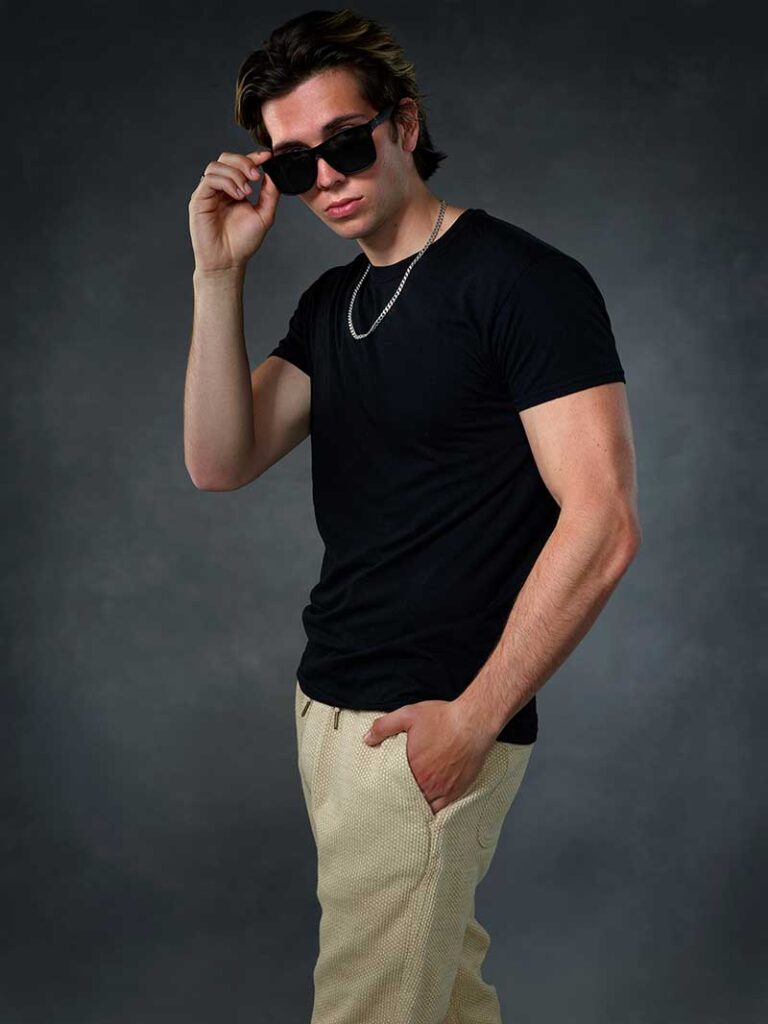
Start this week. Shoot digitals against a plain wall in daylight, pick your six strongest images, and list every agency within driving distance that represents your category. Submit to all of them the same week, then shoot more tests instead of refreshing your inbox.
The part nobody mentions about how to become a model is that persistence outperforms almost everything else early on. Keep costs near zero, never pay to be represented, bring somebody to first meetings, and read each no as information about that board rather than a verdict on you. Want digitals, a comp card, and a starter book in one sitting? Our Northeast Minneapolis studio does that, at (612) 200-8612.
Note: This advice is provided in good faith and at no cost. However, it is offered as general information and should not be considered professional advice. We disclaim all liability and assume no legal responsibility for actions taken based on this advice.