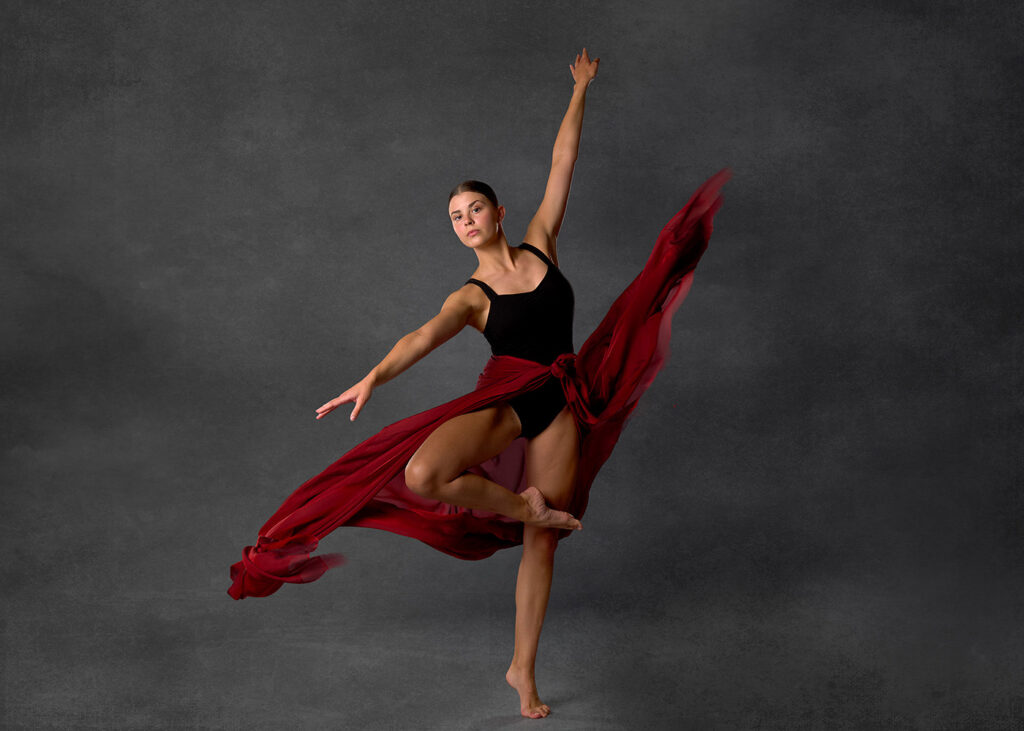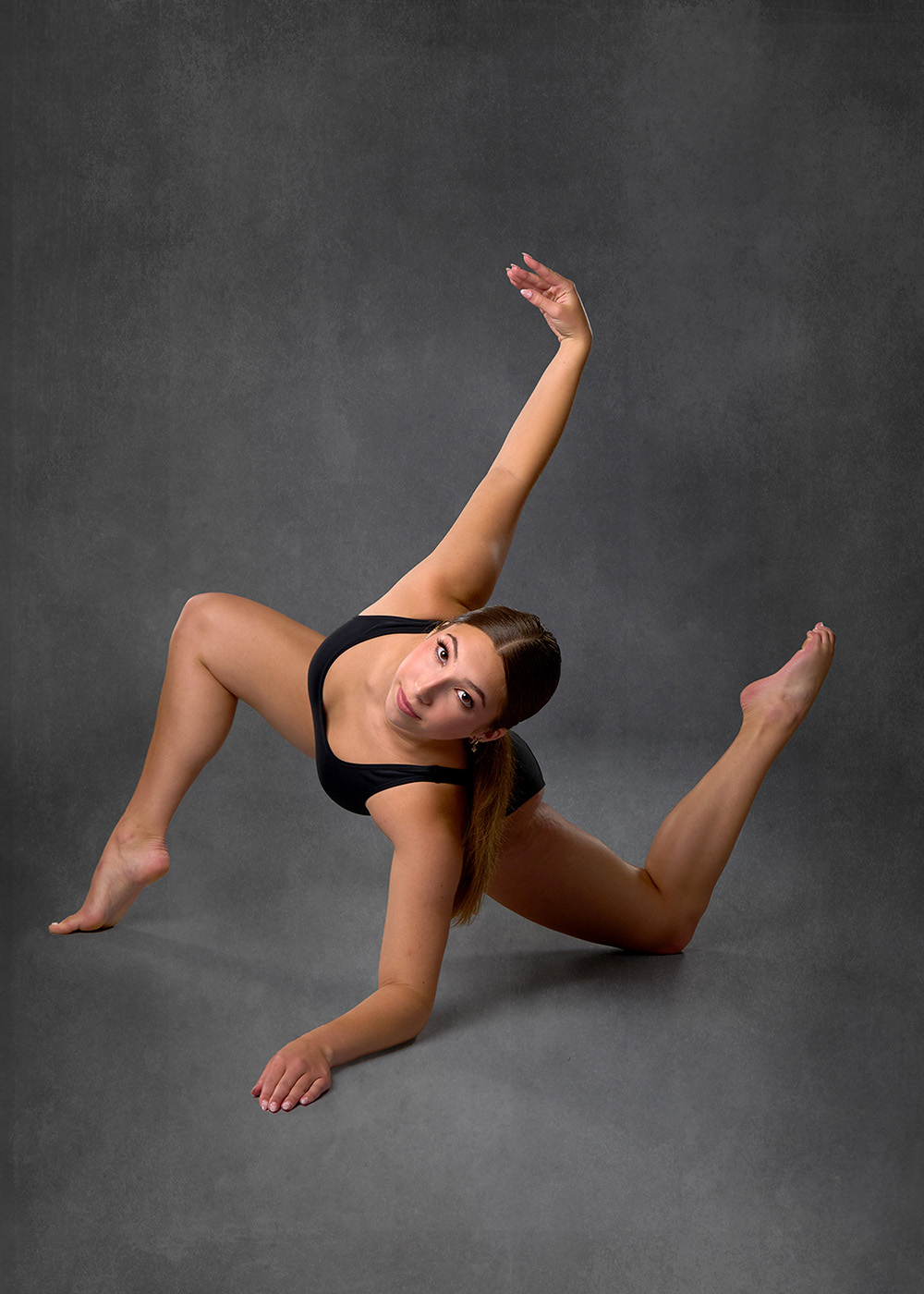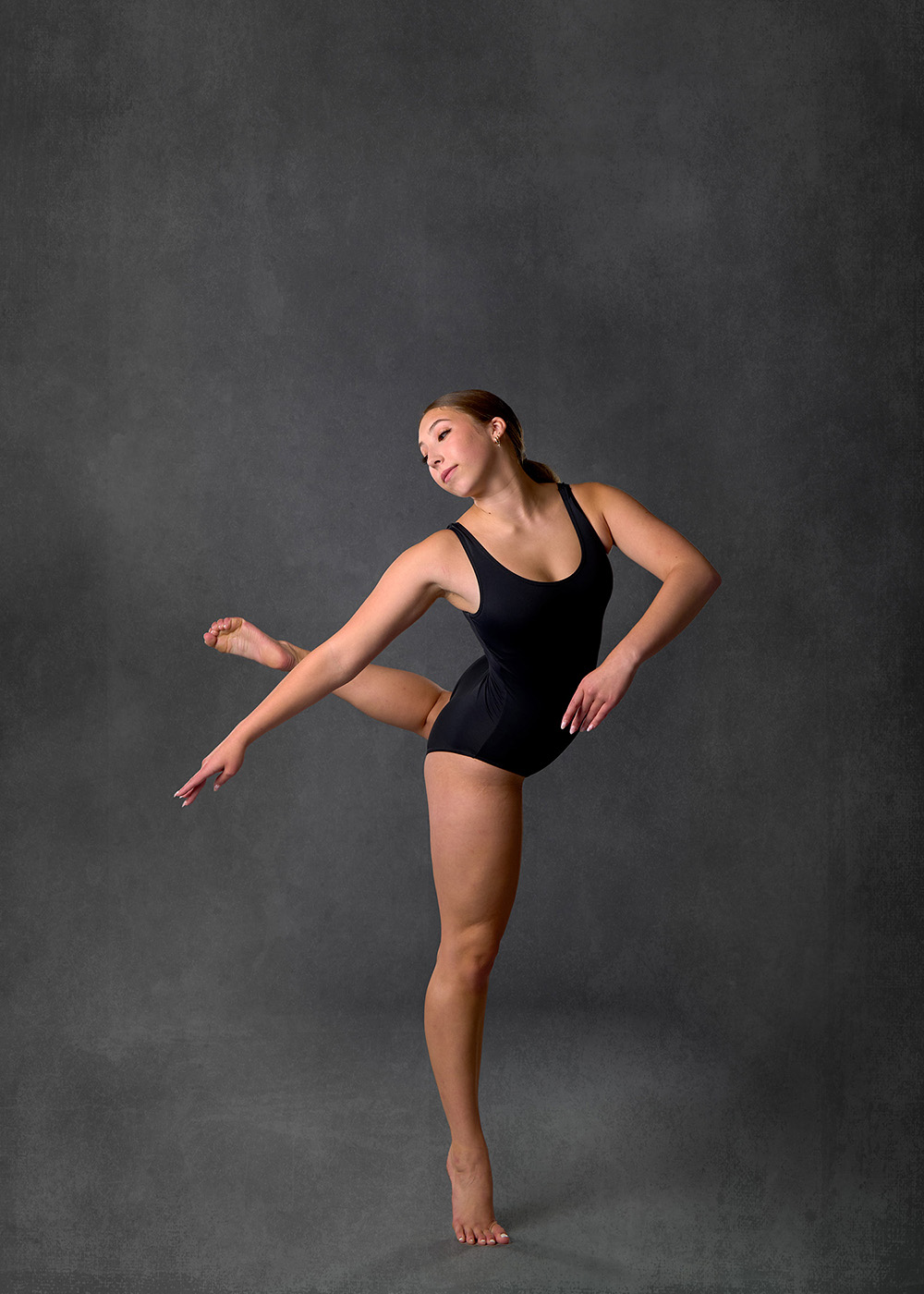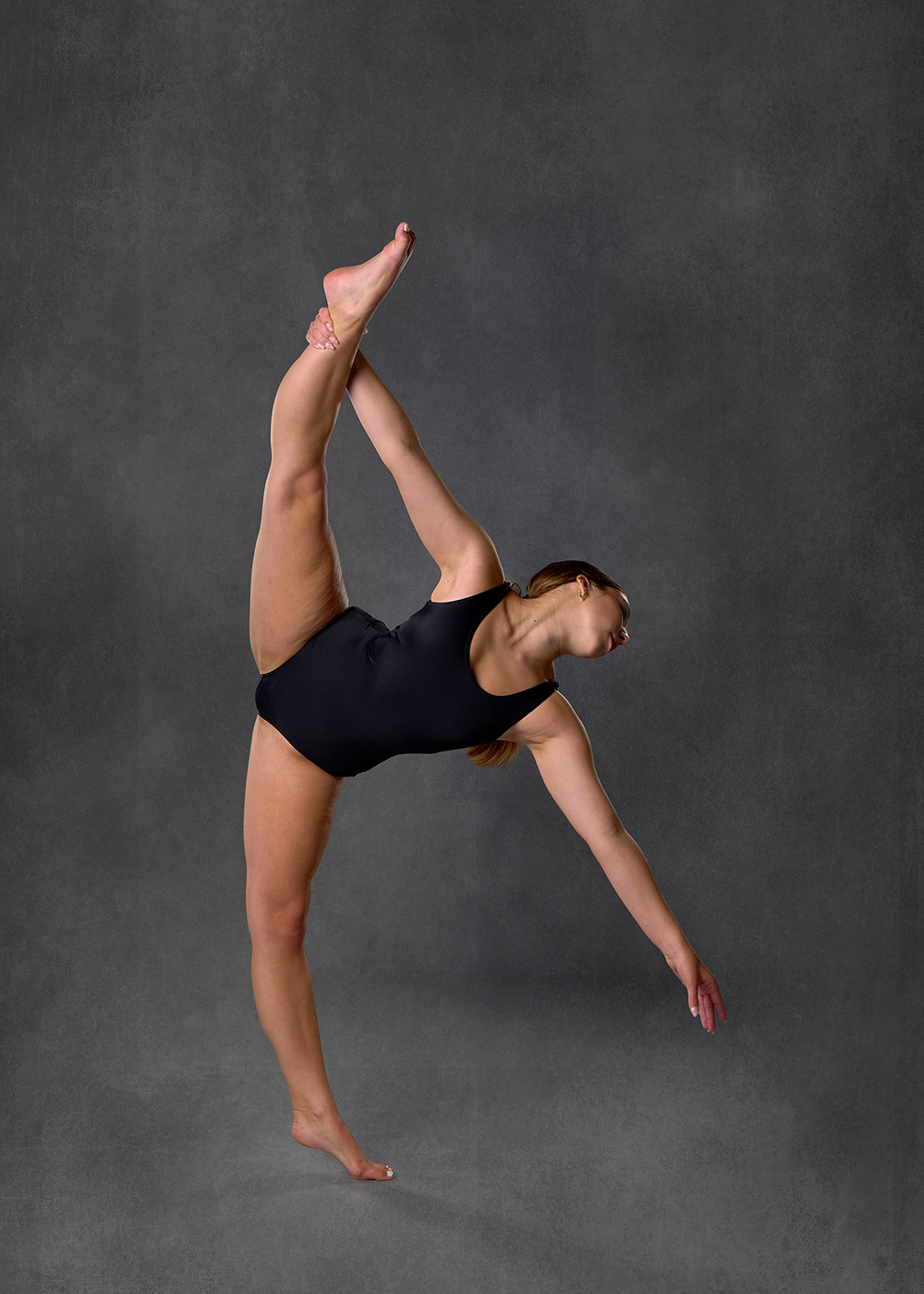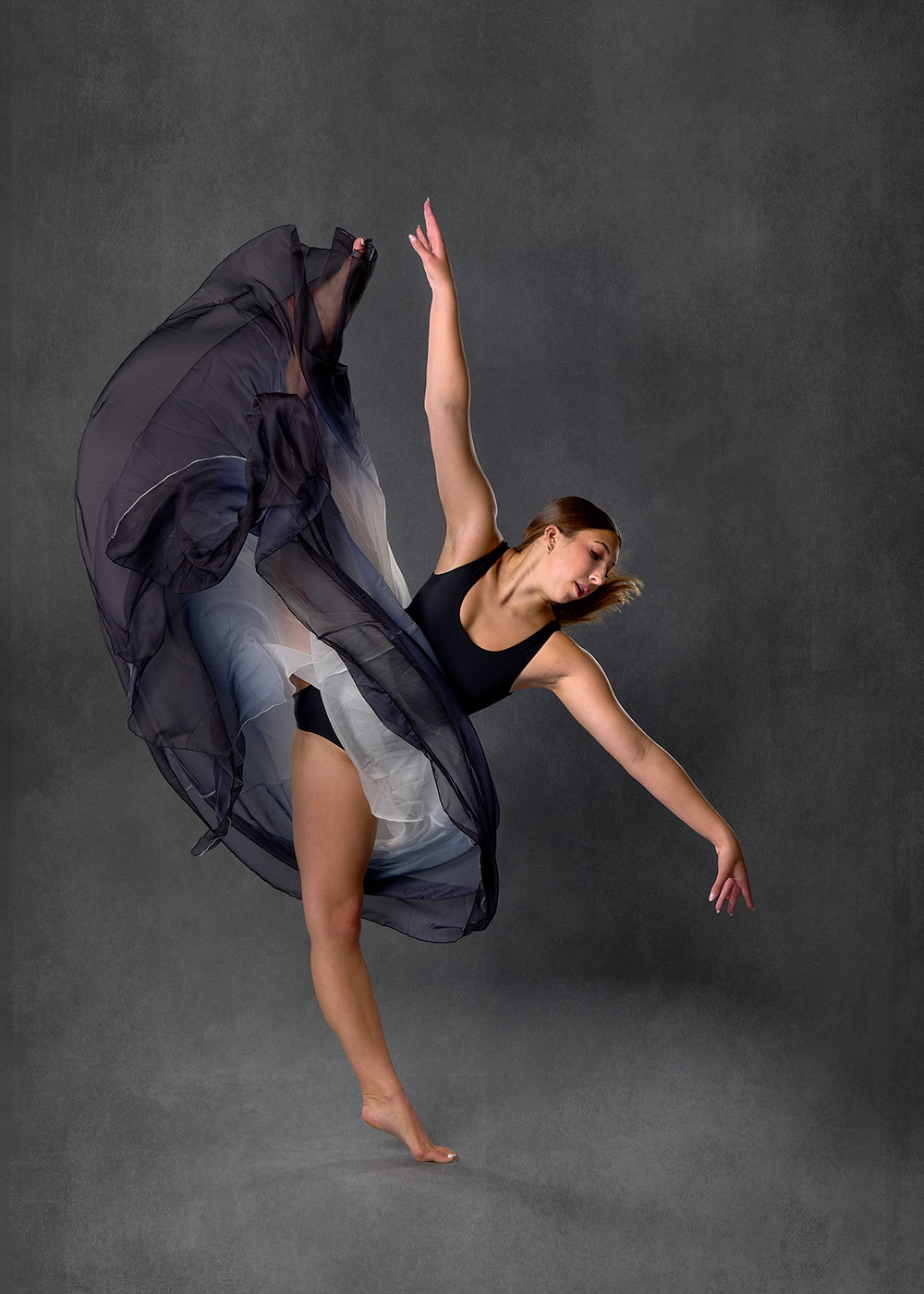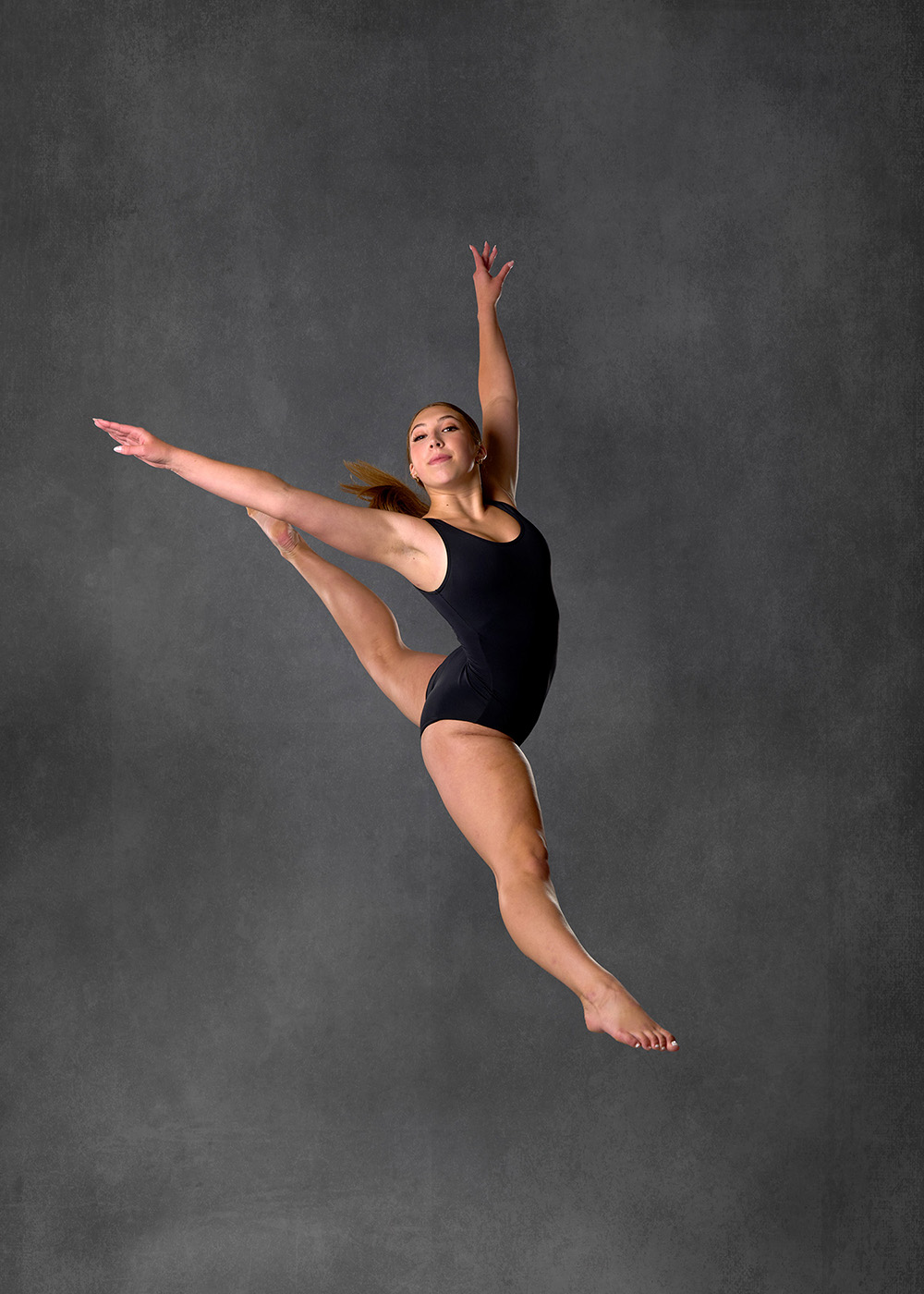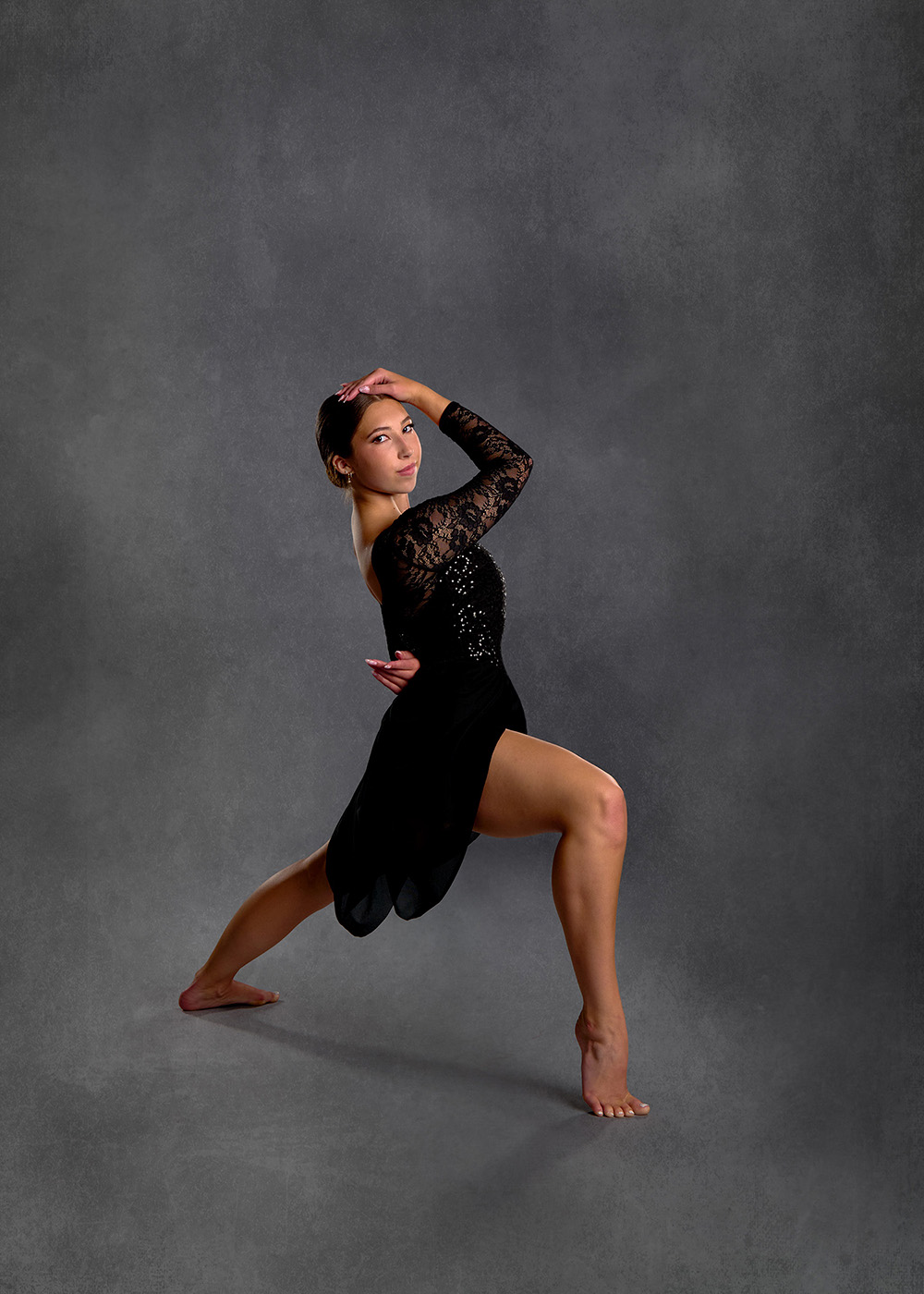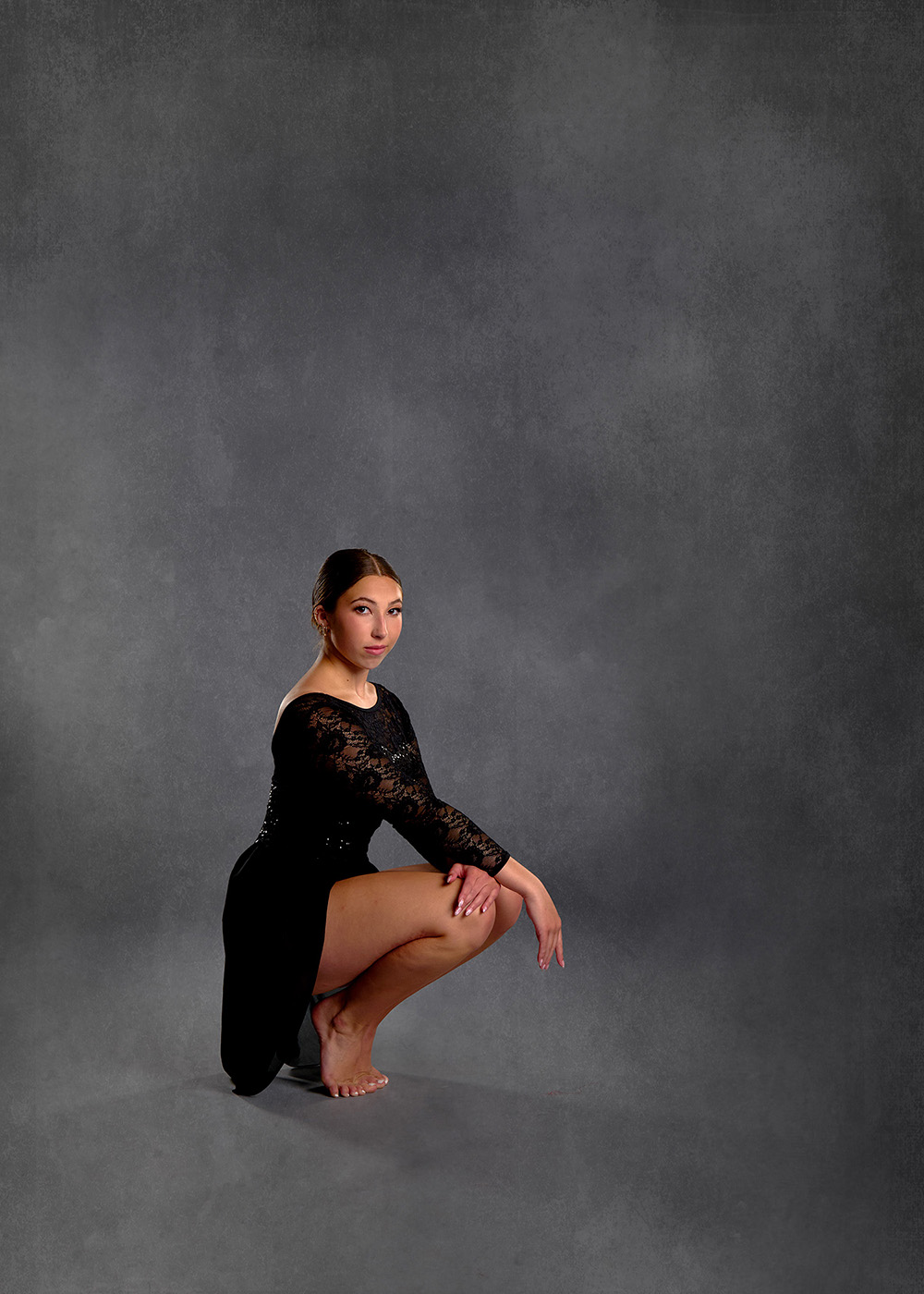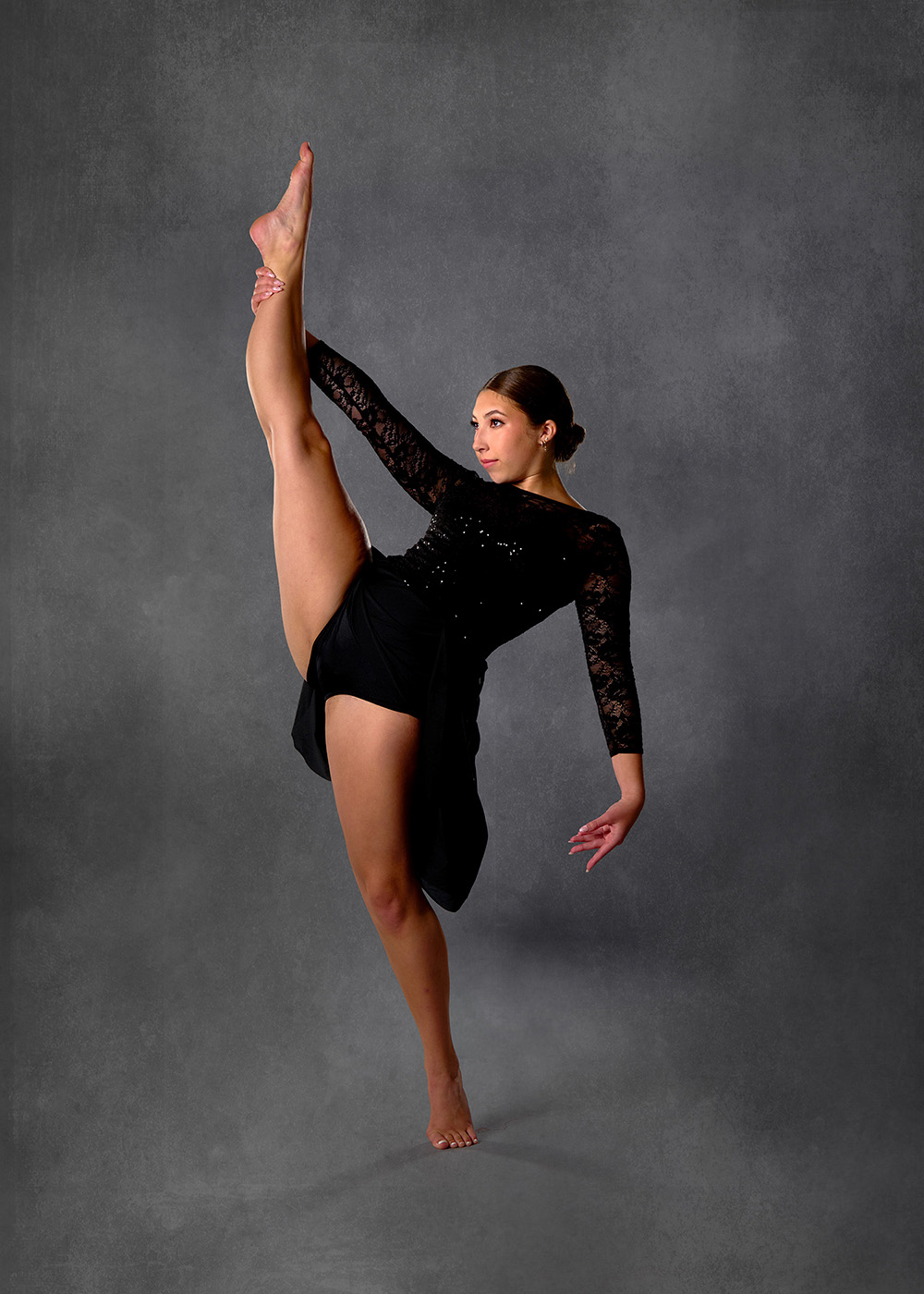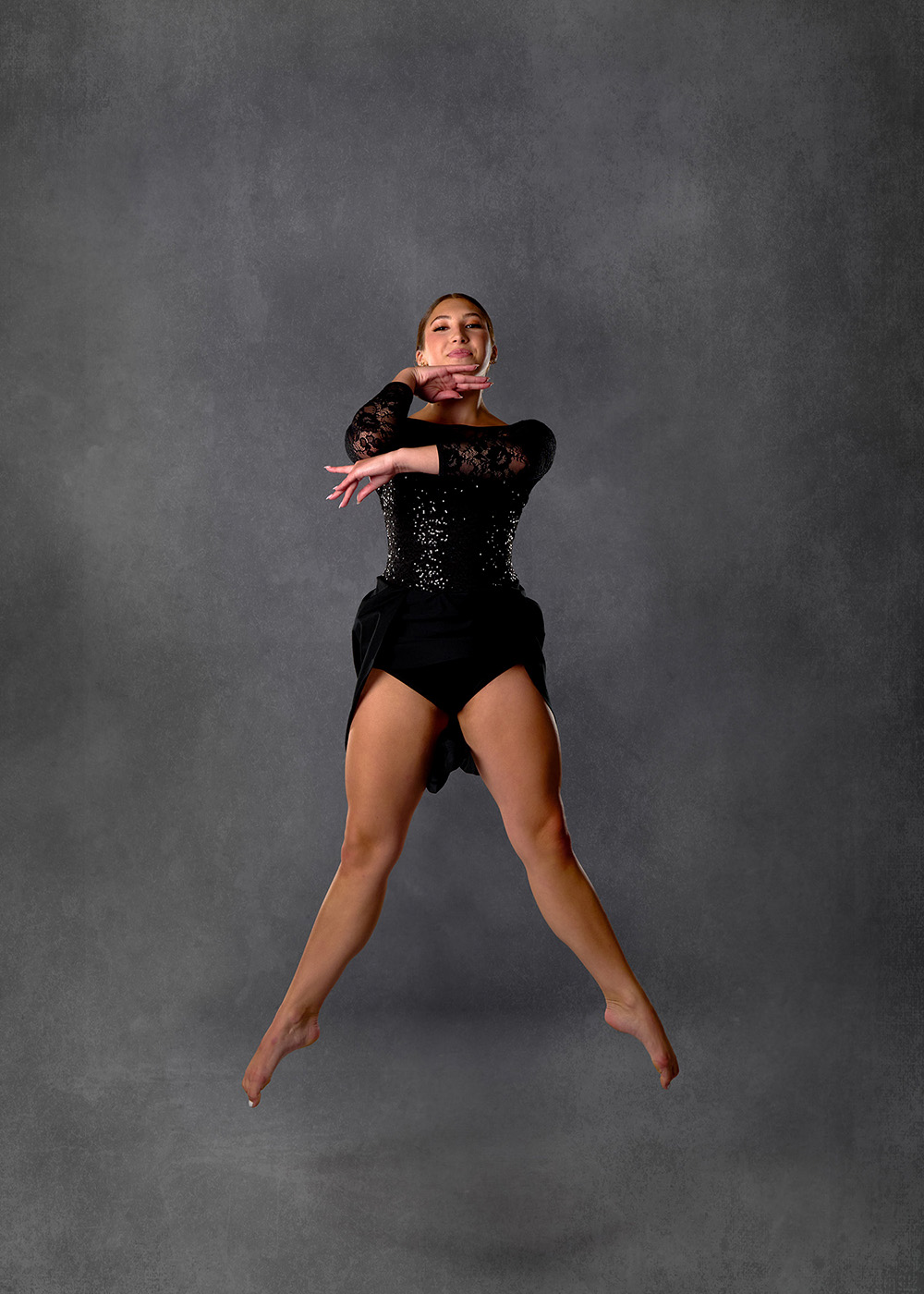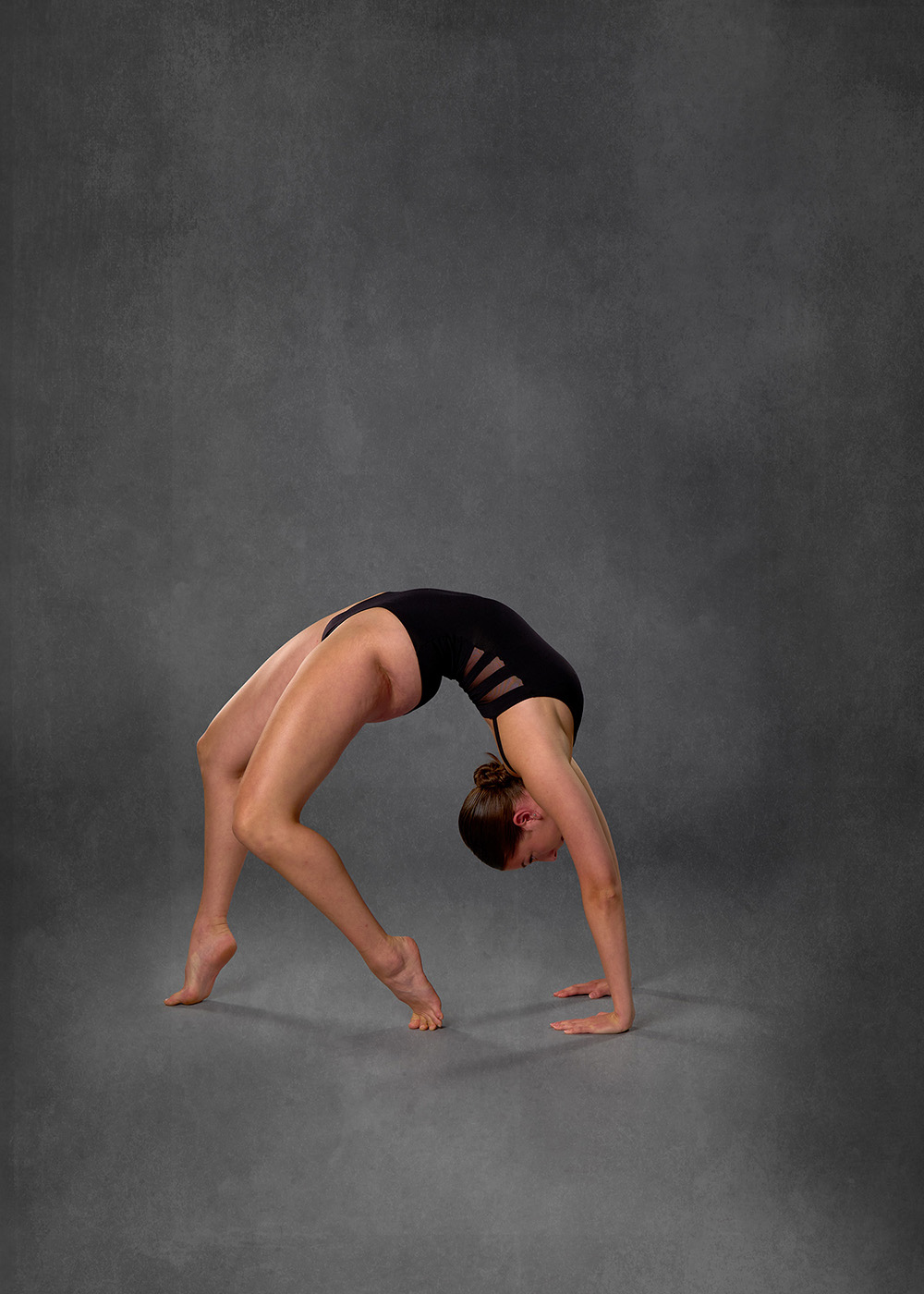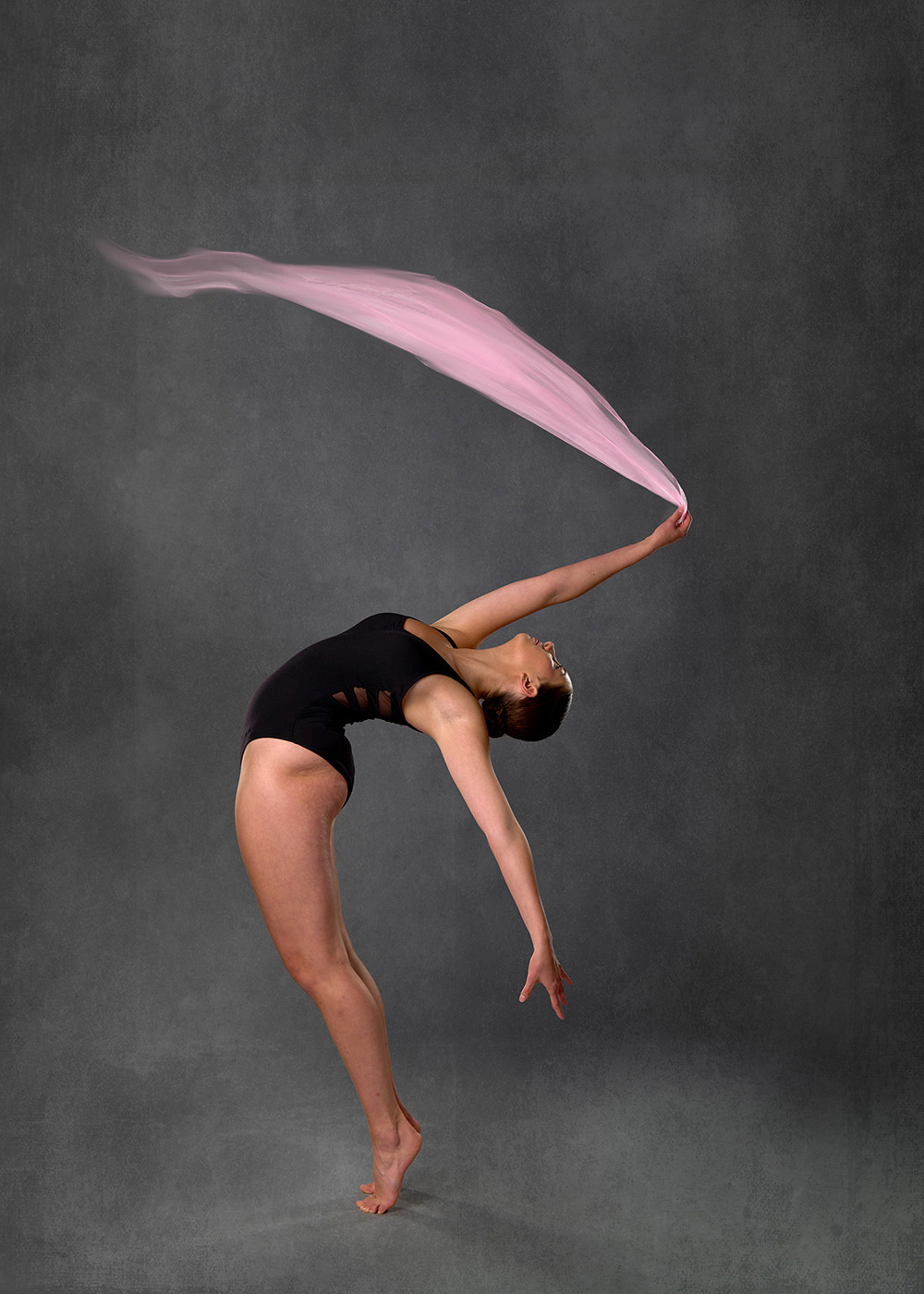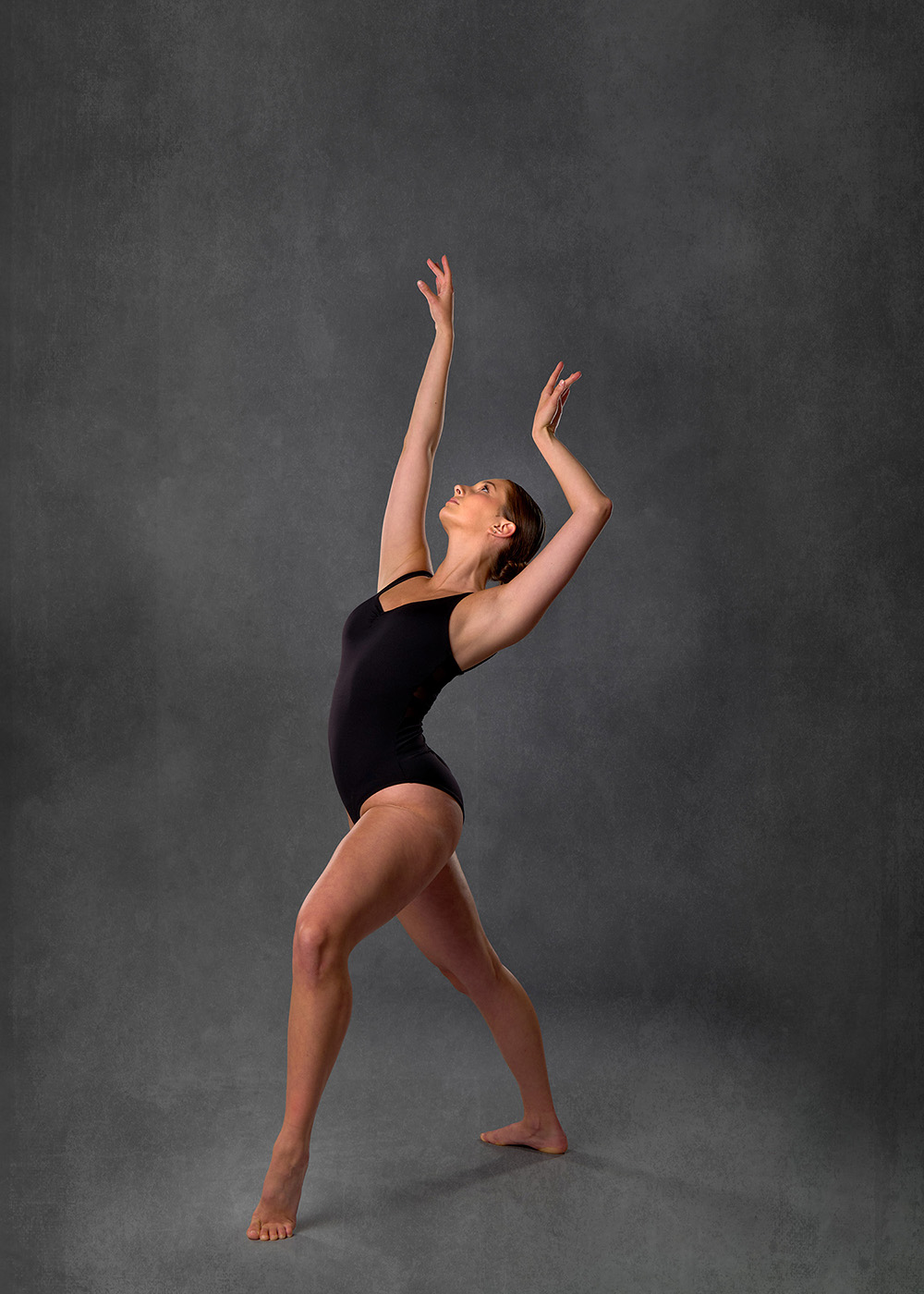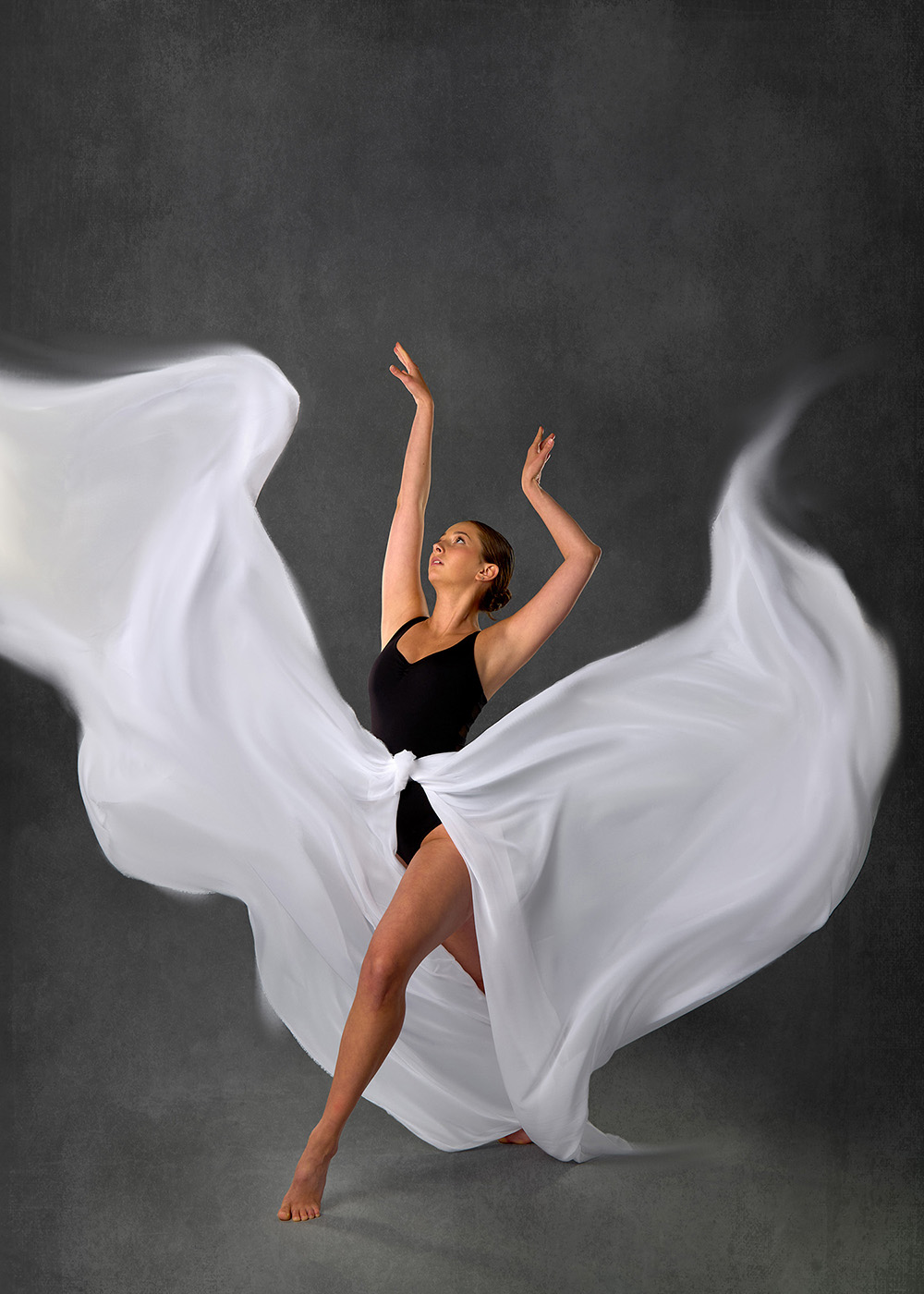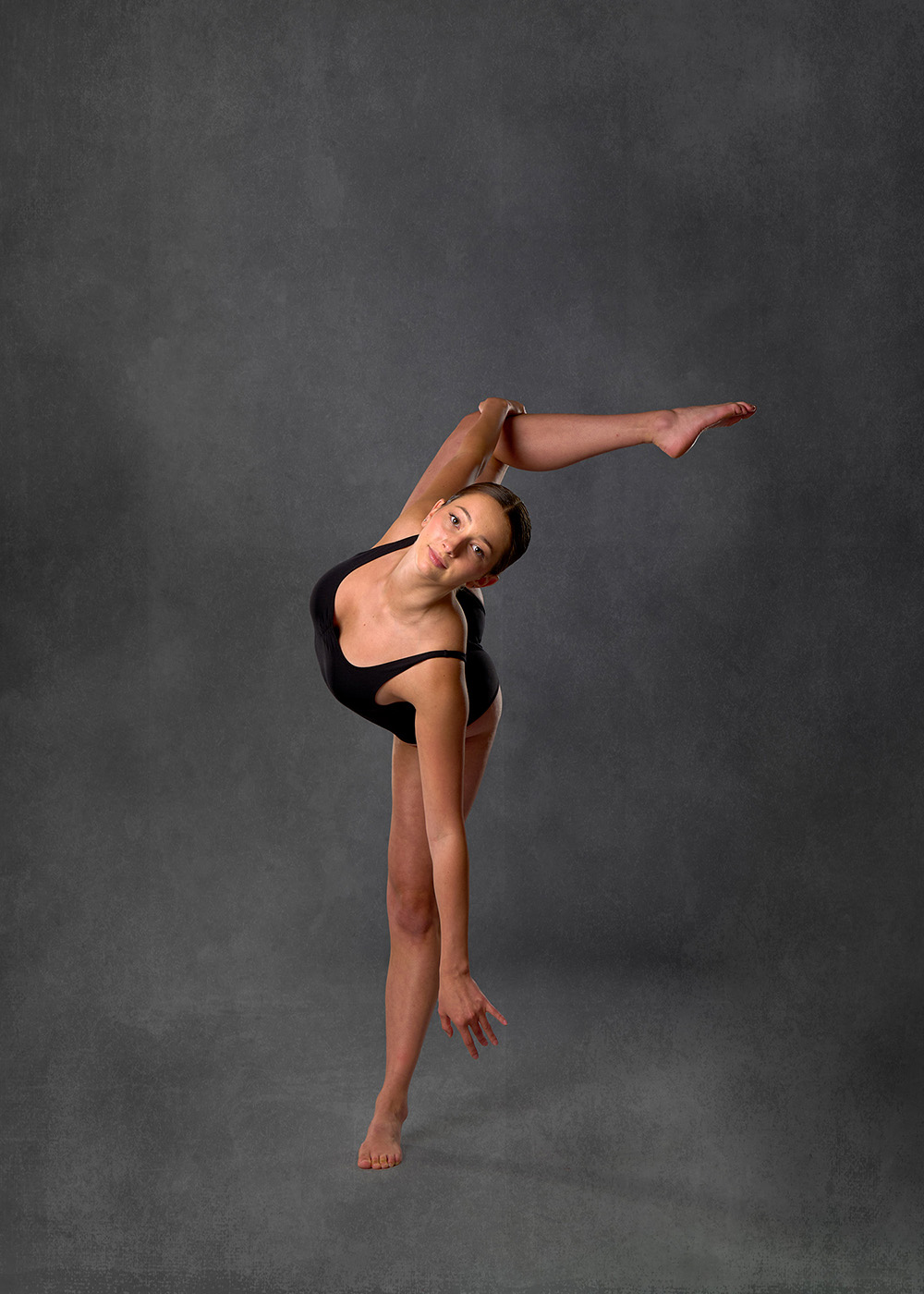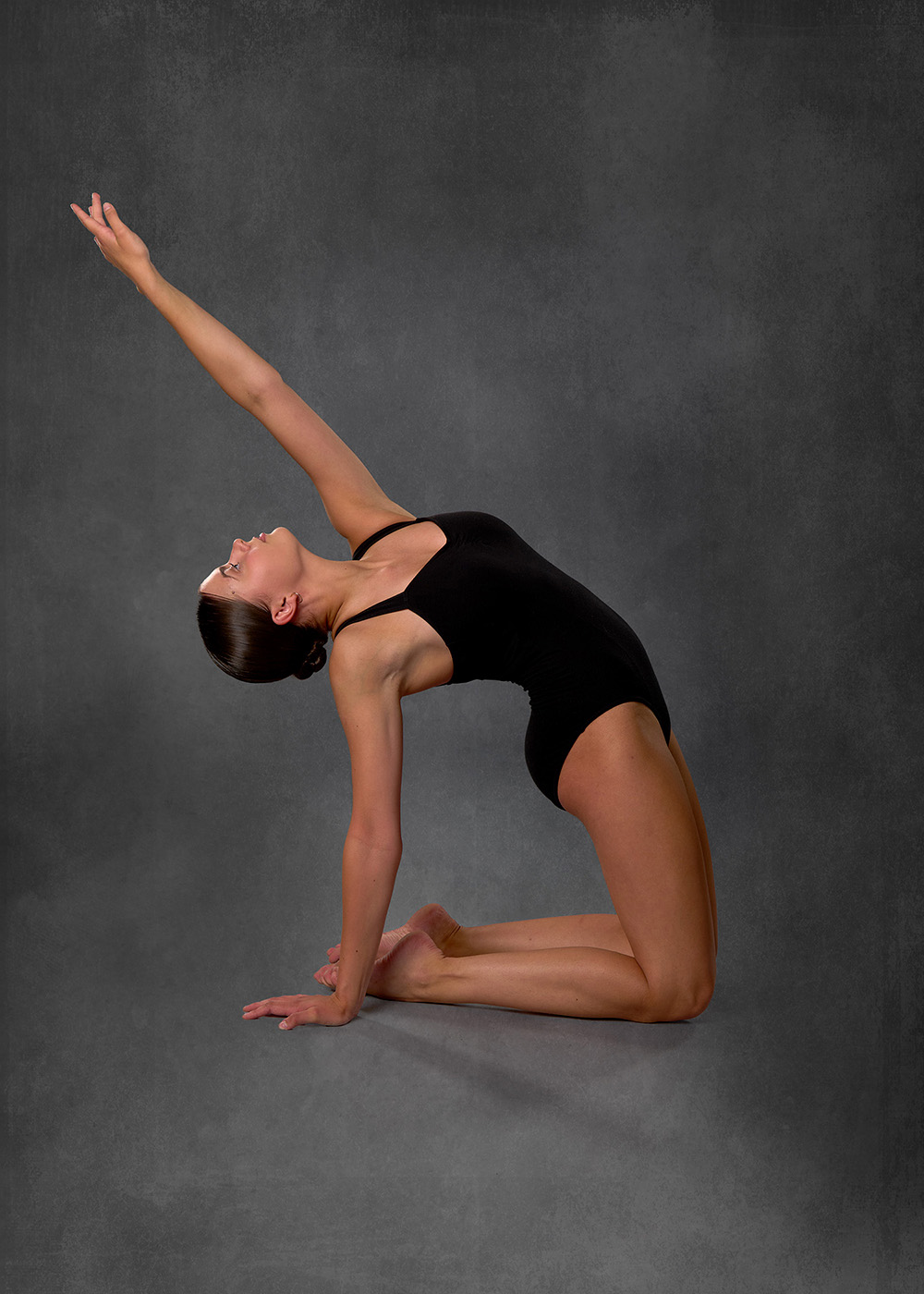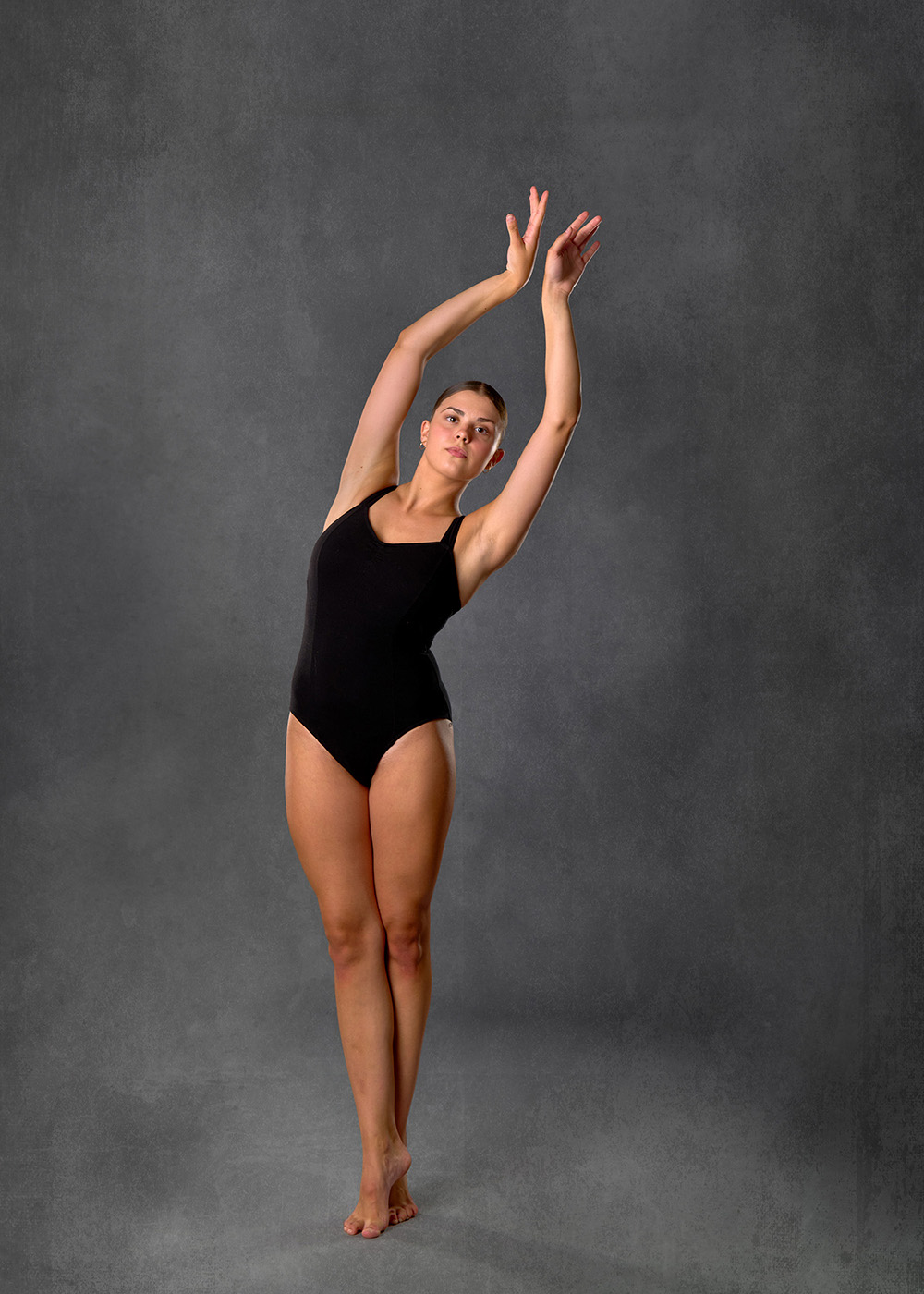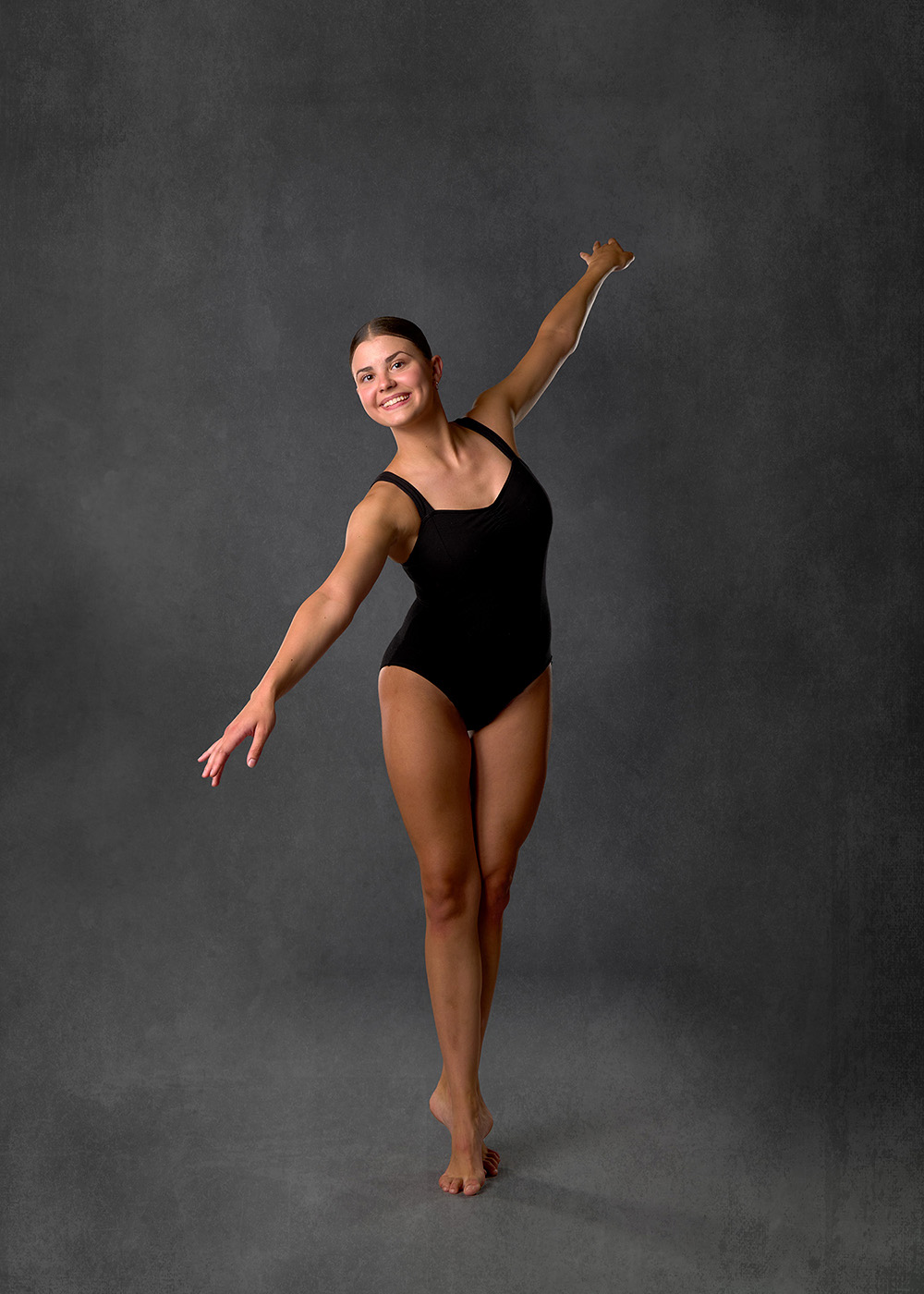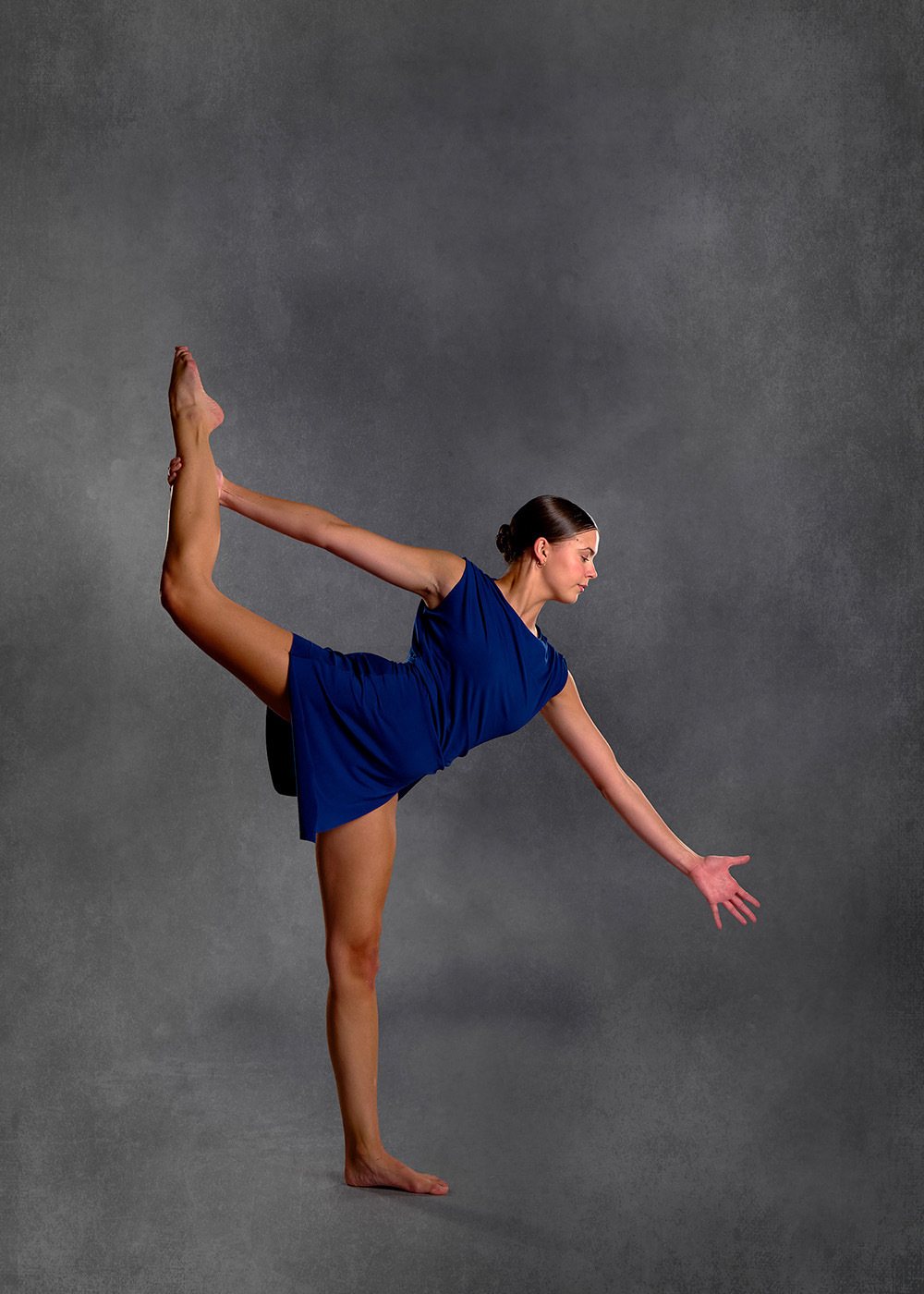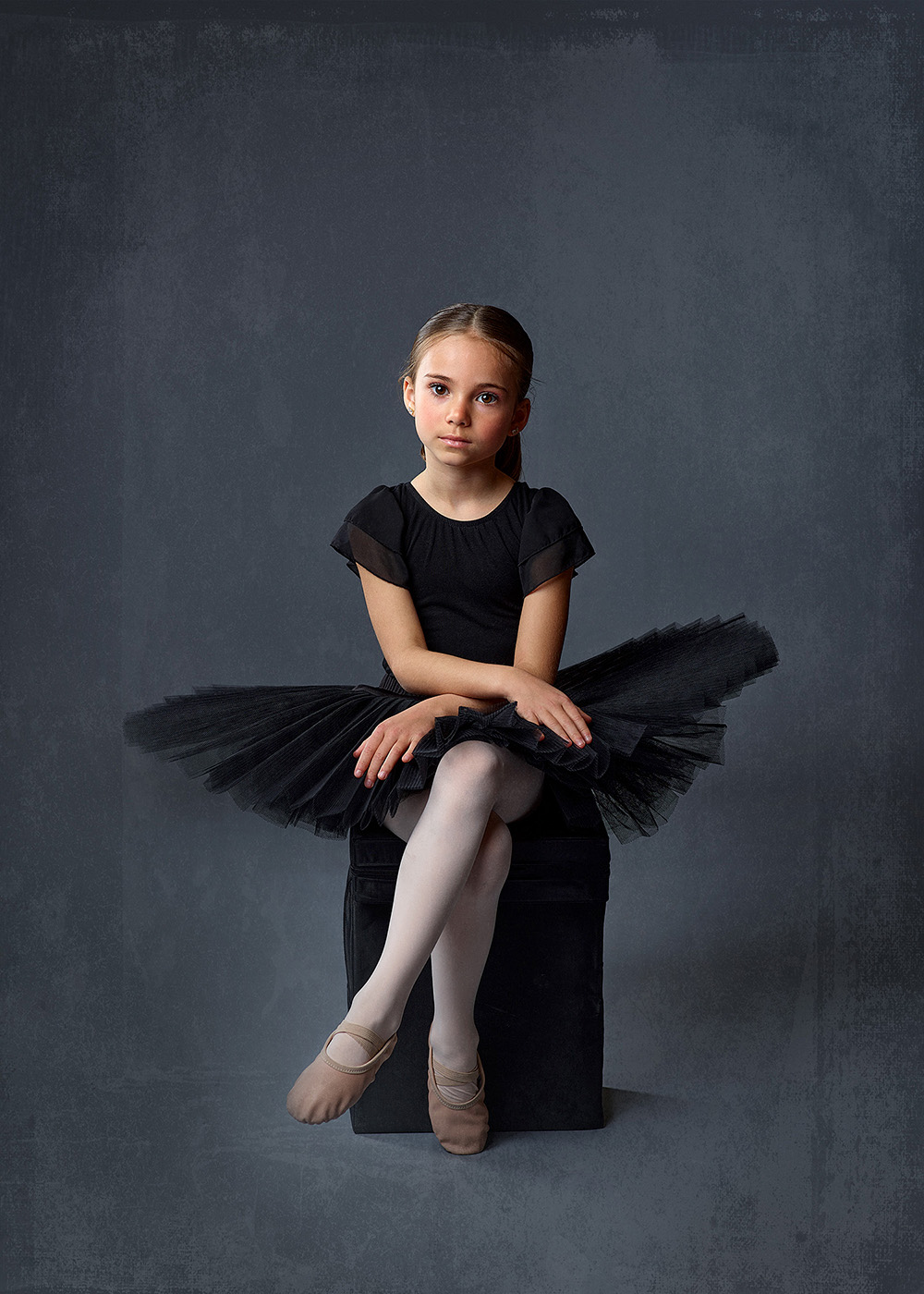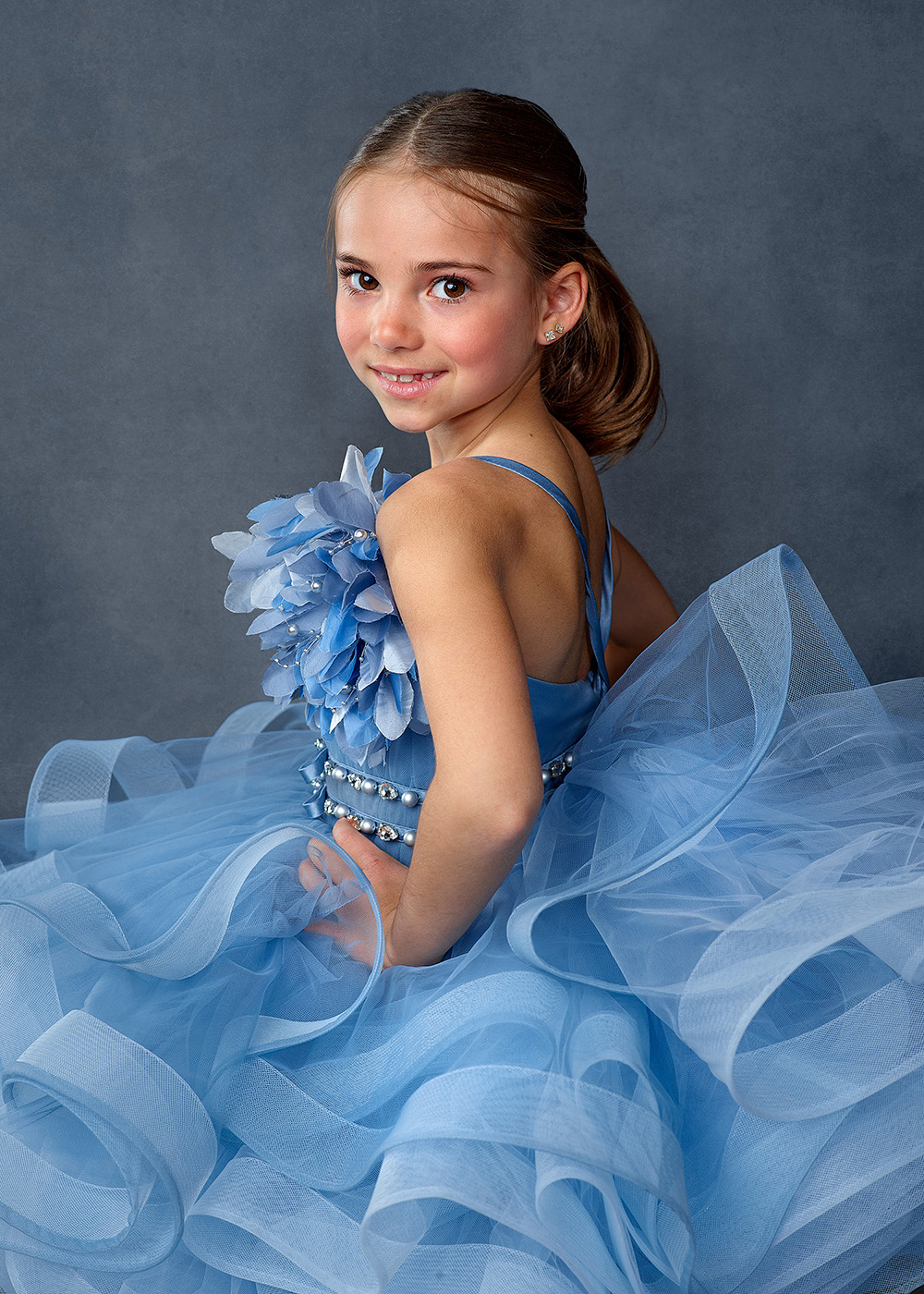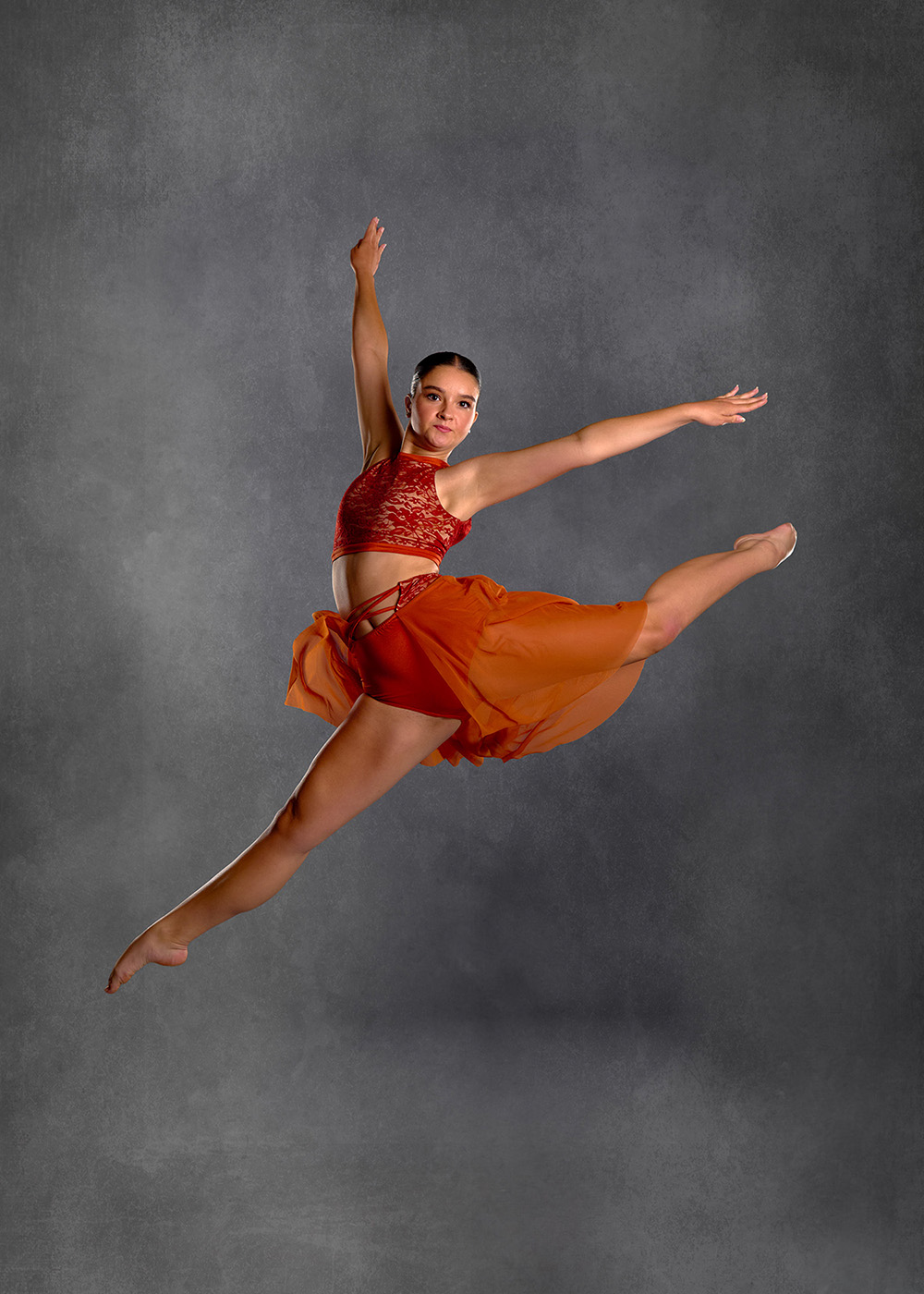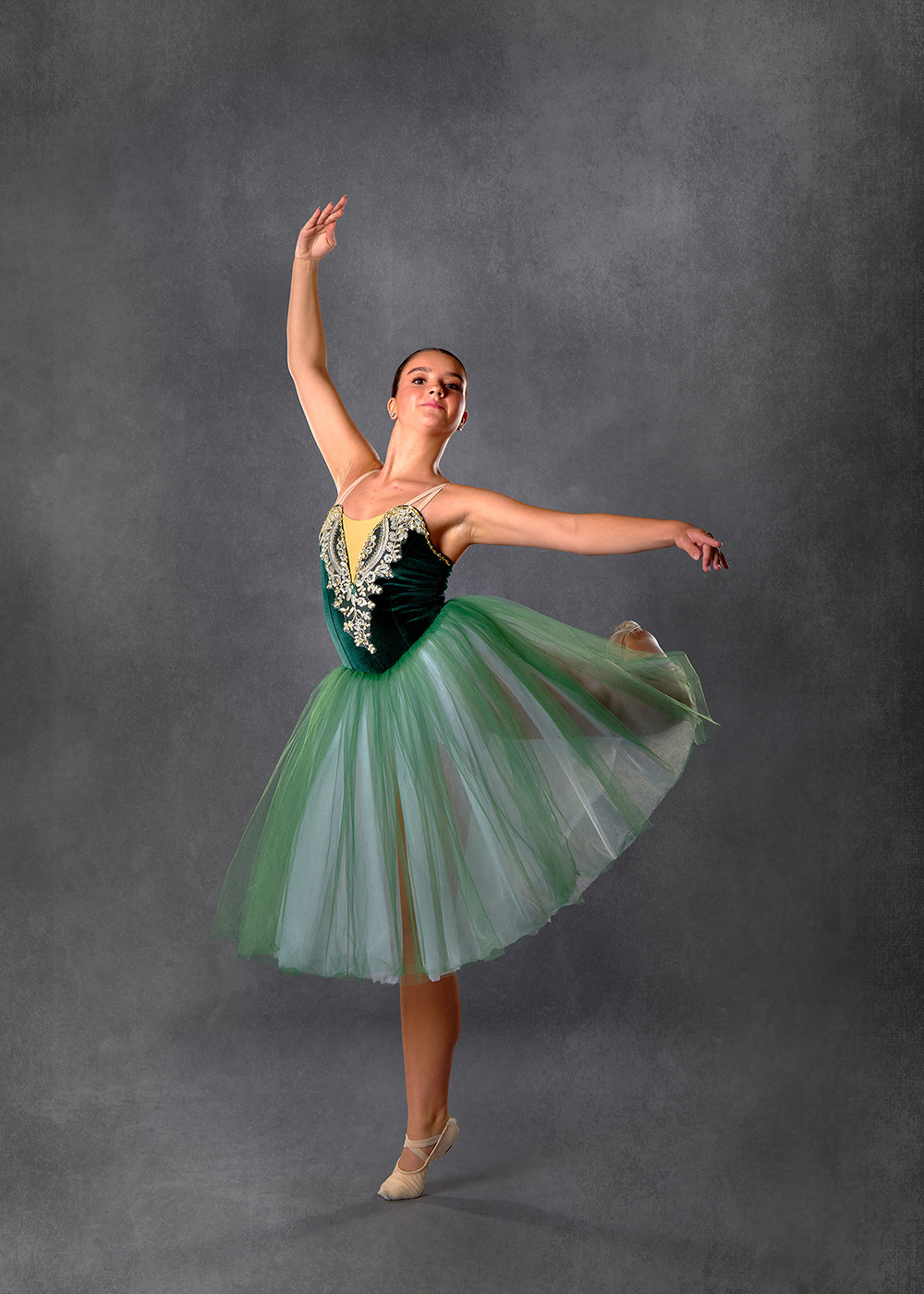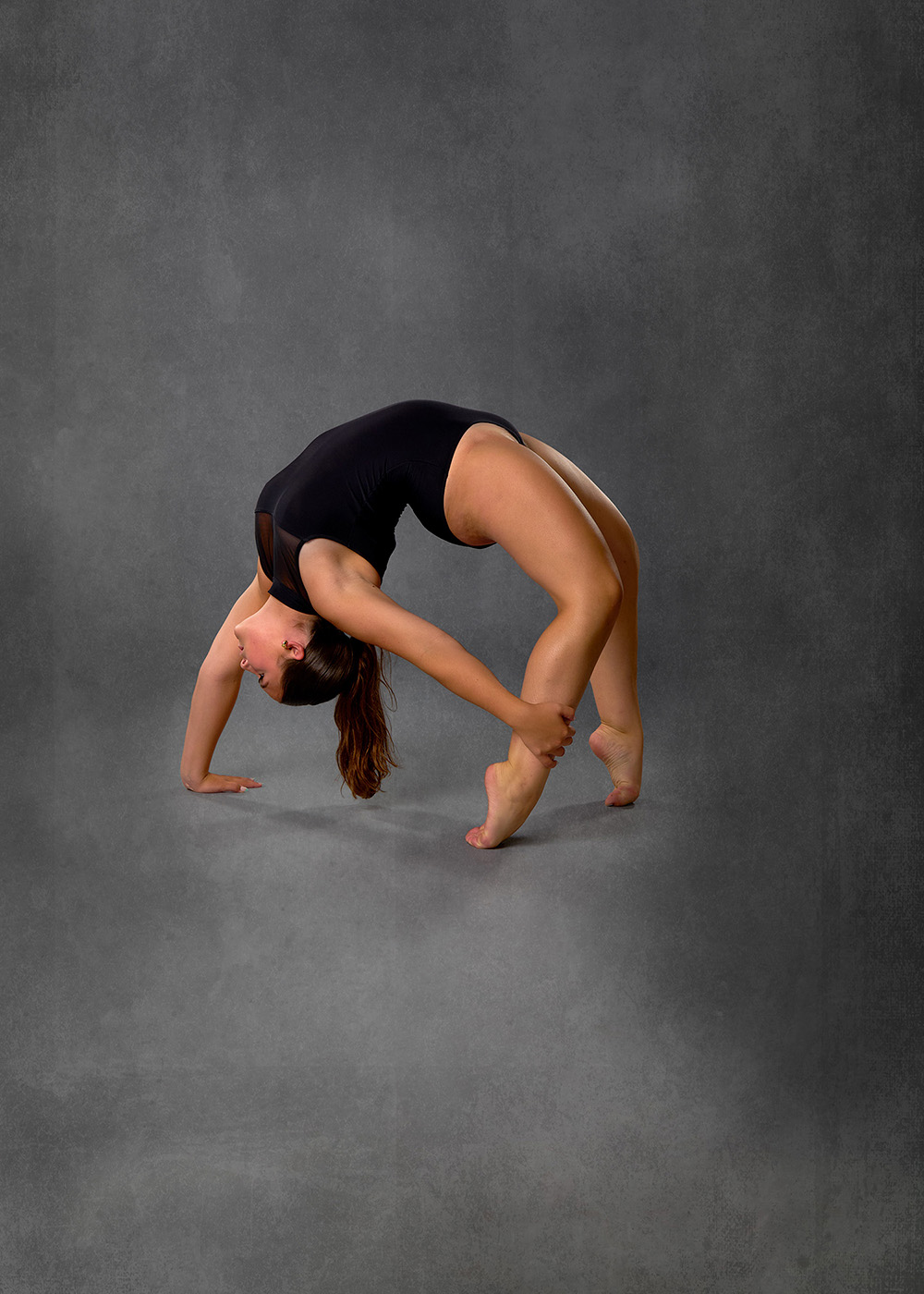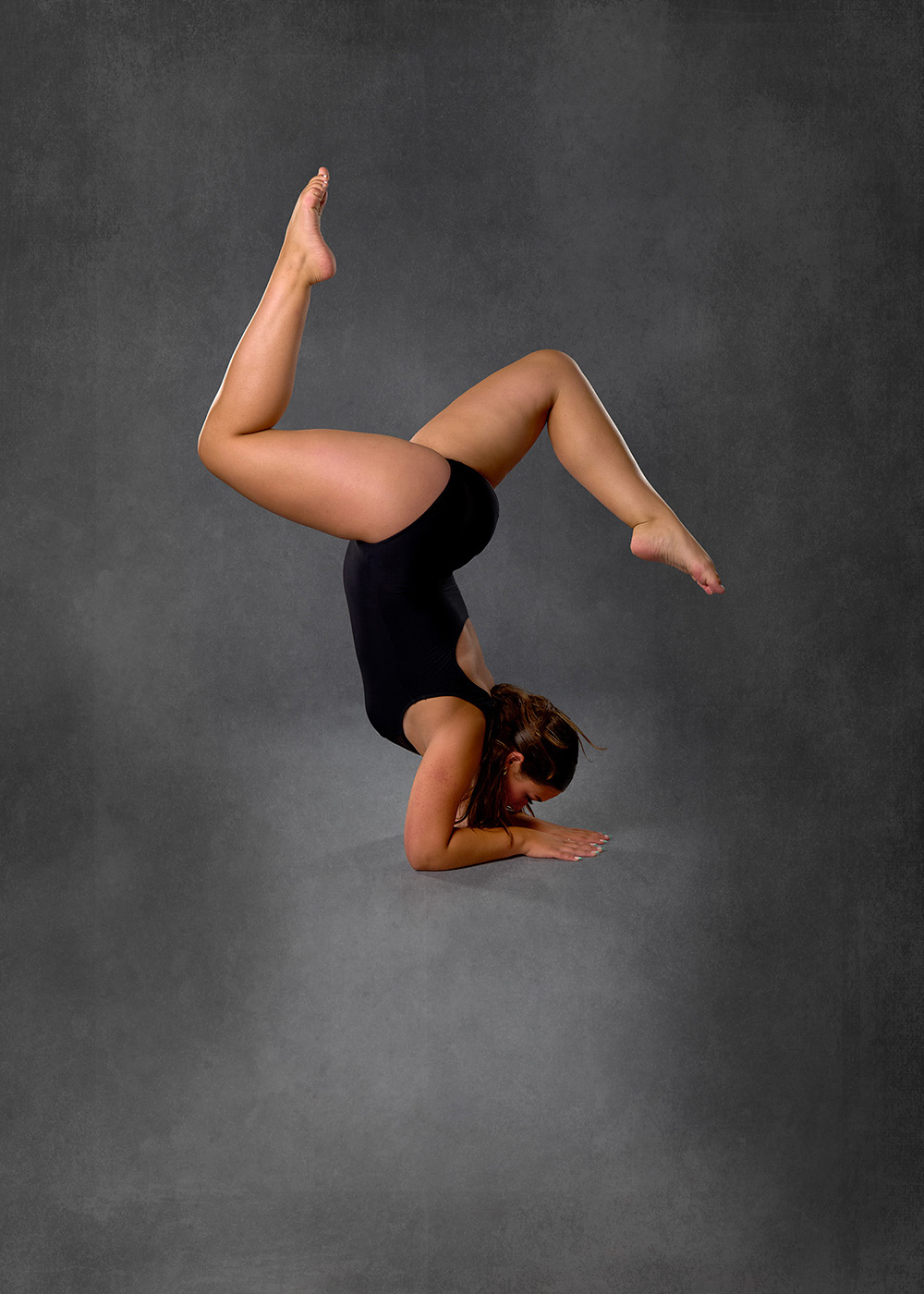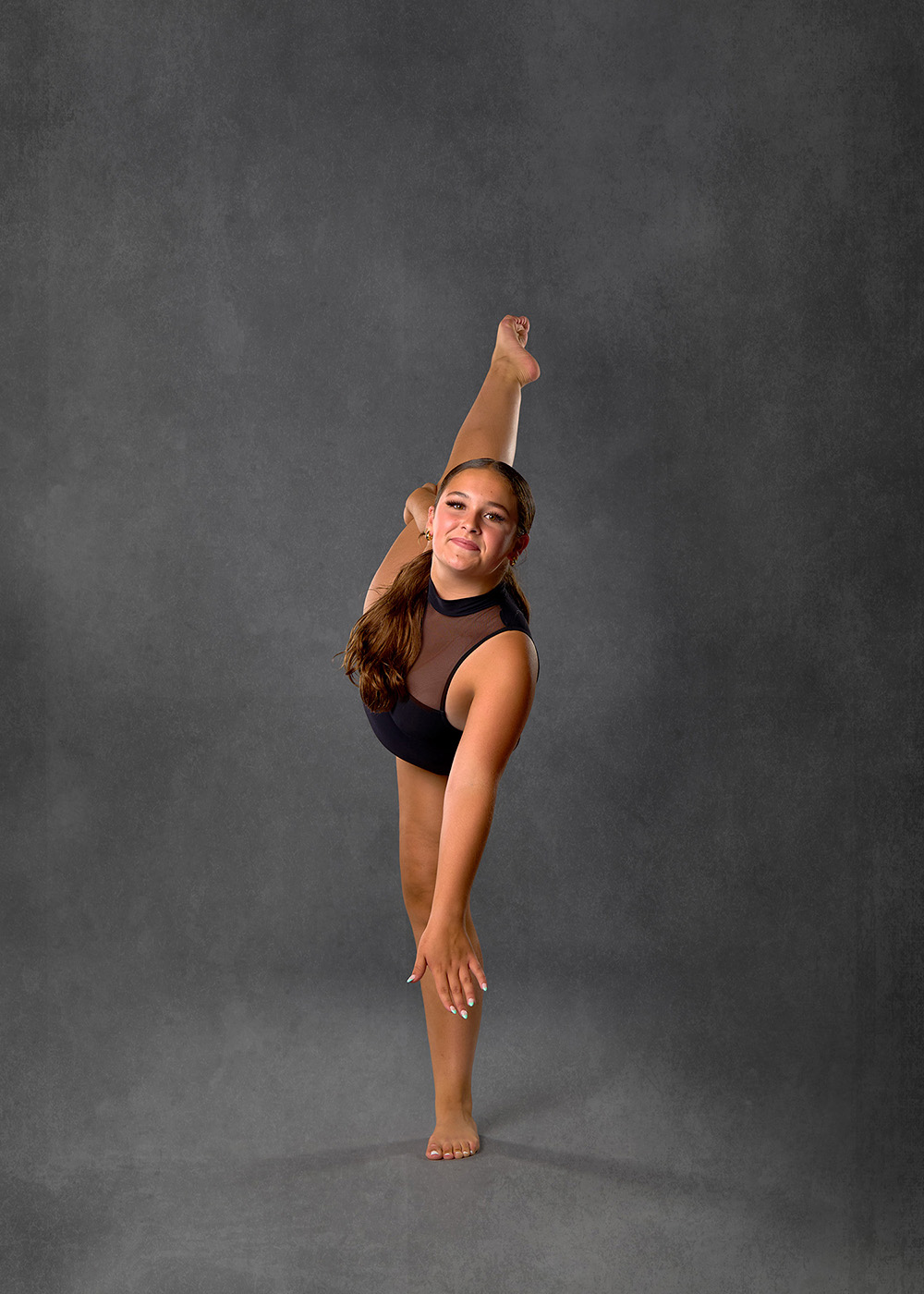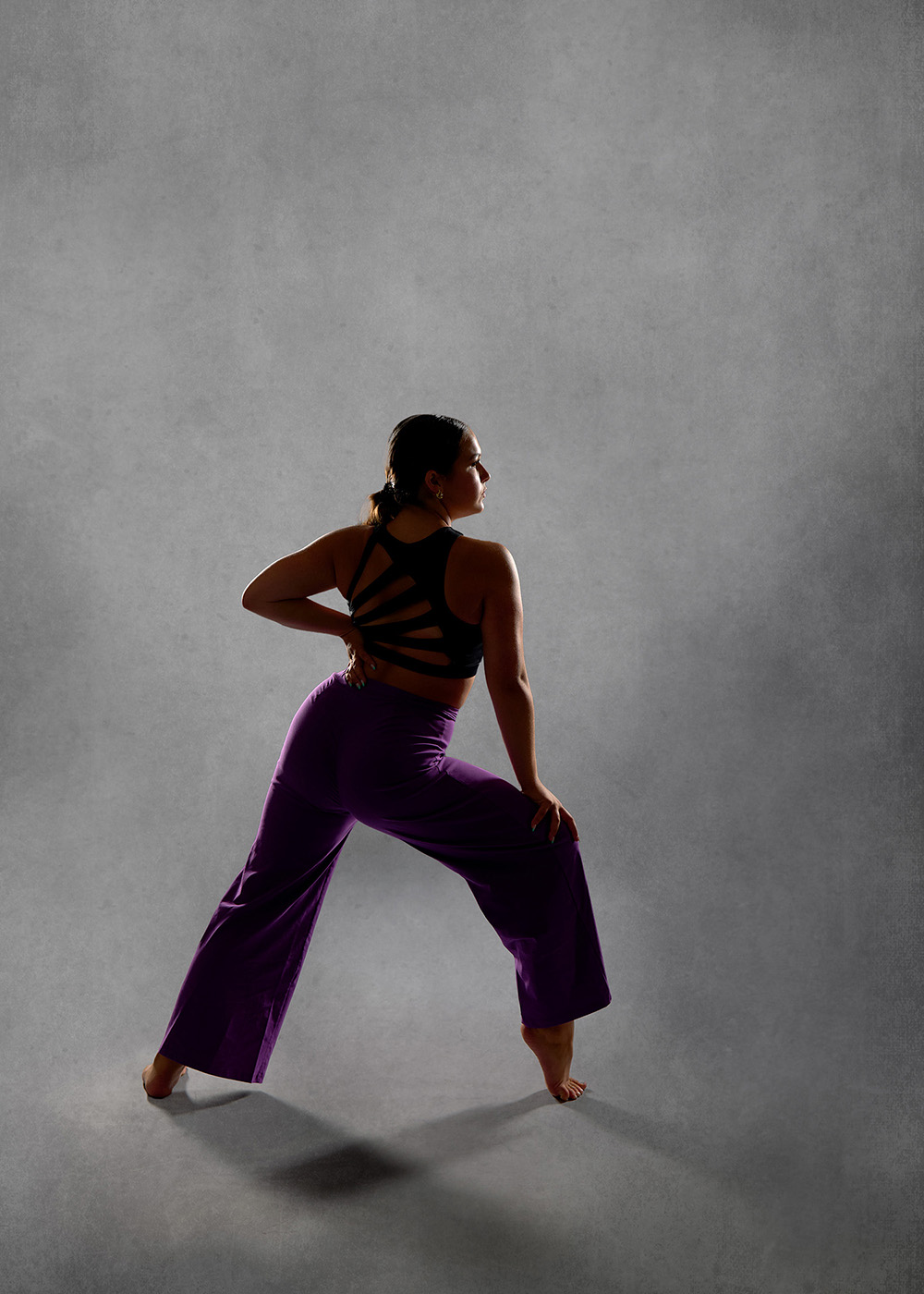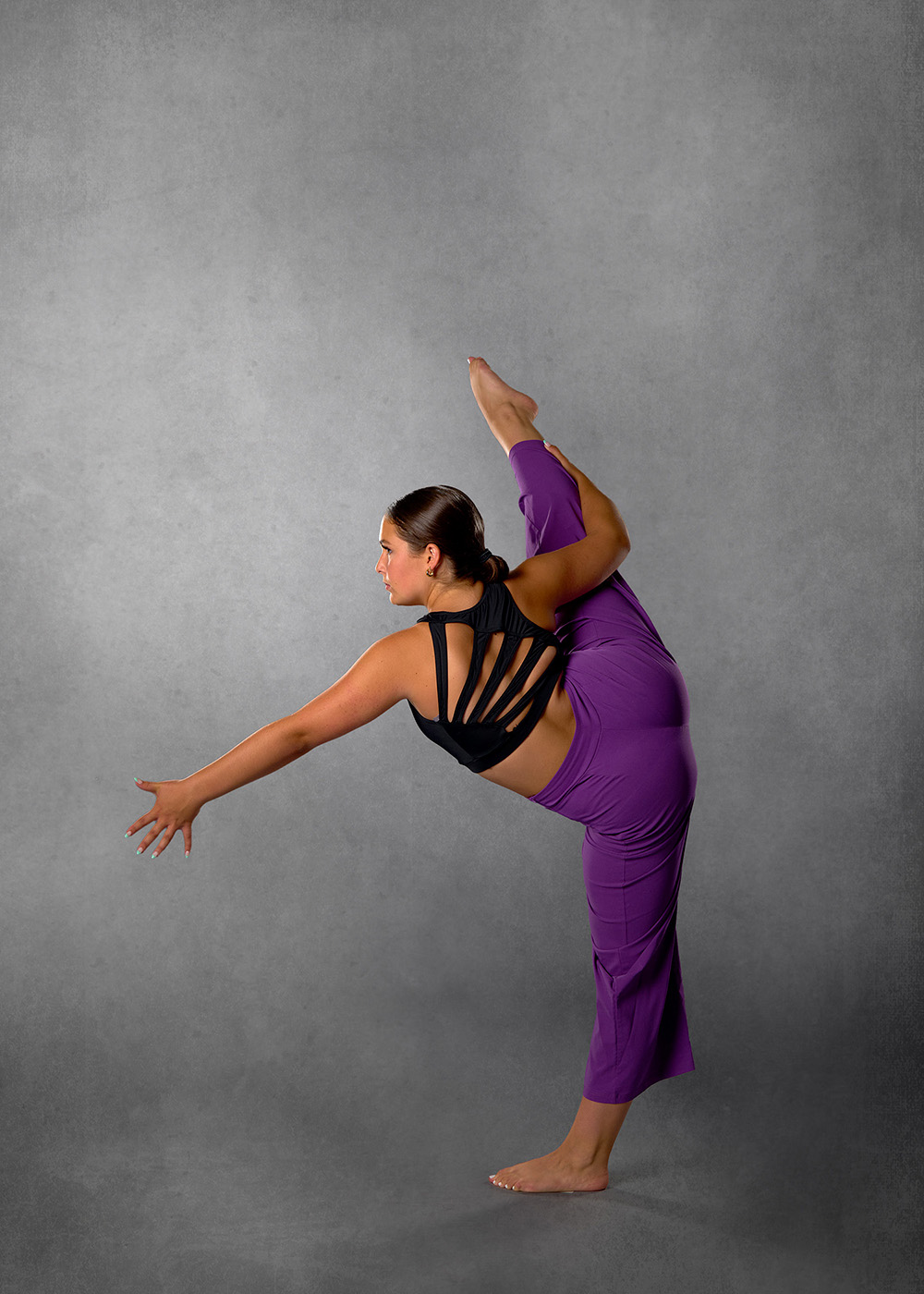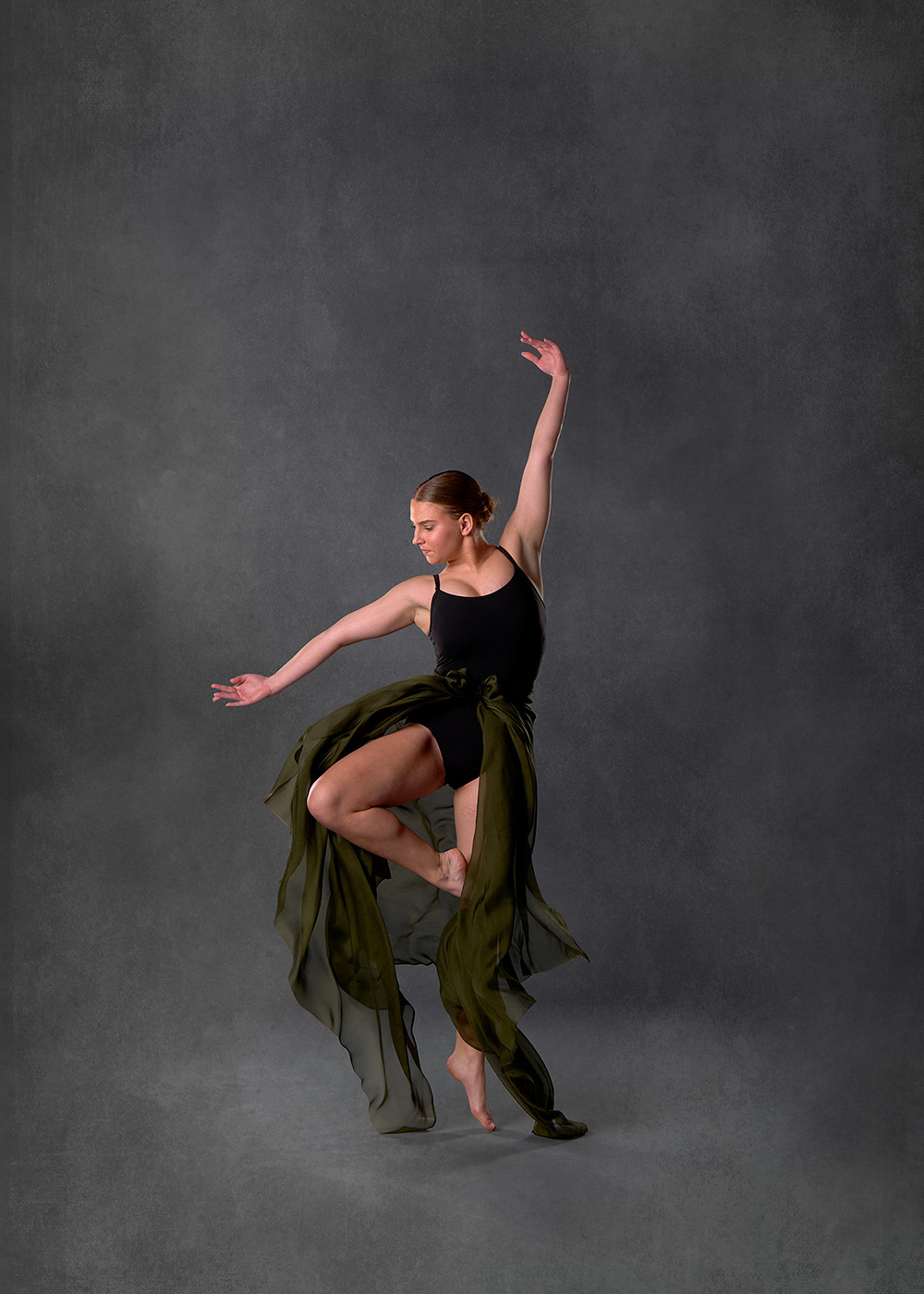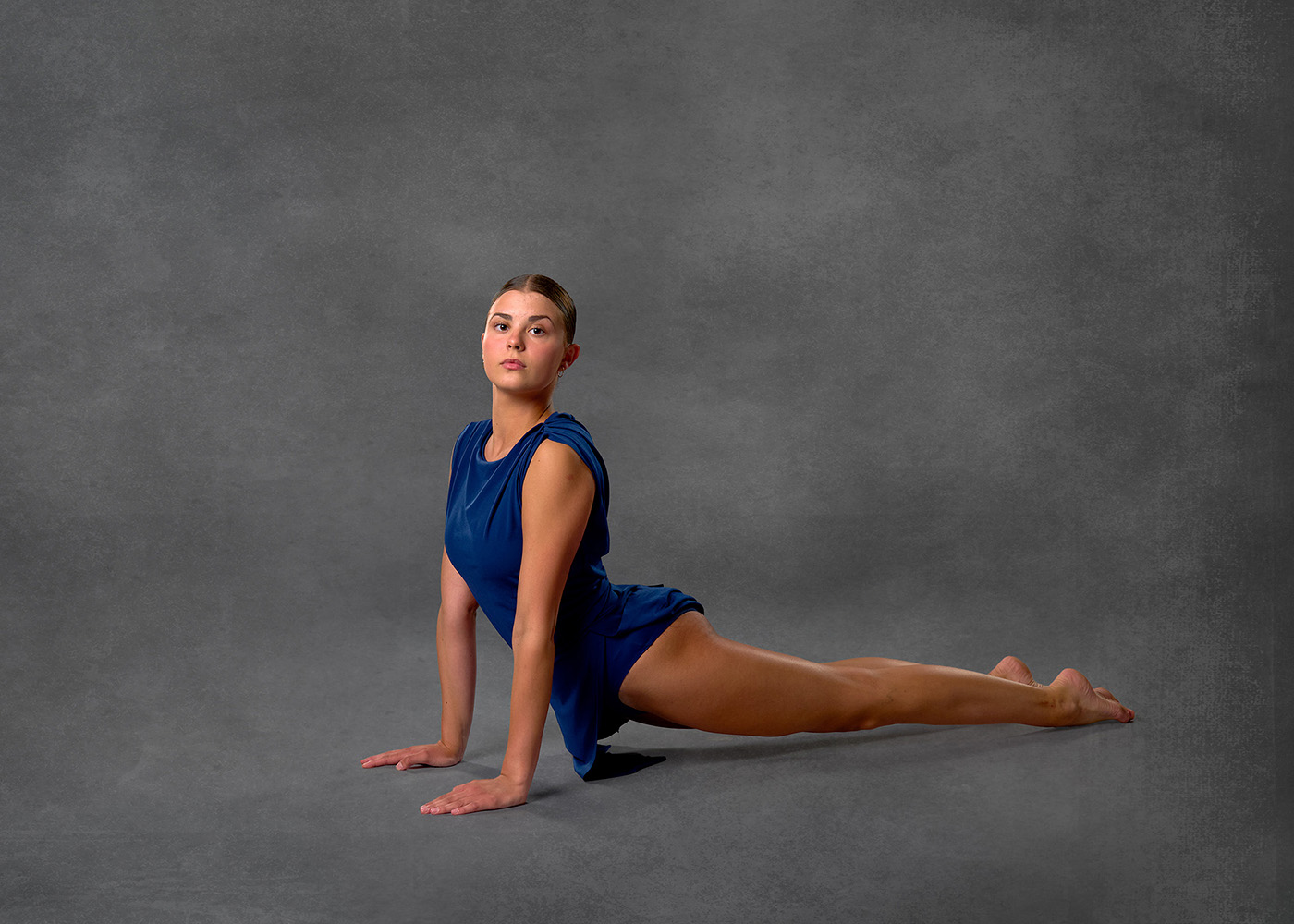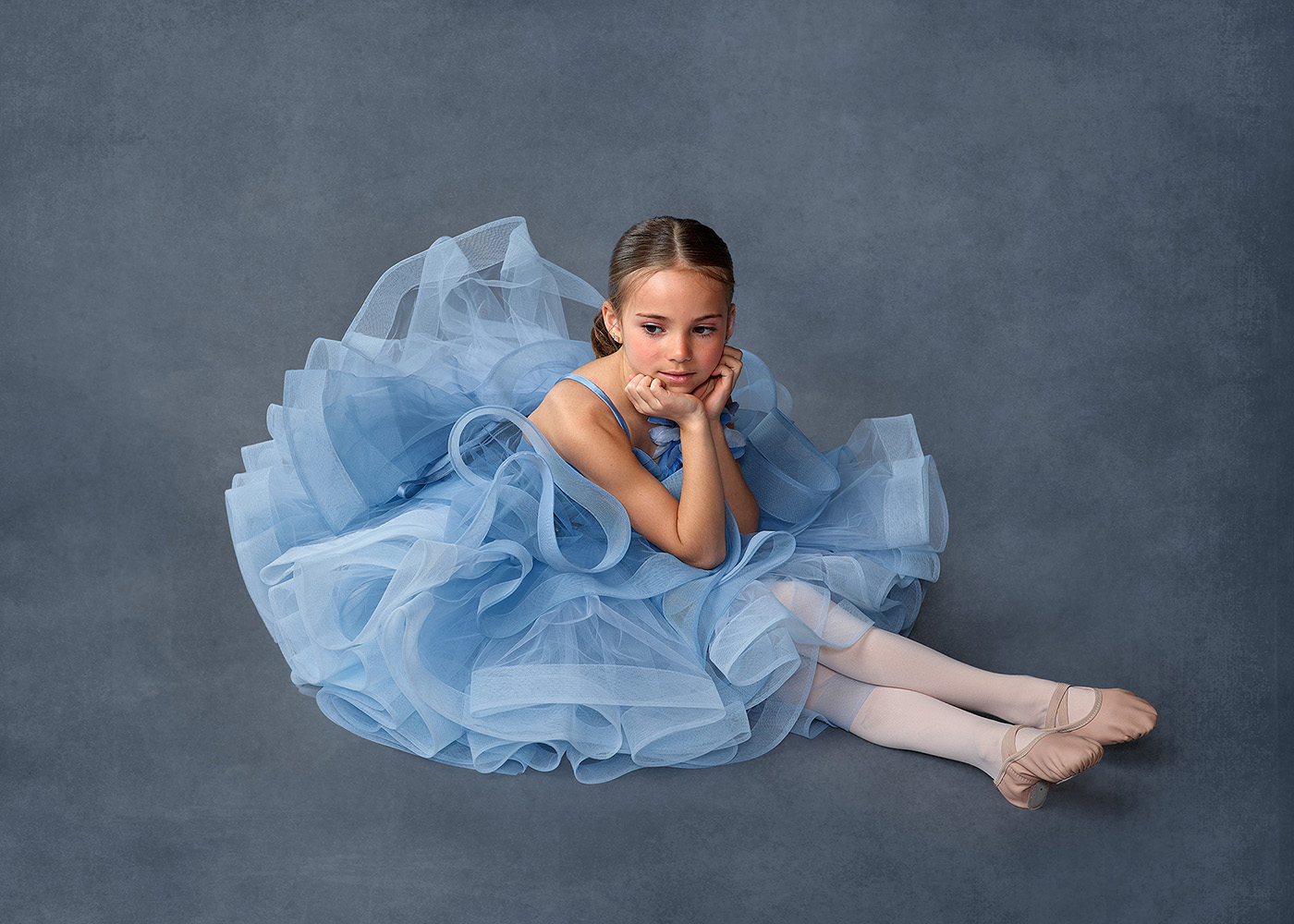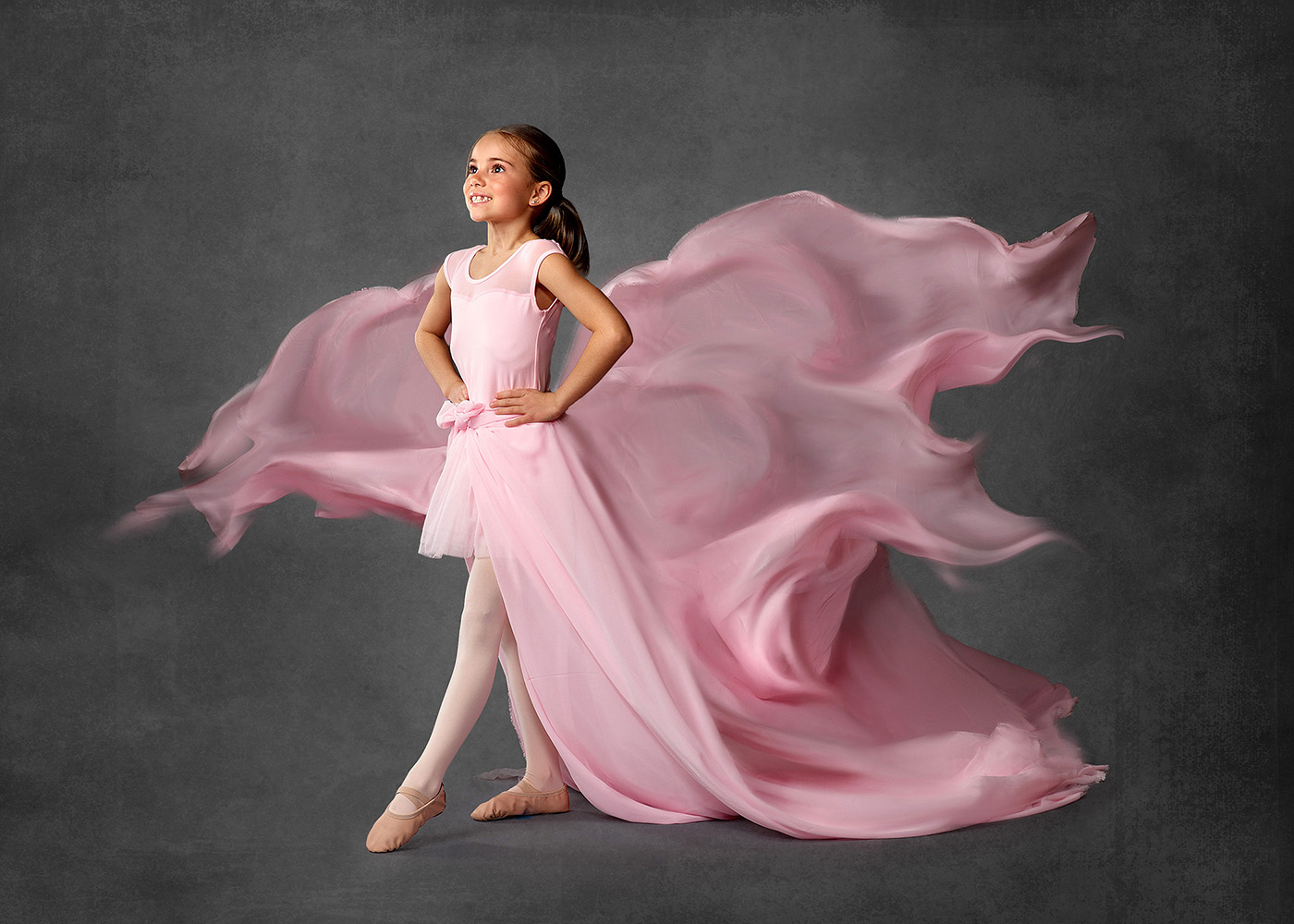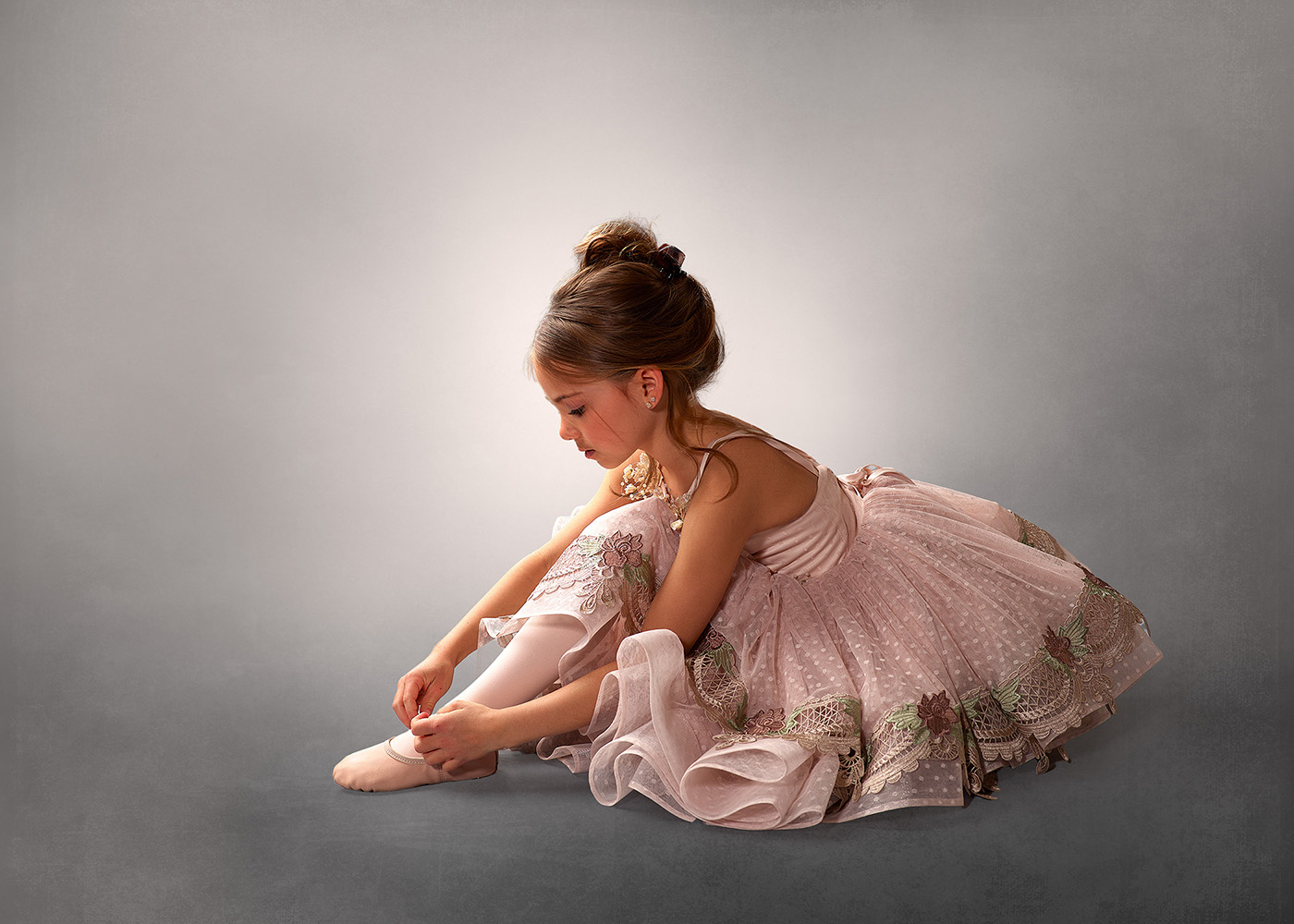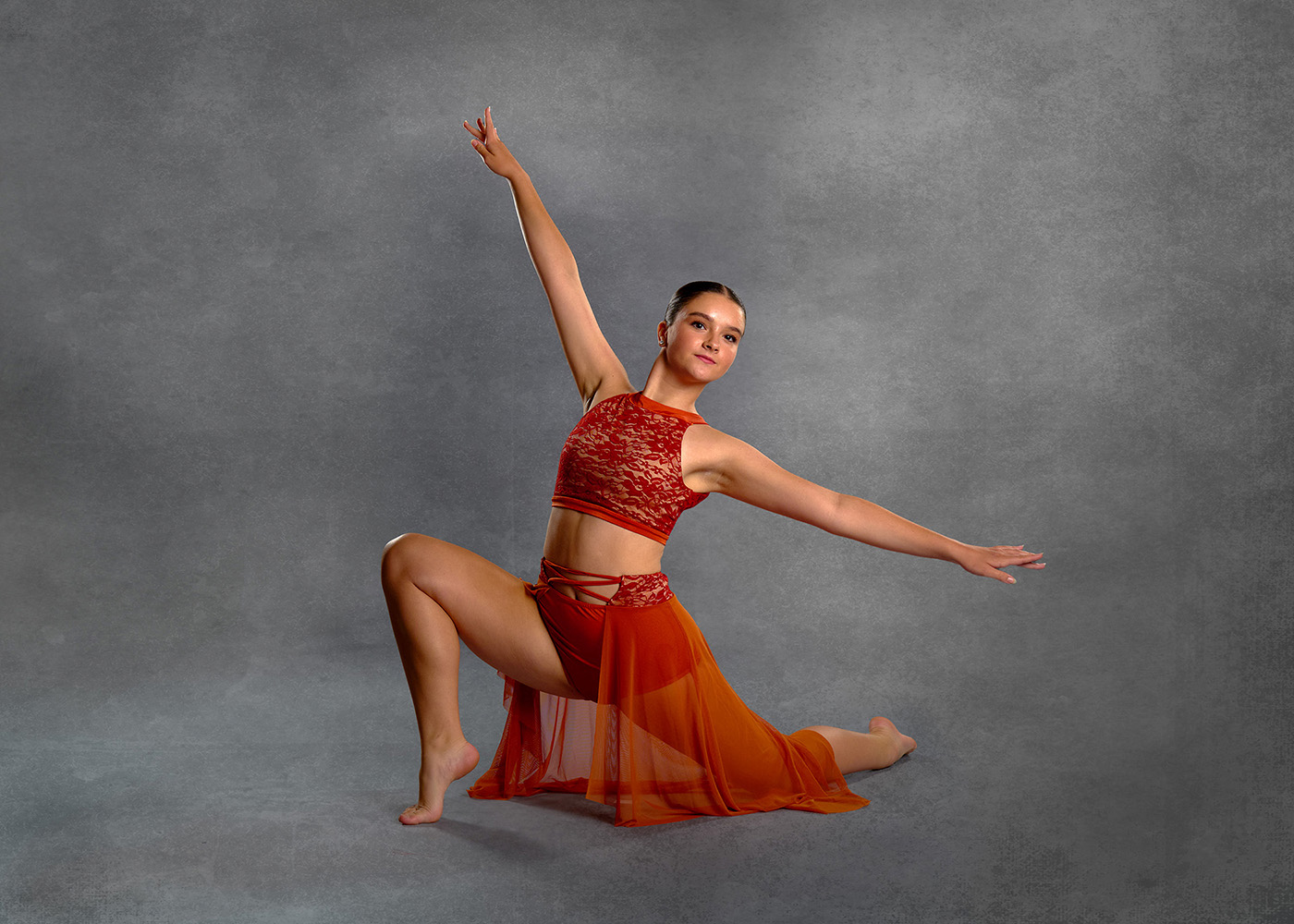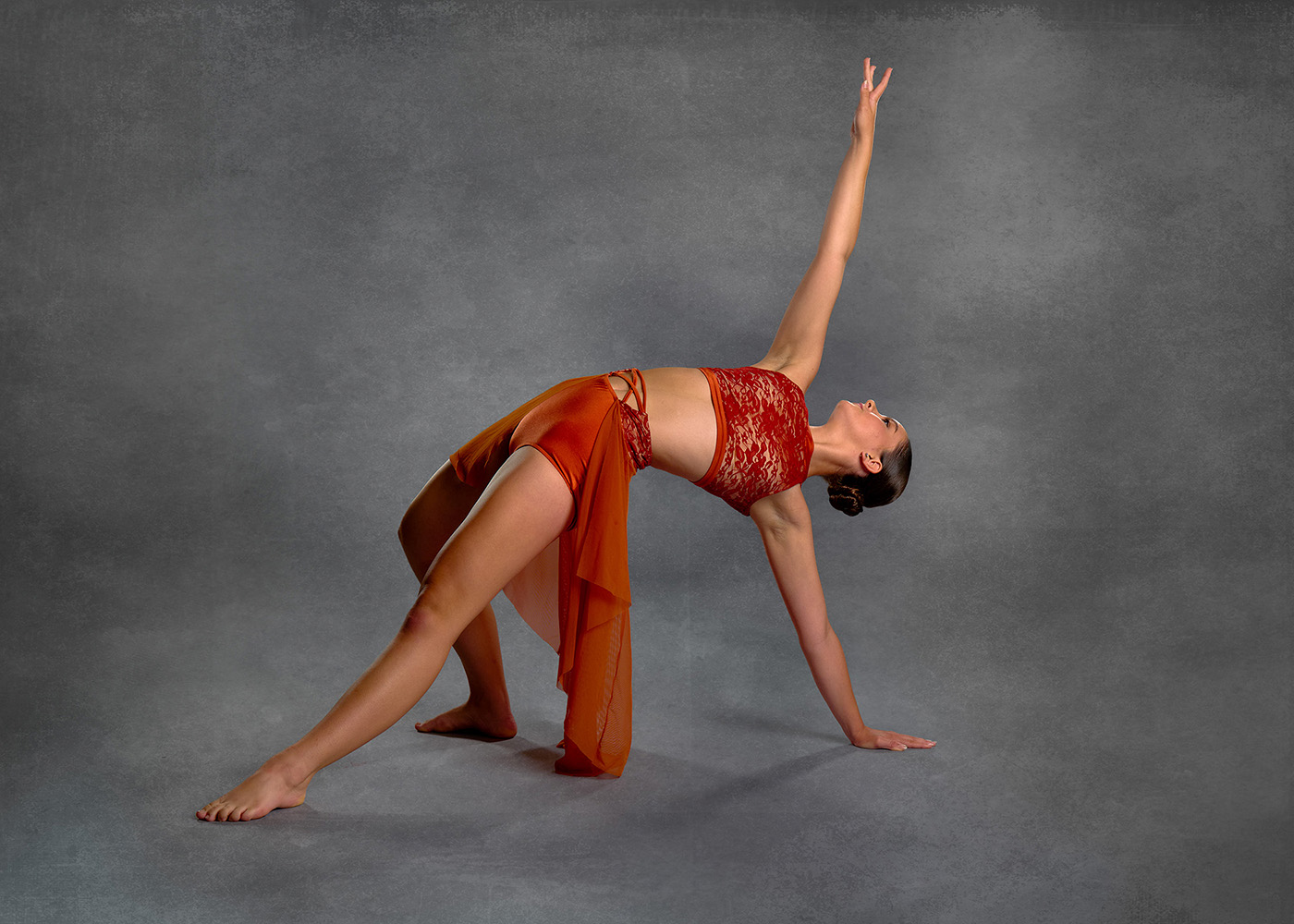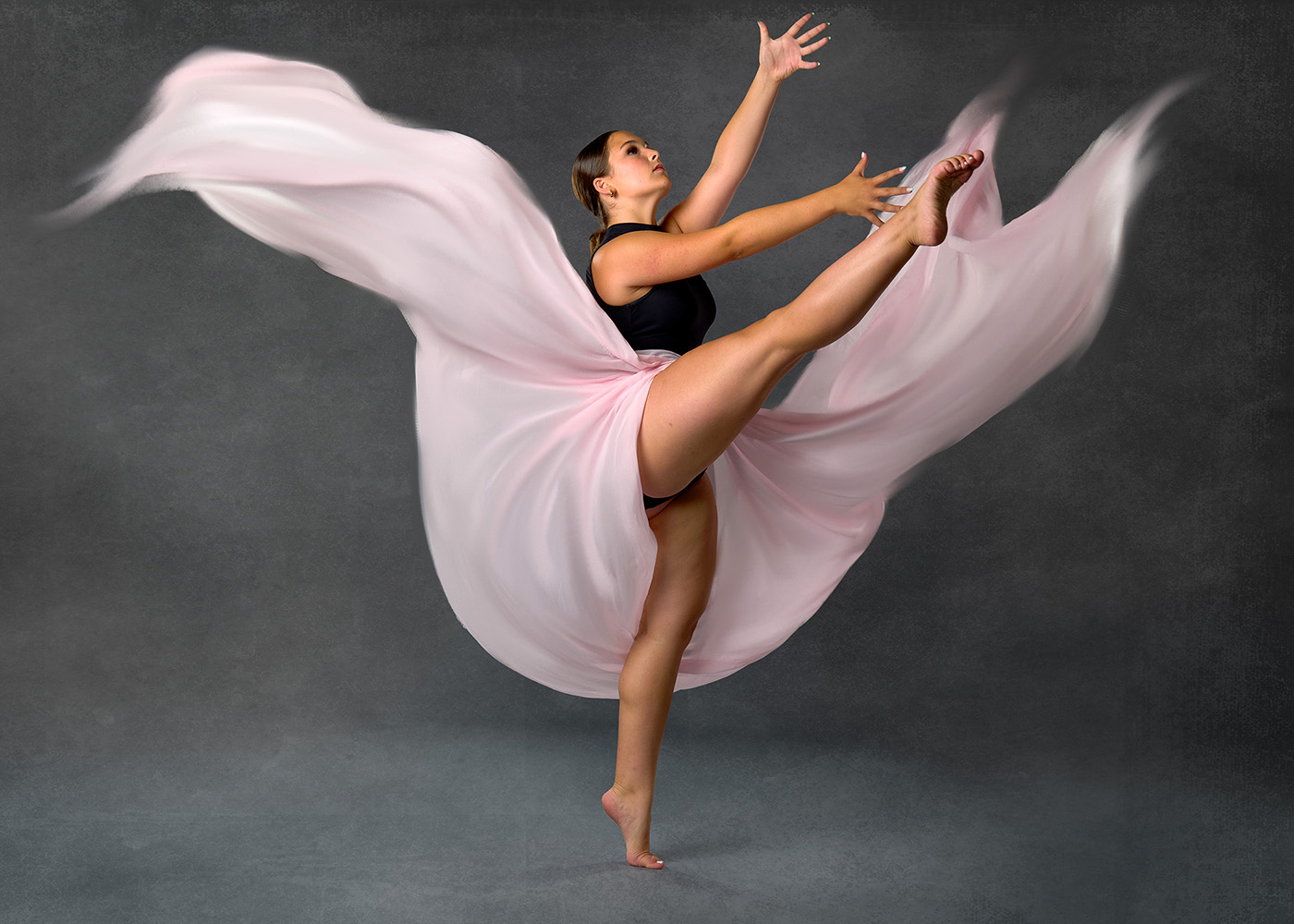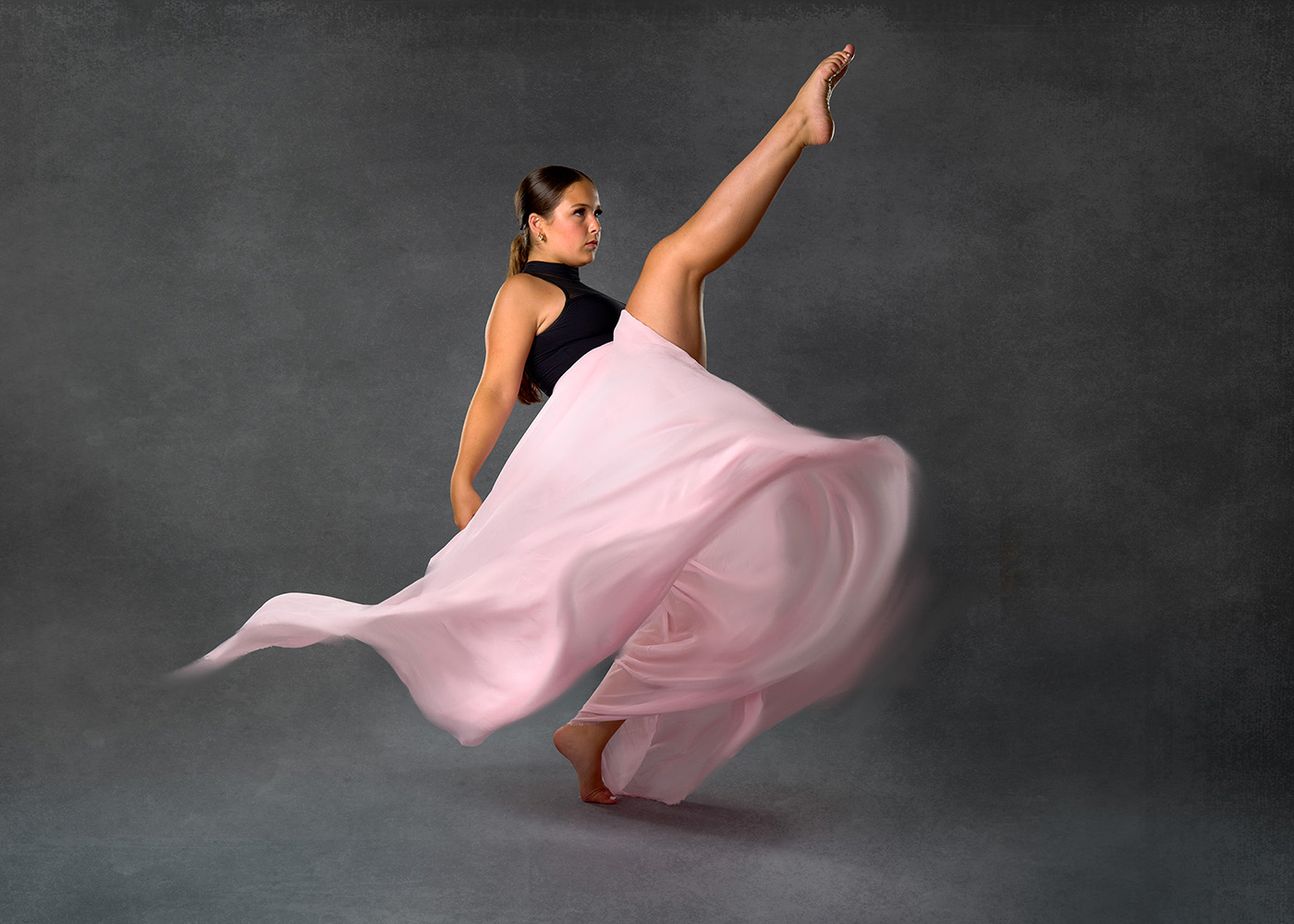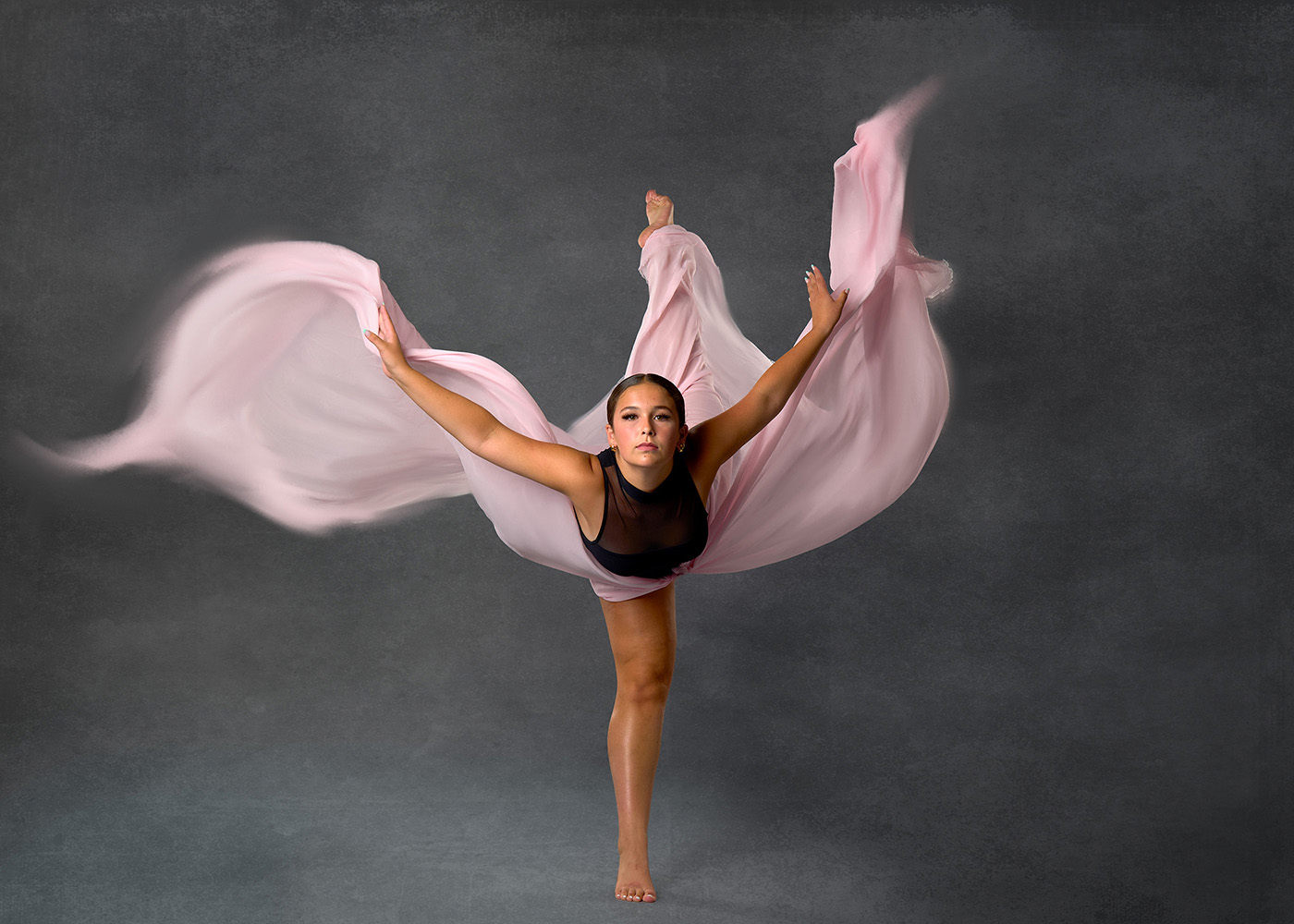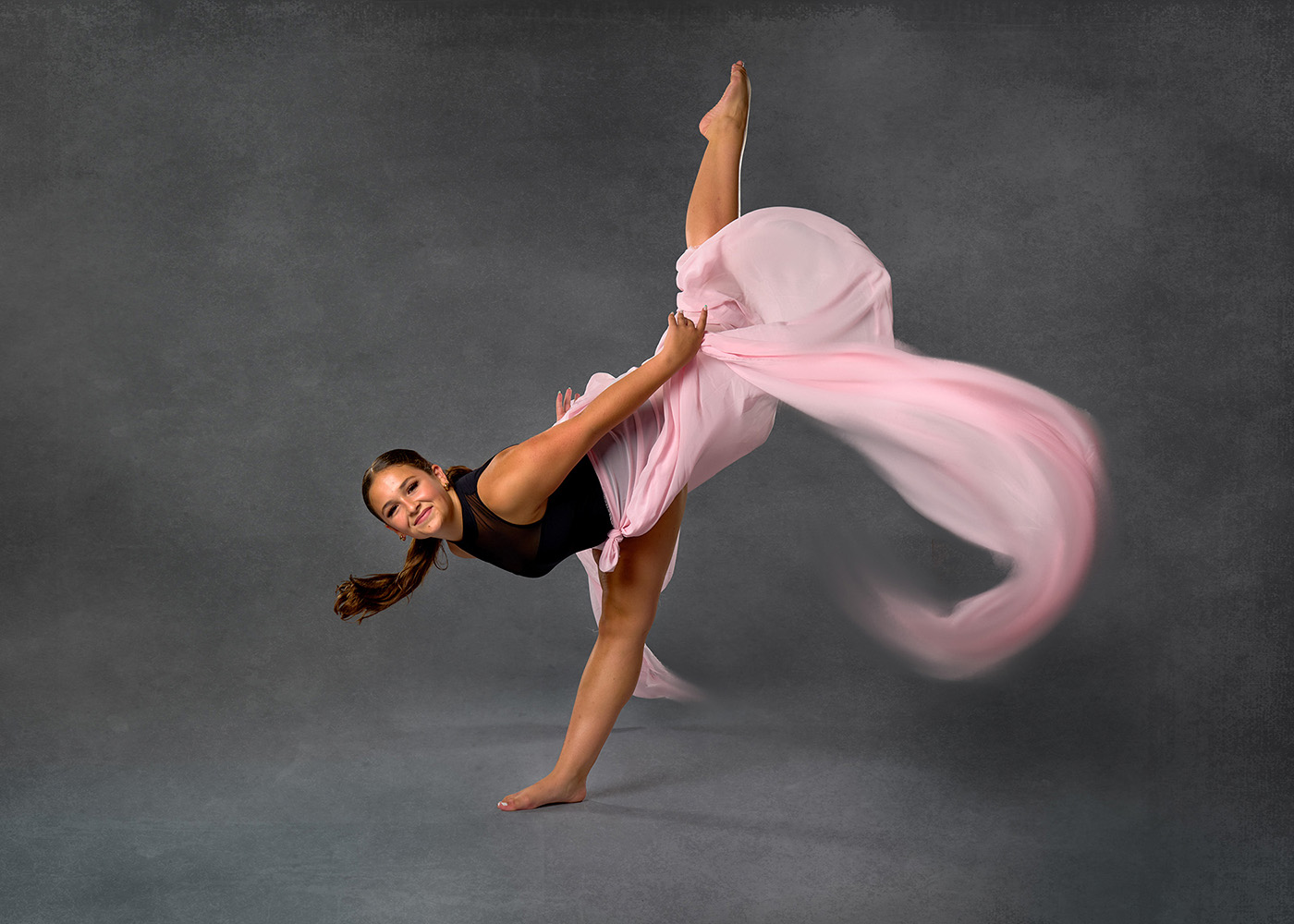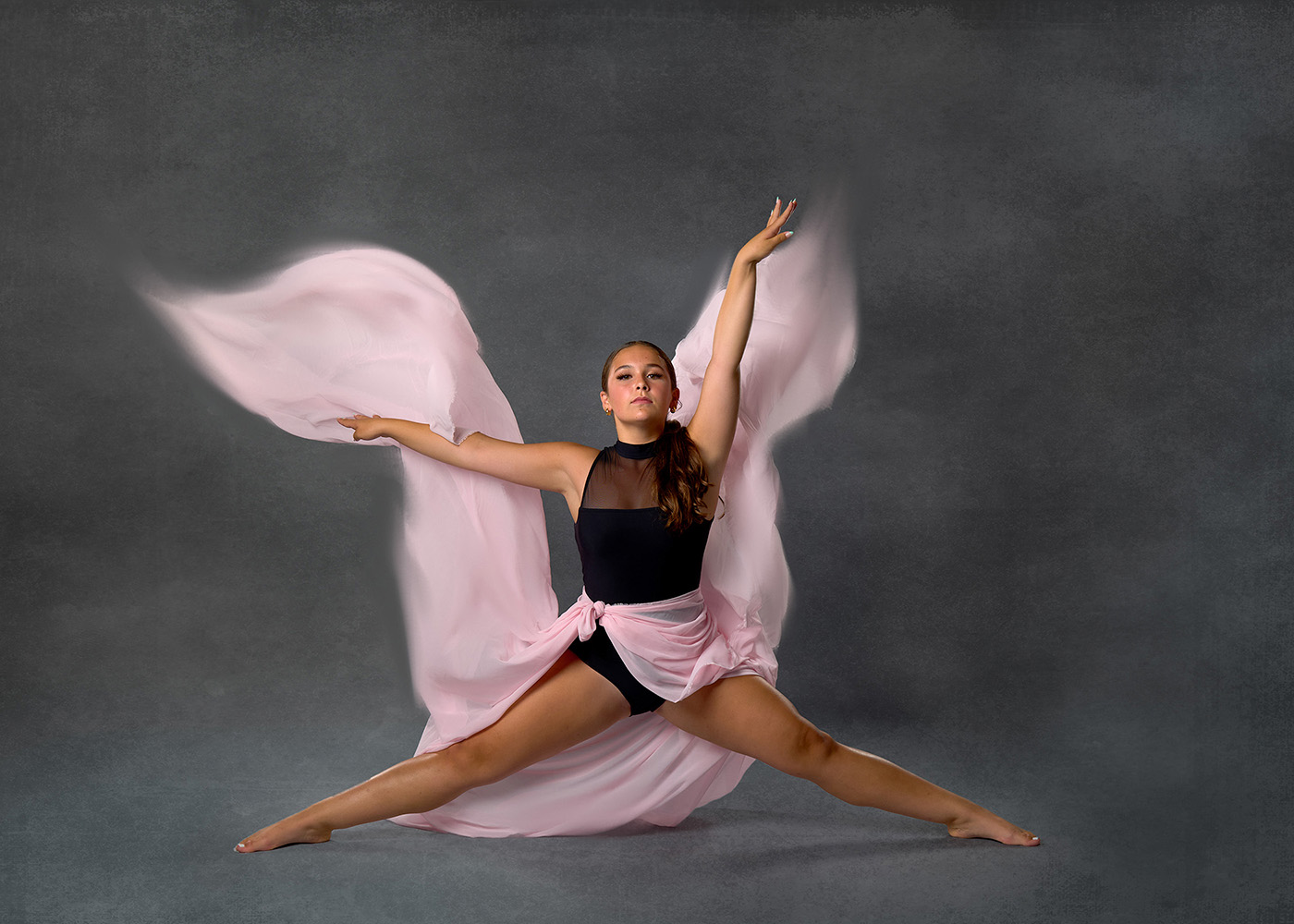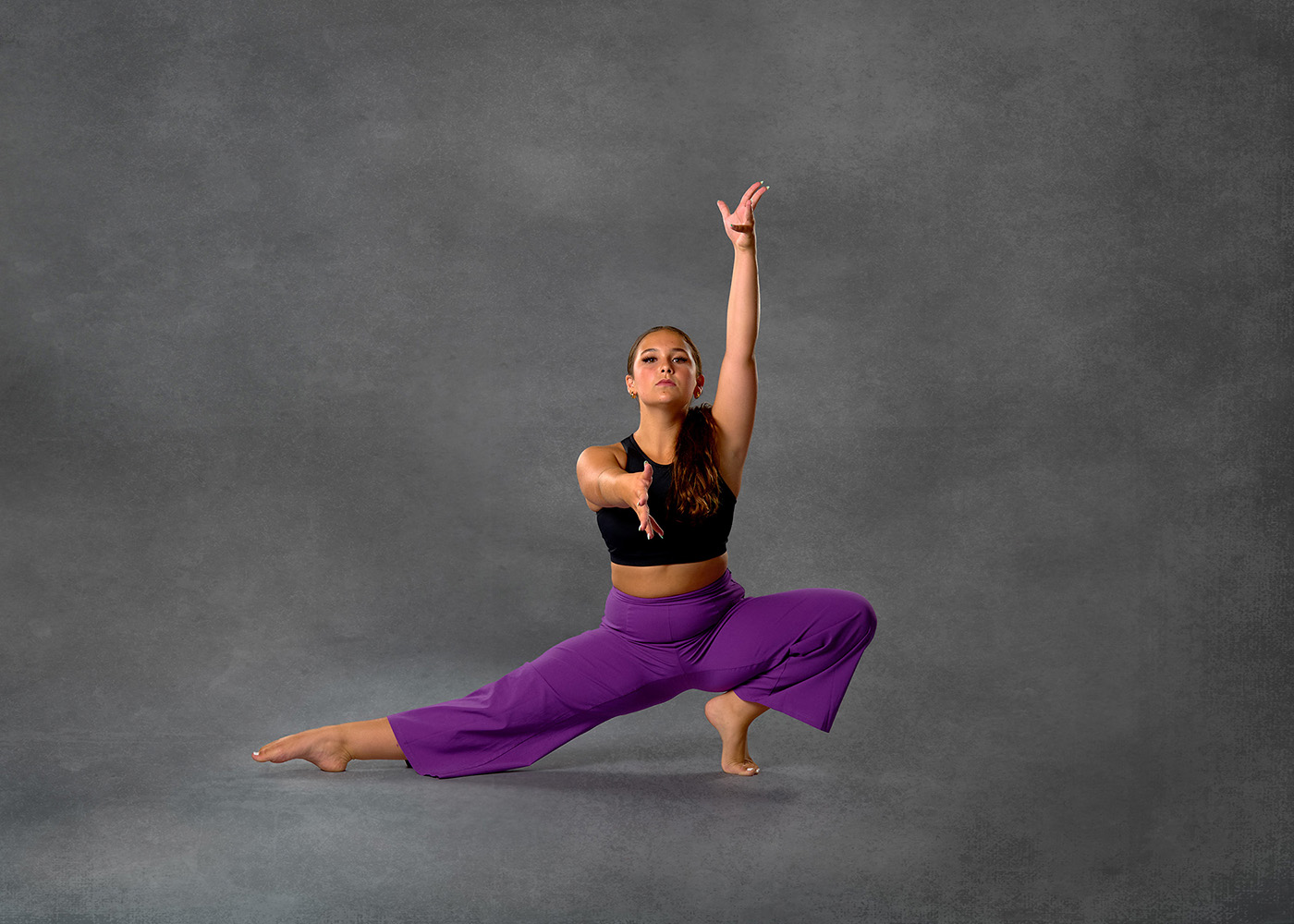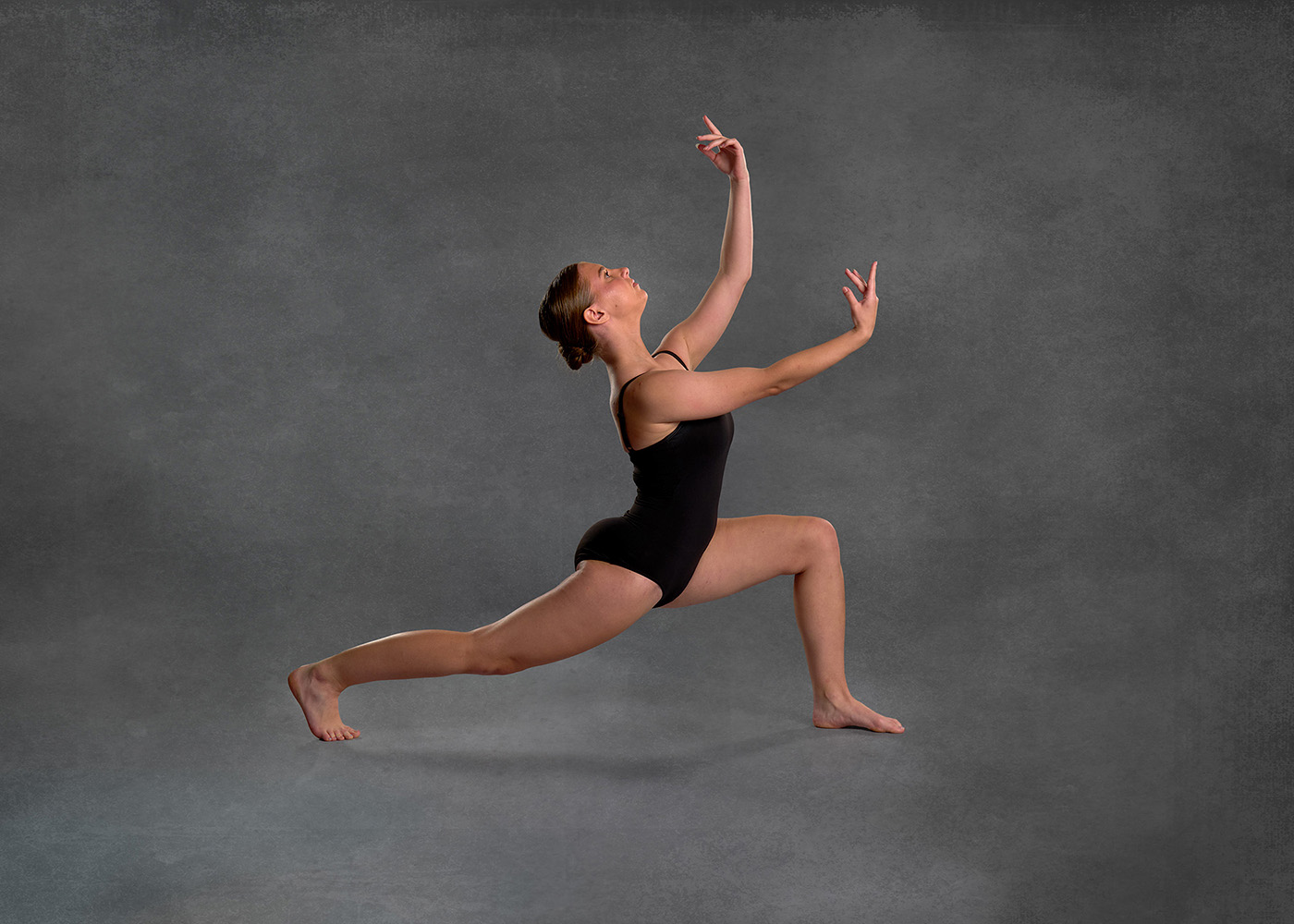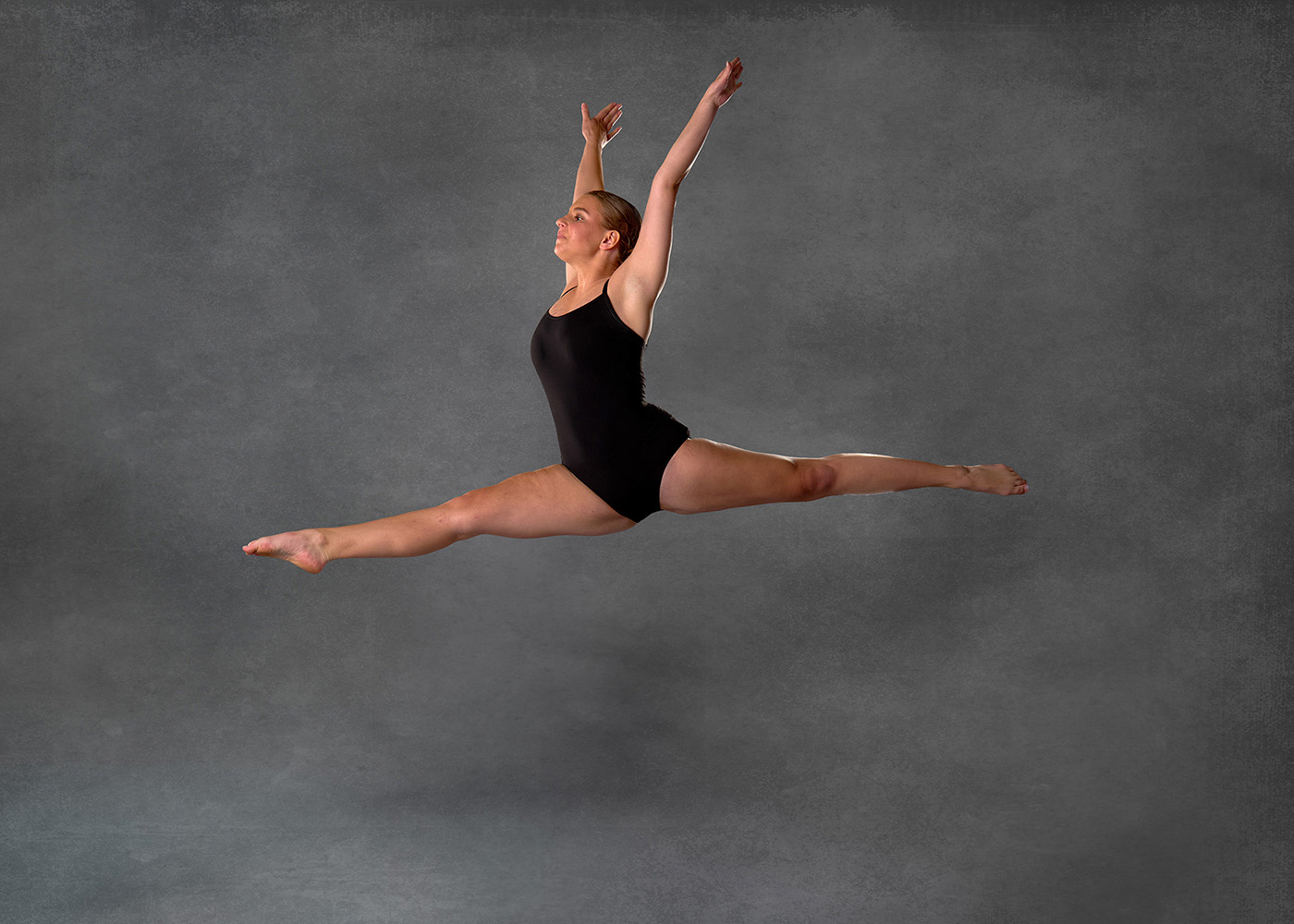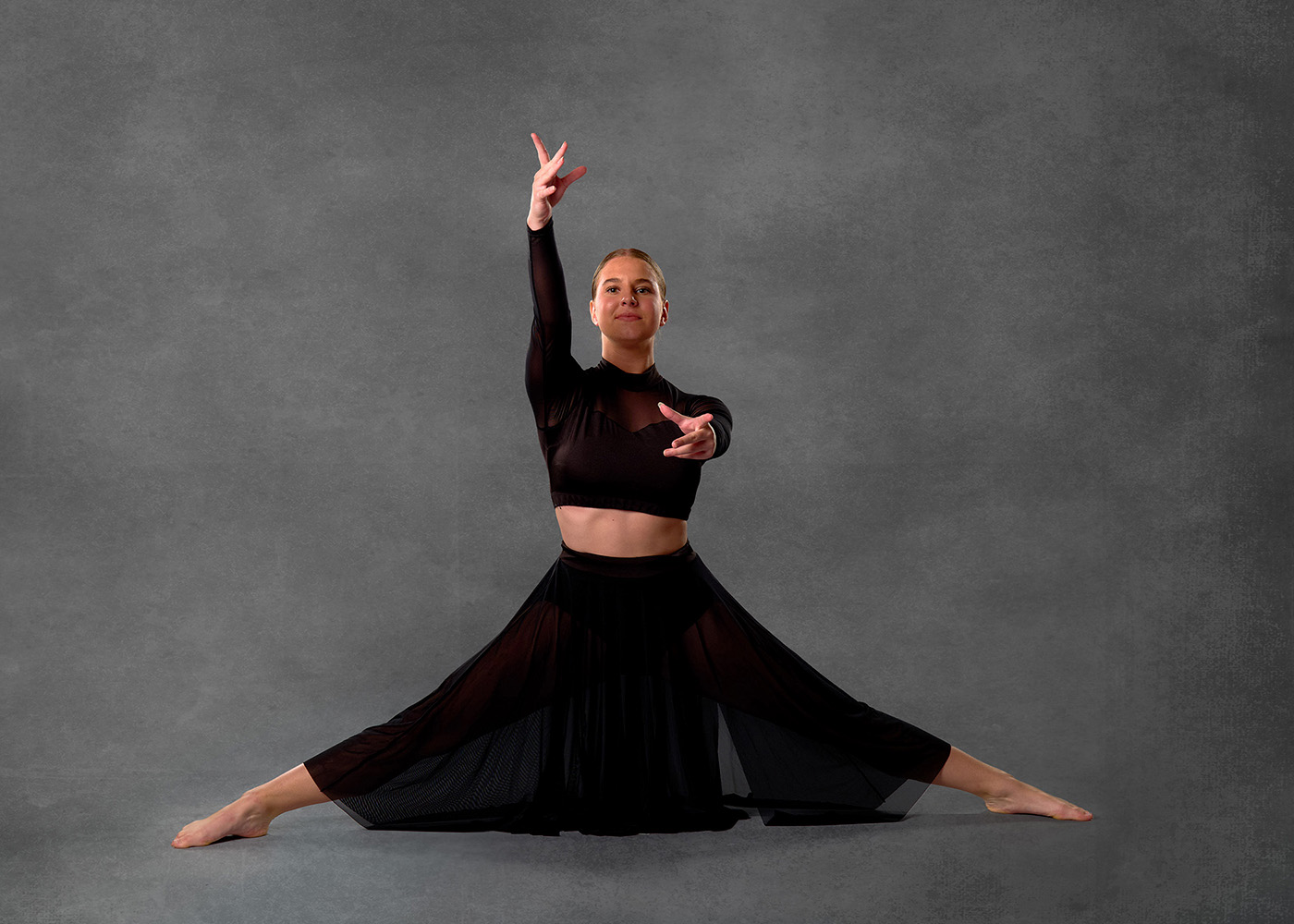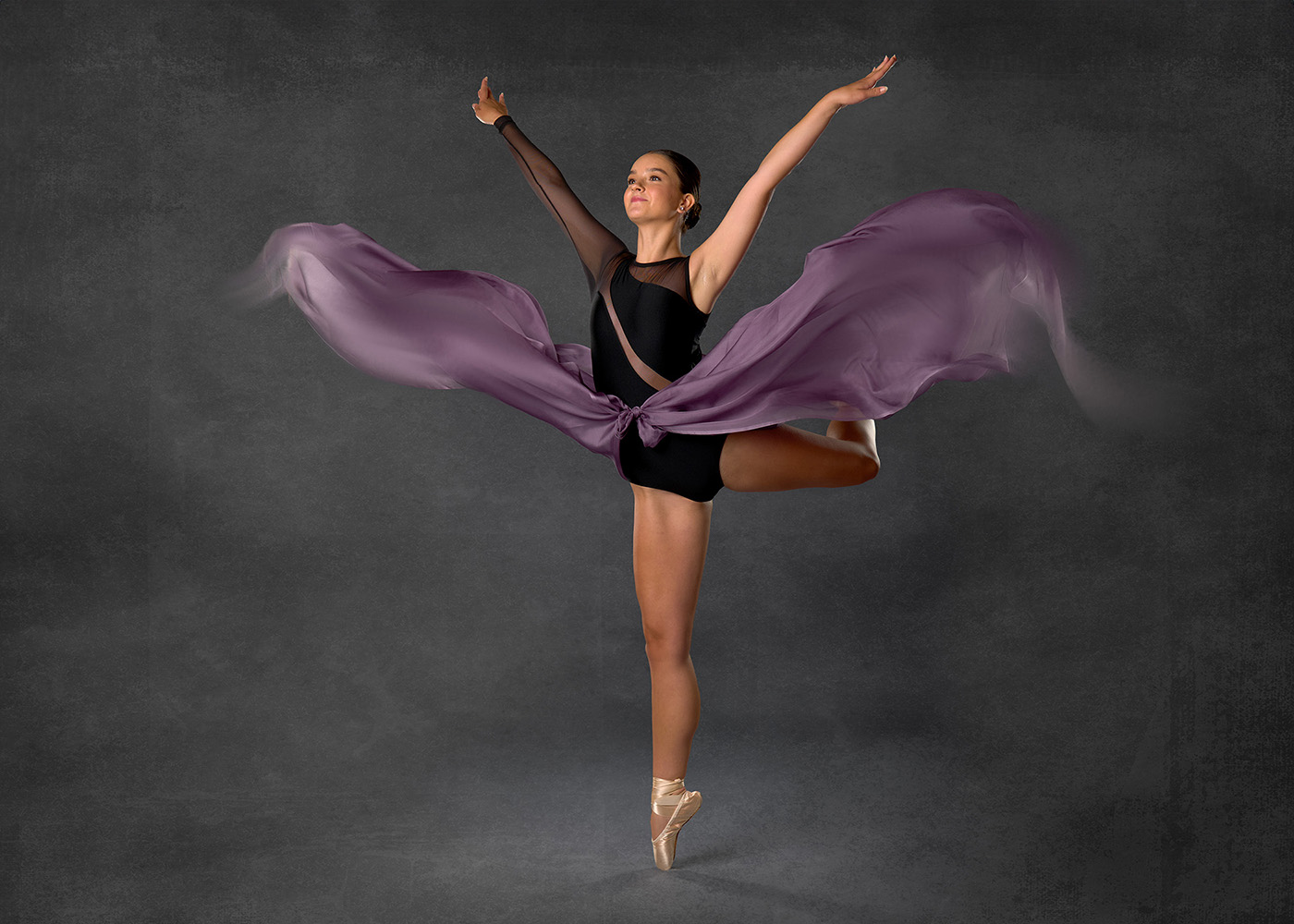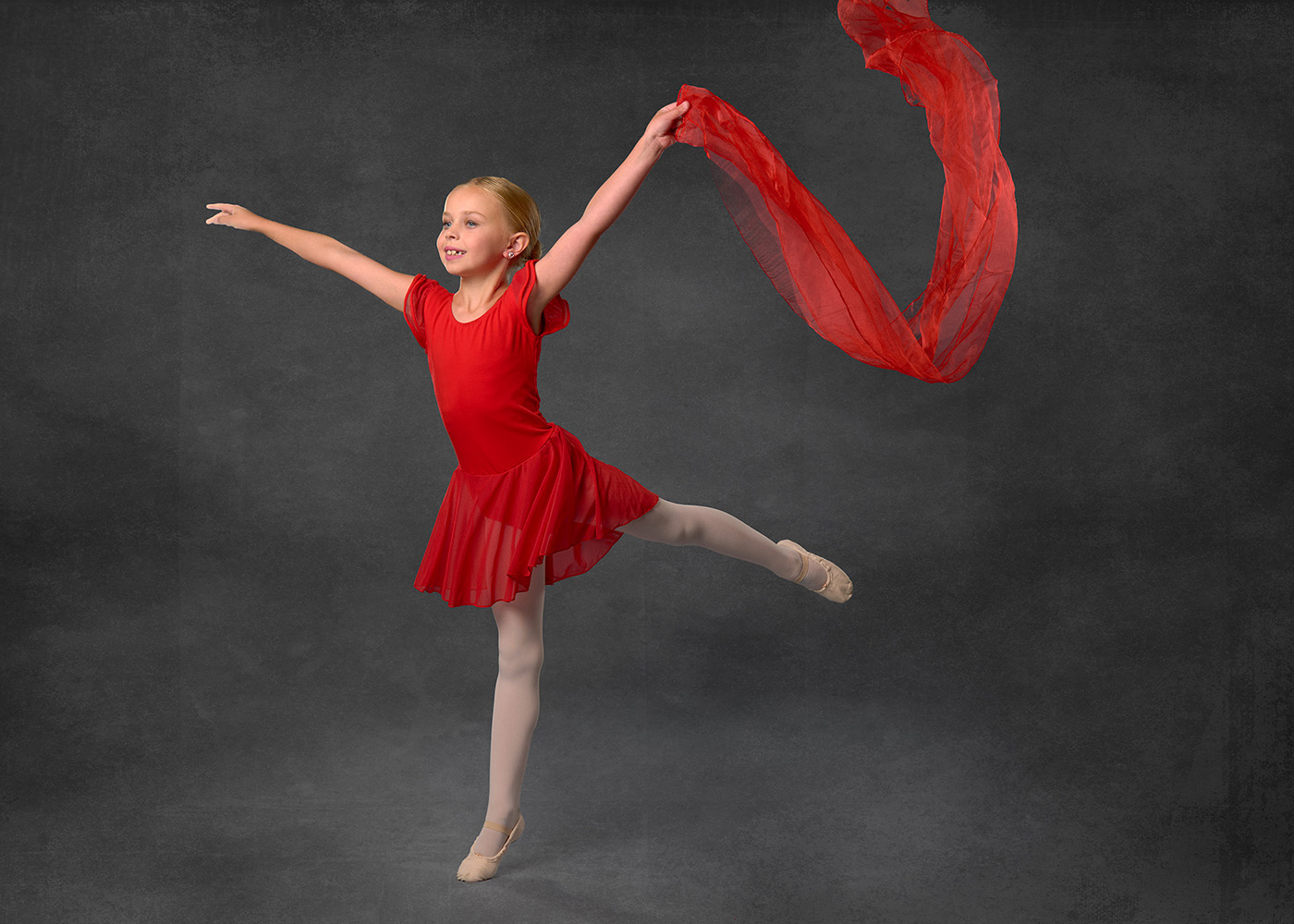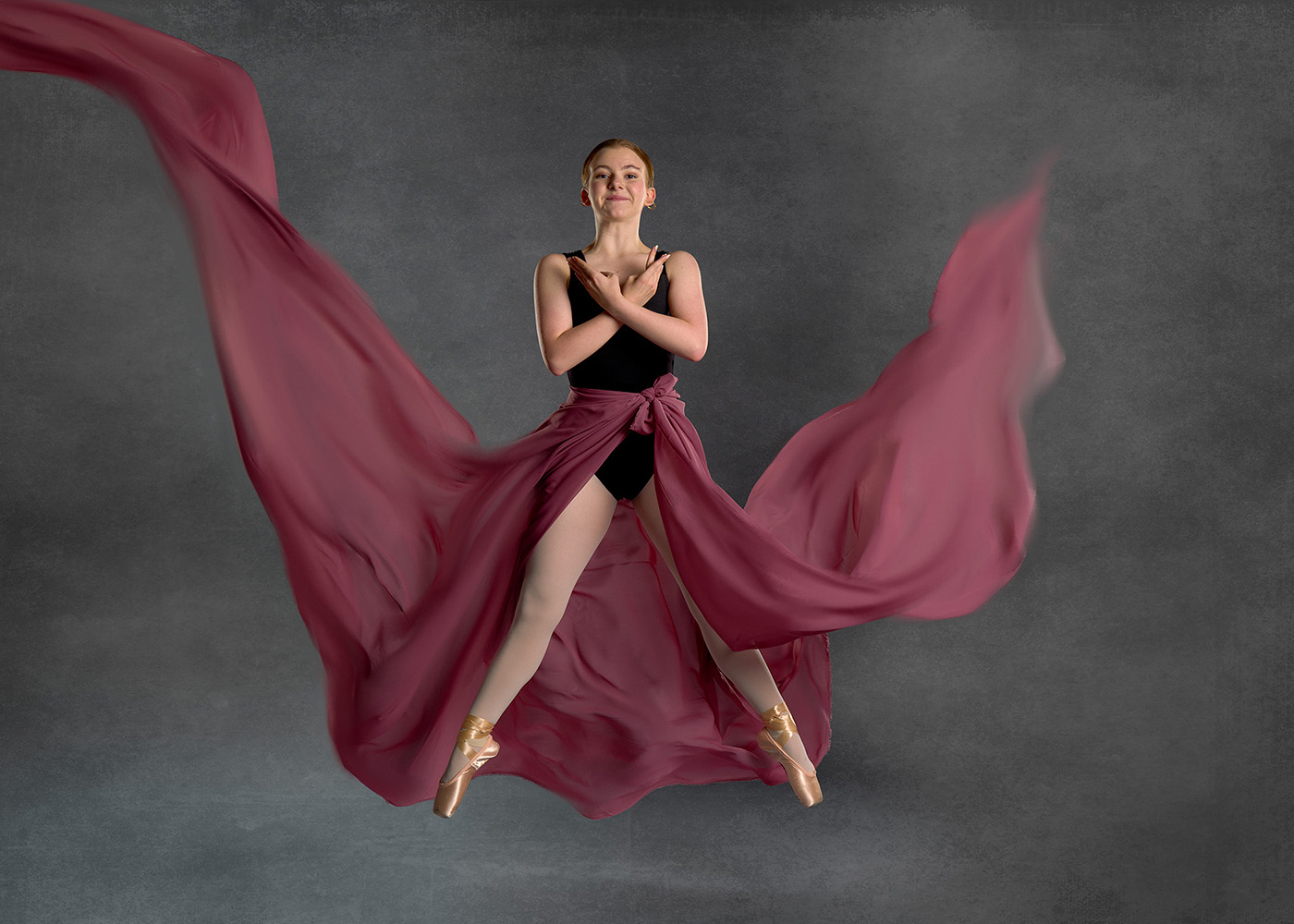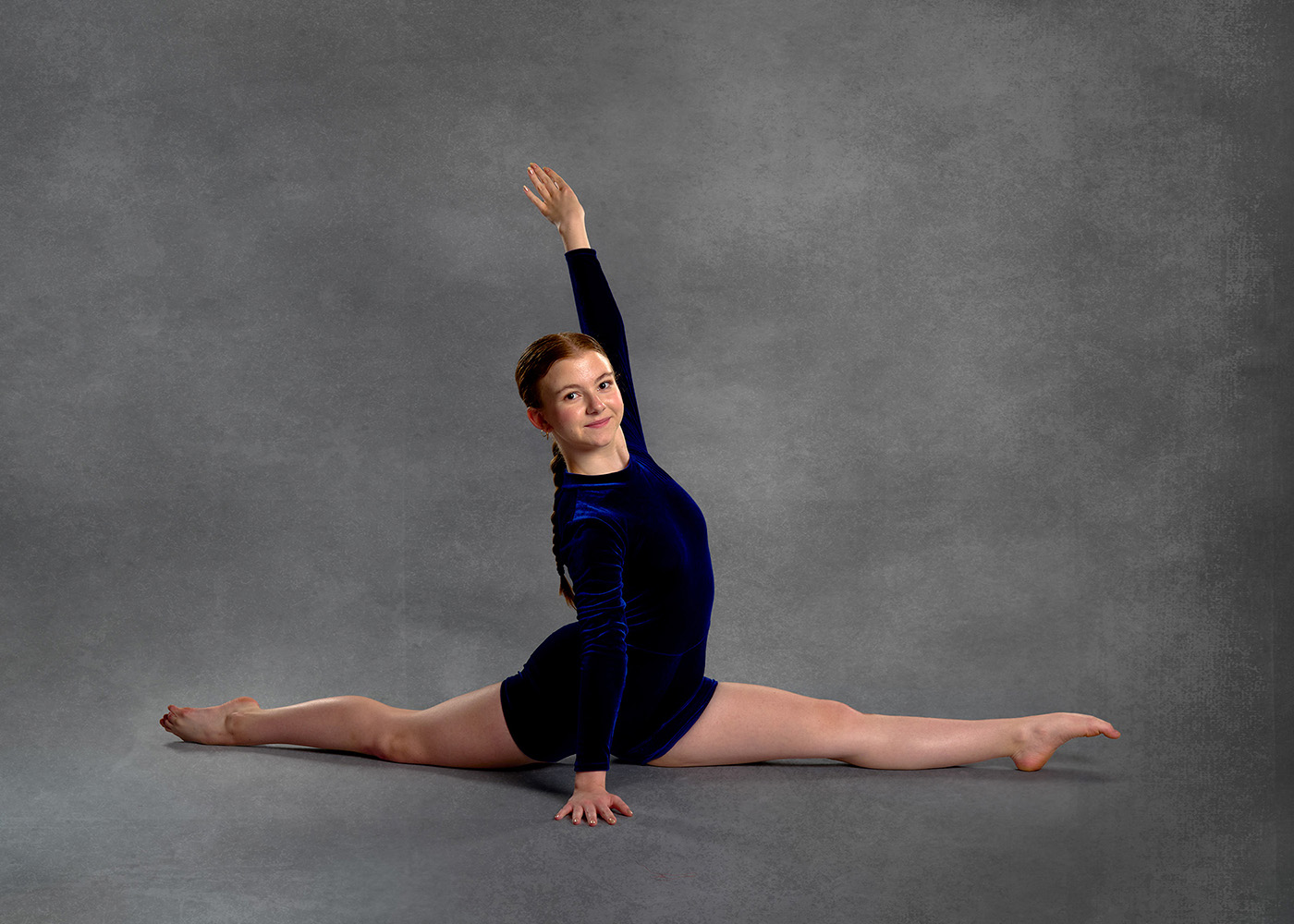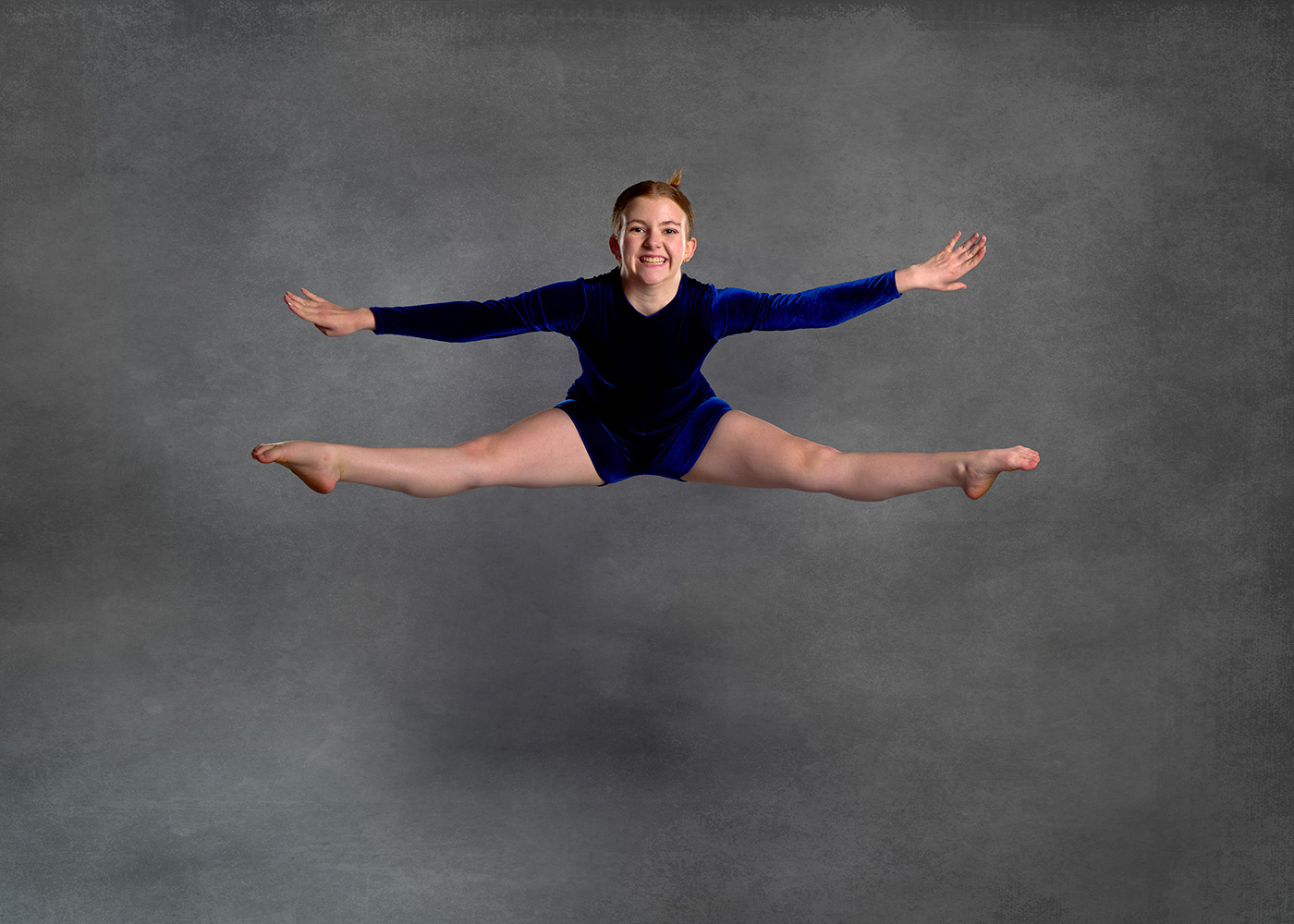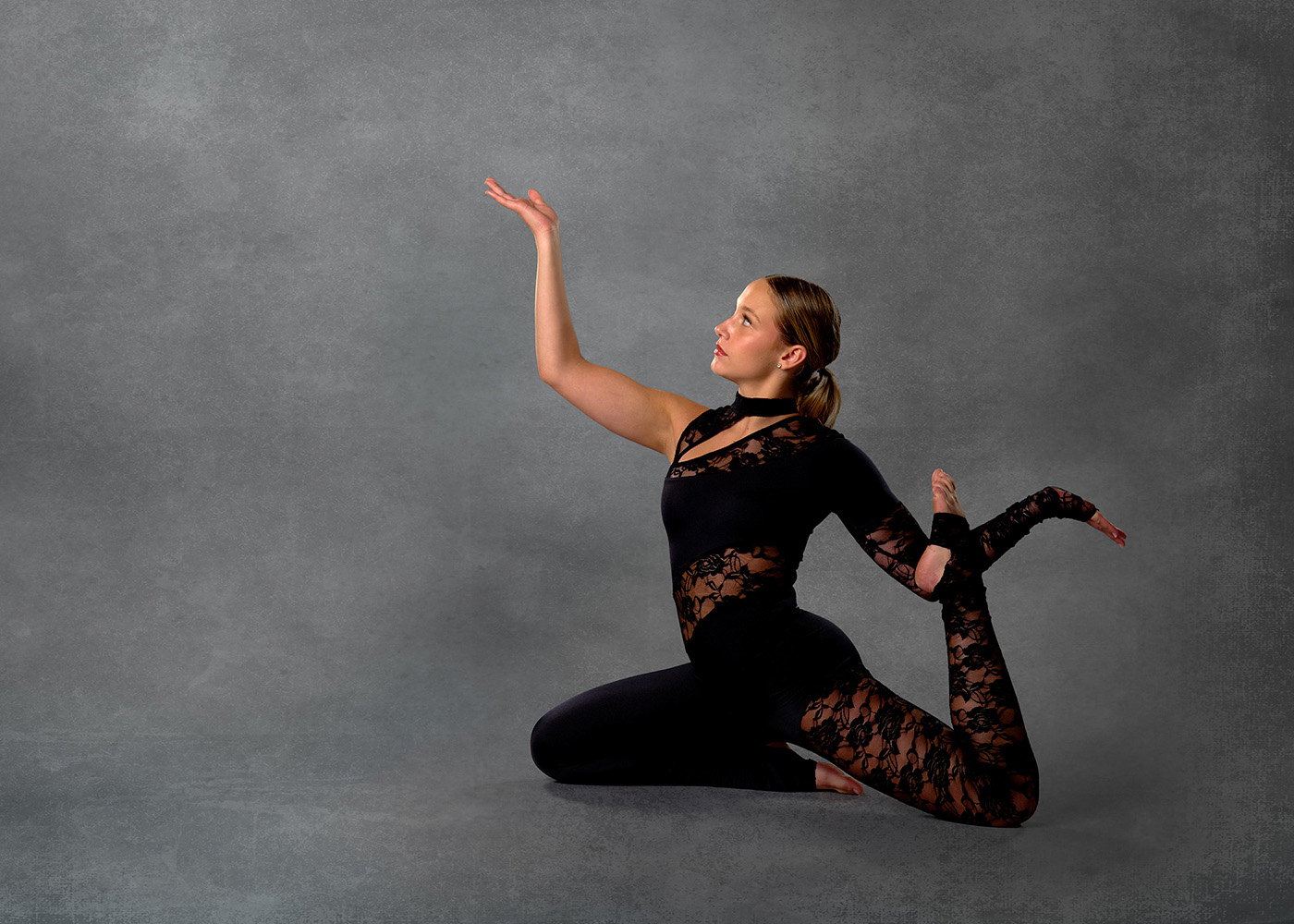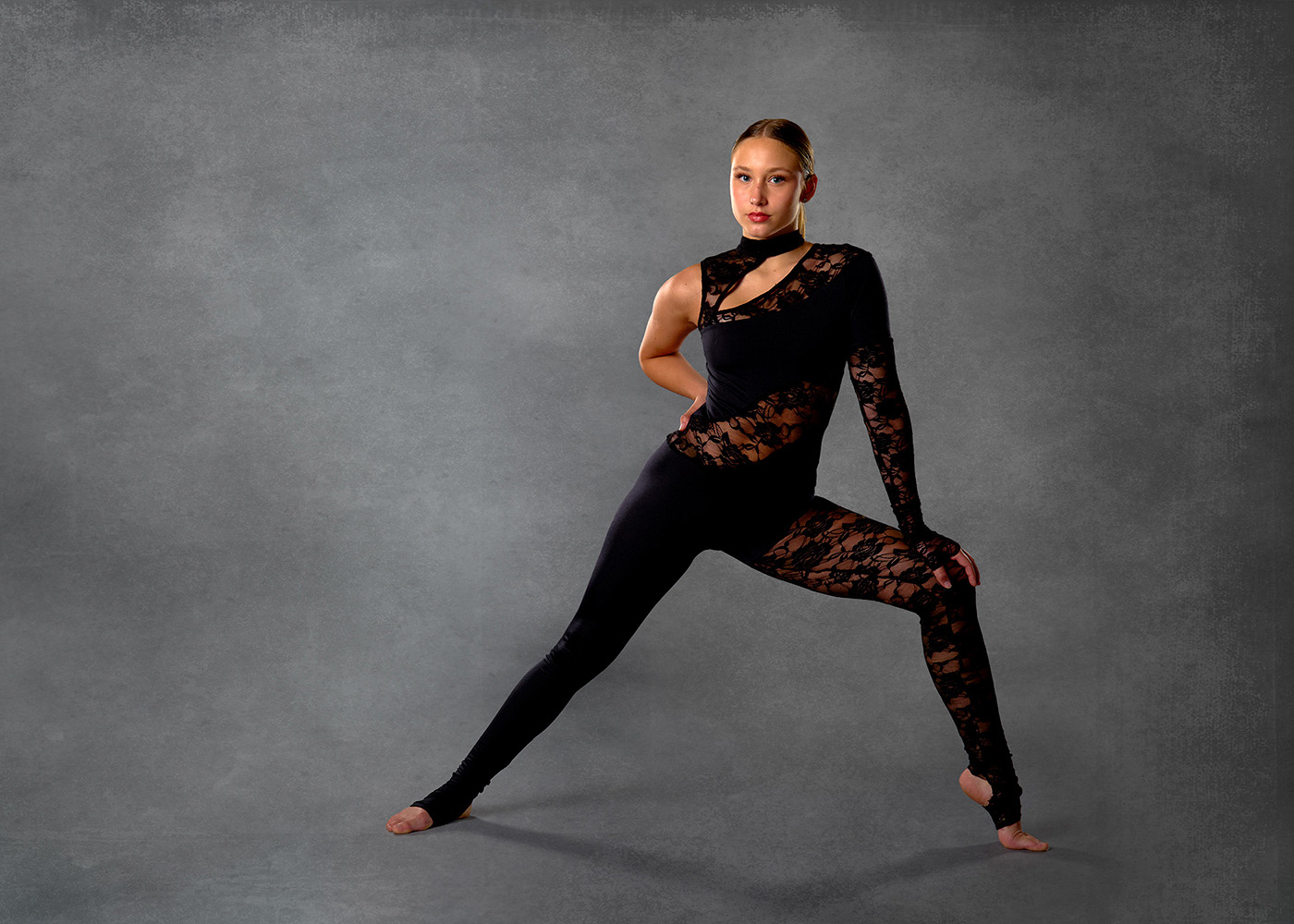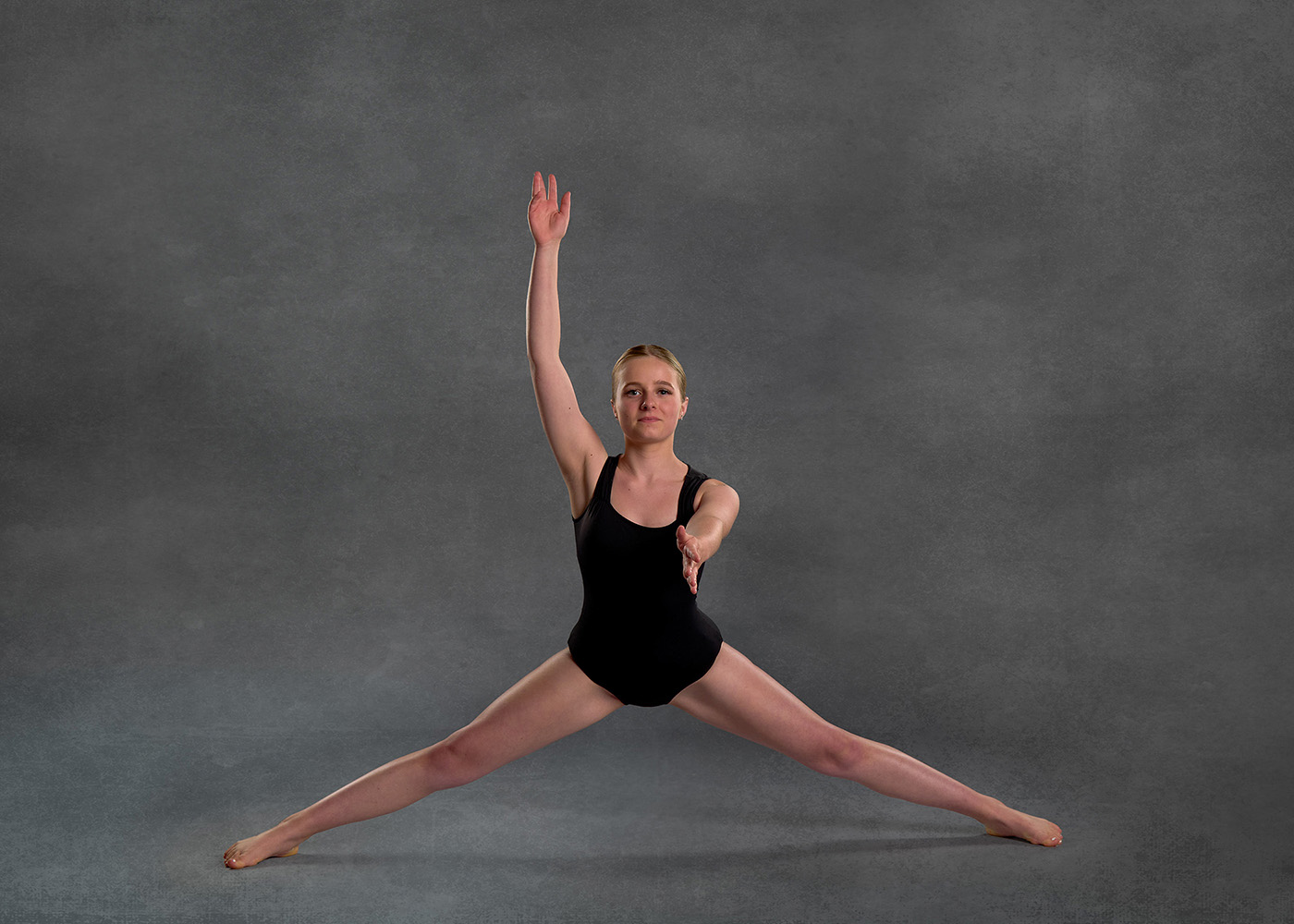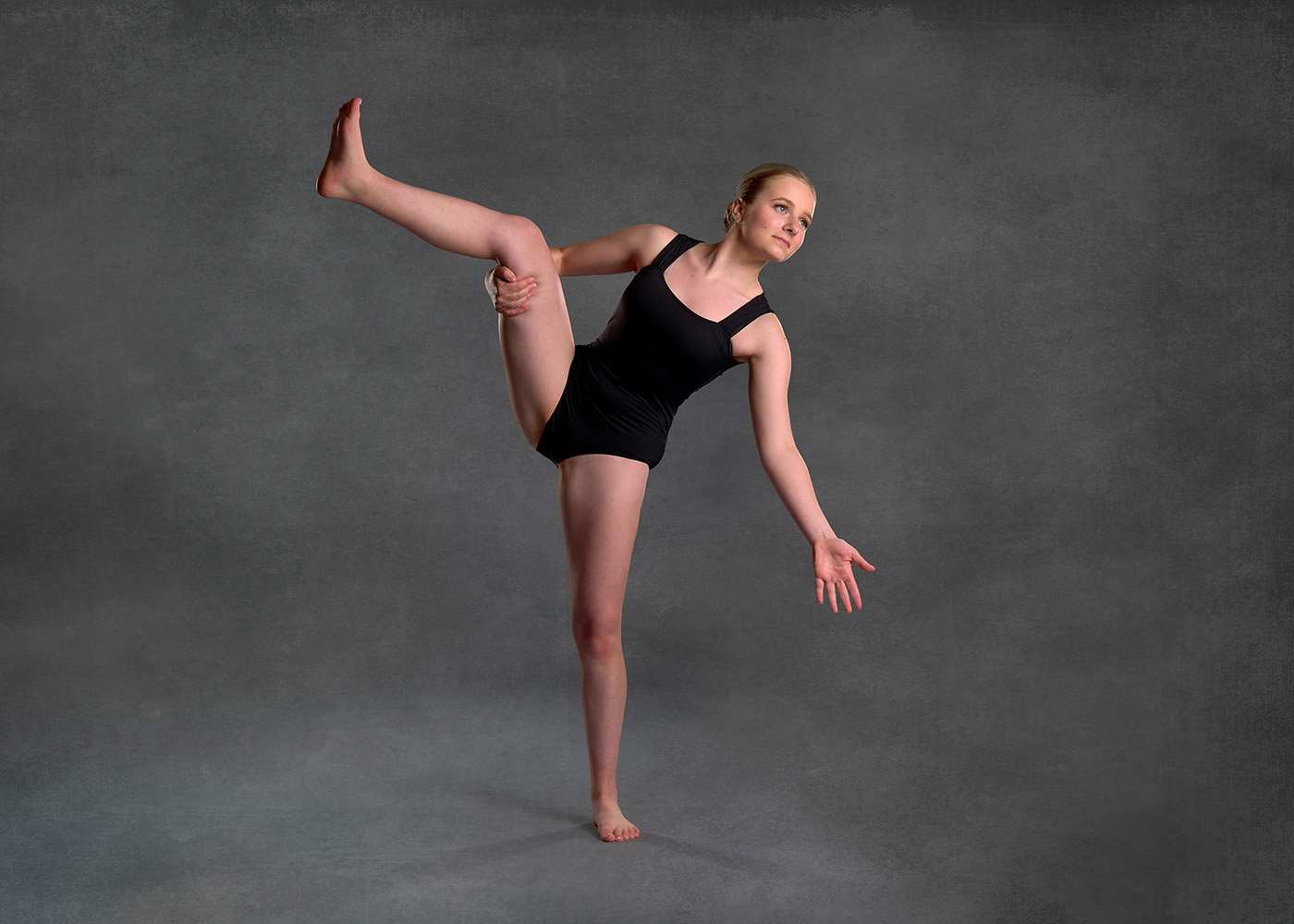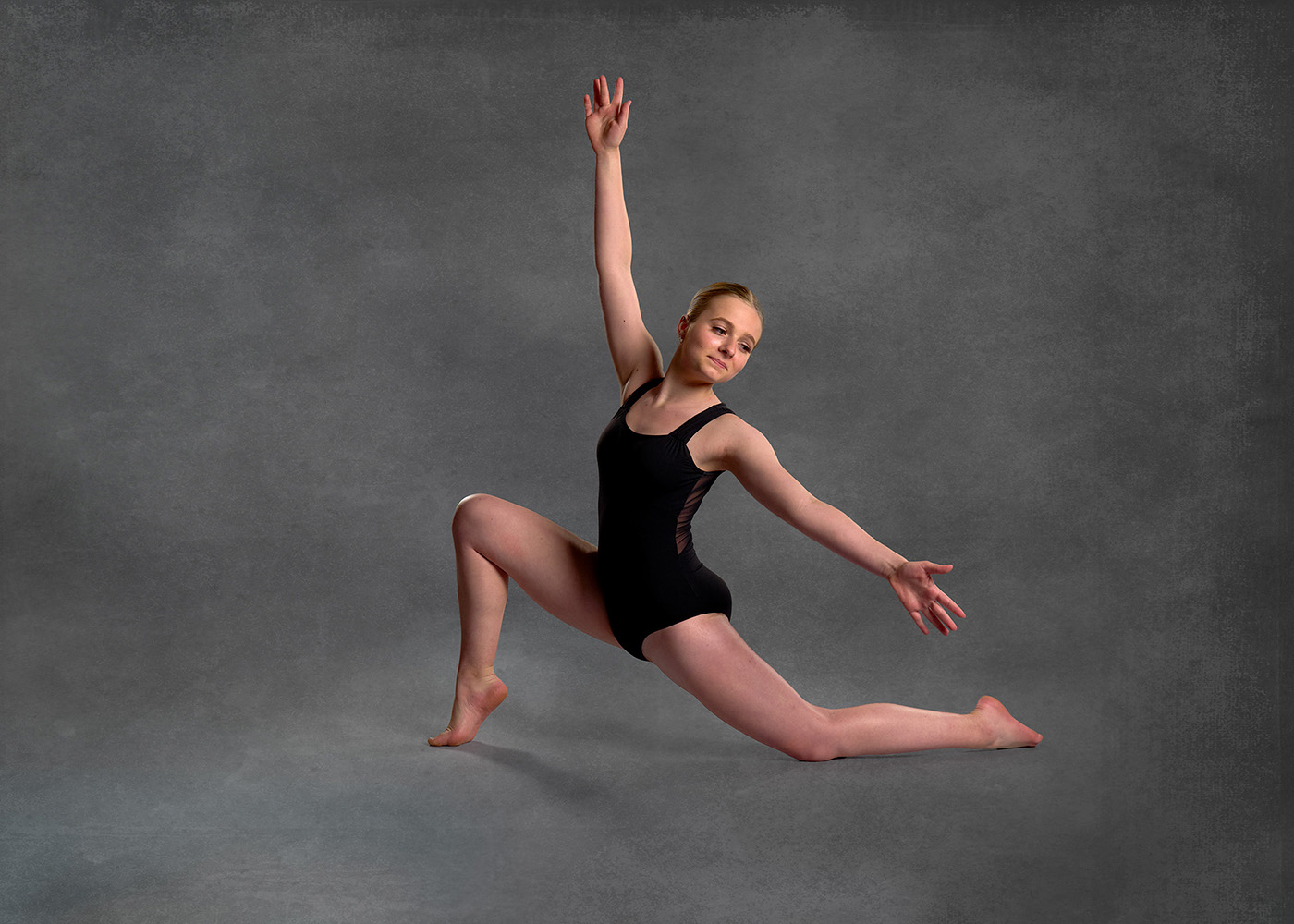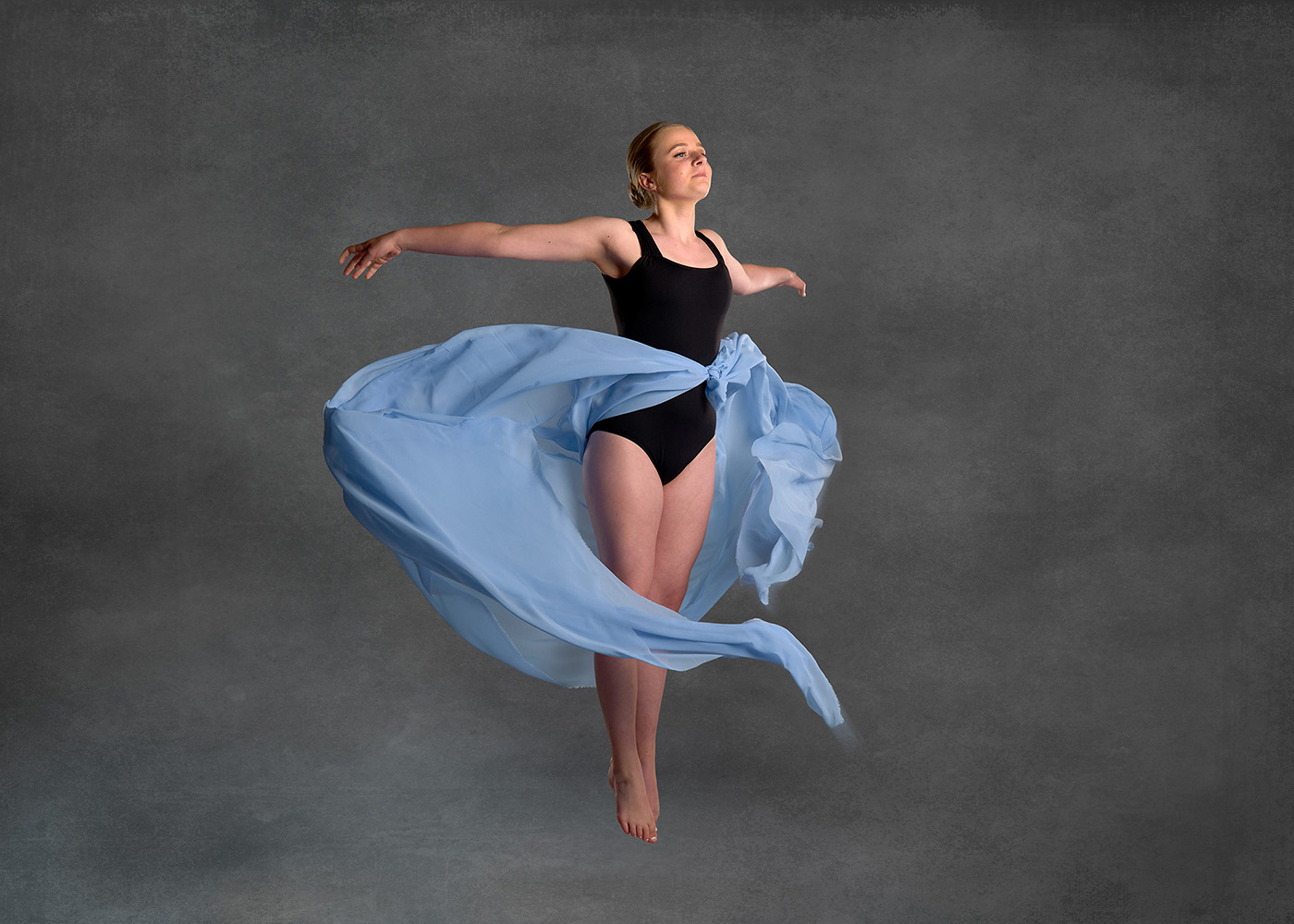
A dance photographer in Minneapolis works with a subject that refuses to hold still, which is why the craft looks nothing like a standard portrait sitting. Inna Sumra photographs classical ballet, jazz, contemporary, ballroom, and competition team work at her downtown studio, and she shoots on location around the Twin Cities when a piece calls for it.
Dance is grace, motion, and energy arriving in the same instant. Capturing that instant, sharp and clean enough to print large, is the whole assignment.
Families are welcome in the room. Parents and siblings help with fabric tosses, hand off shoes, and cue the count, and having them there usually shortens the session instead of stretching it. Inna talks each dancer through every setup, so nobody stands around wondering what happens next.
What follows covers the parts most Minneapolis dance studios never explain: how motion actually gets frozen, why stage light and studio light behave differently, what belongs in the bag, and how competition files differ from artistic portfolio work.
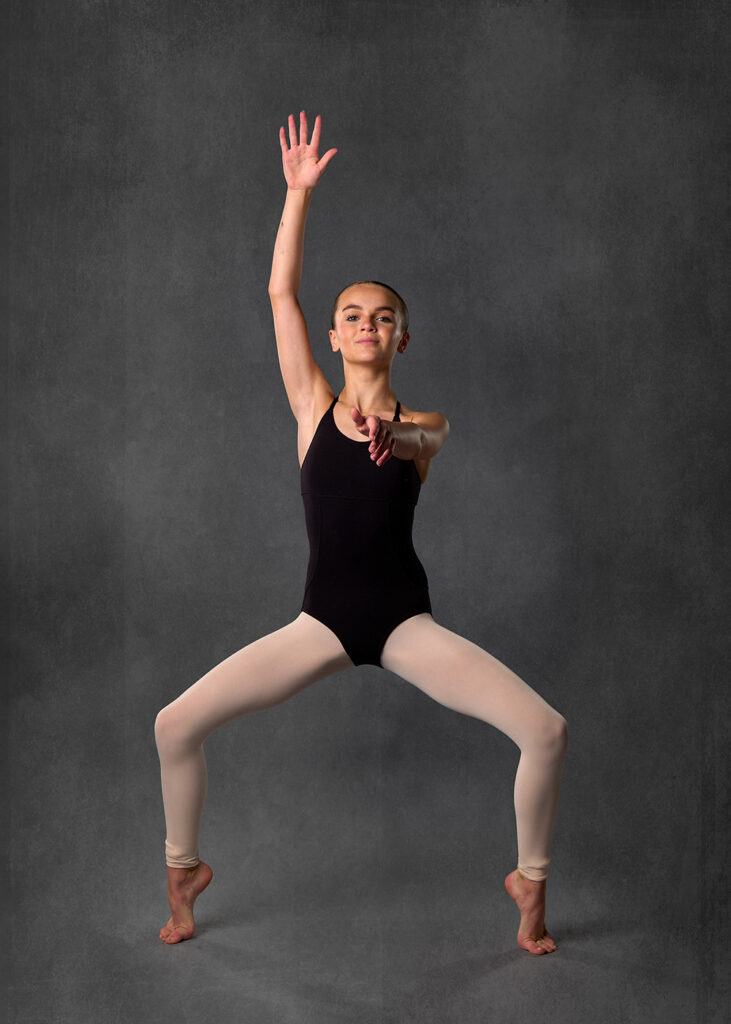
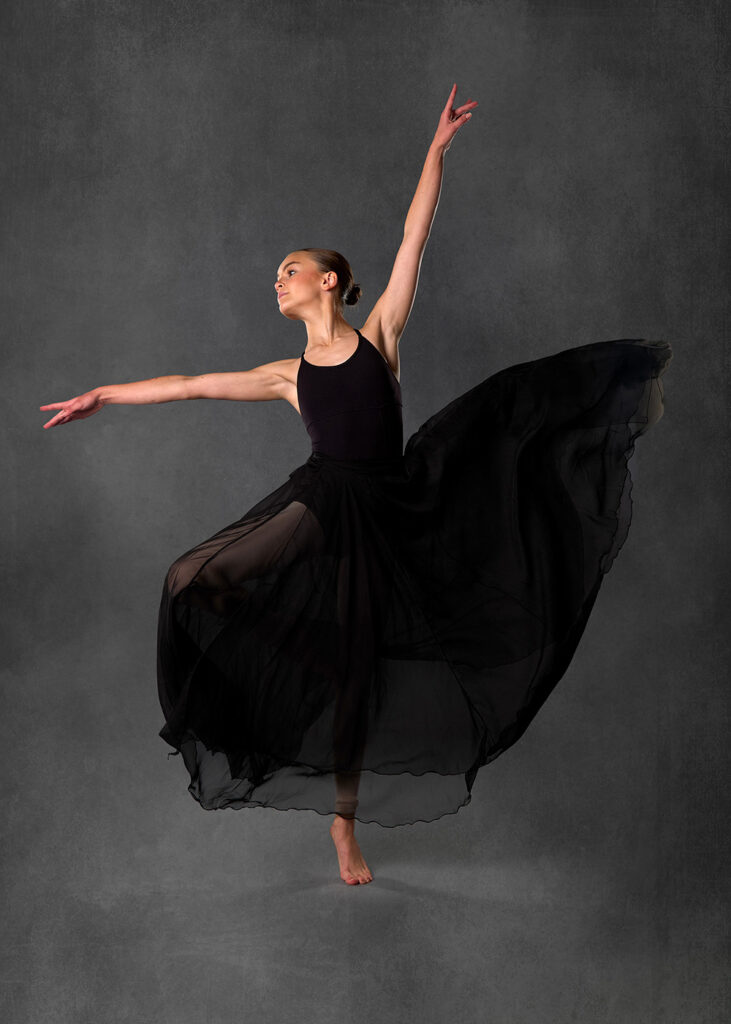
Dance photography is a flash duration problem, not a shutter speed problem. Studio strobes fire for a slice of time far shorter than the shutter stays open, and that burst of light is what actually stops a foot in mid air. Budget lights have a long, lazy flash tail. That tail is why blurred hands and soft feet show up in so many recital images.
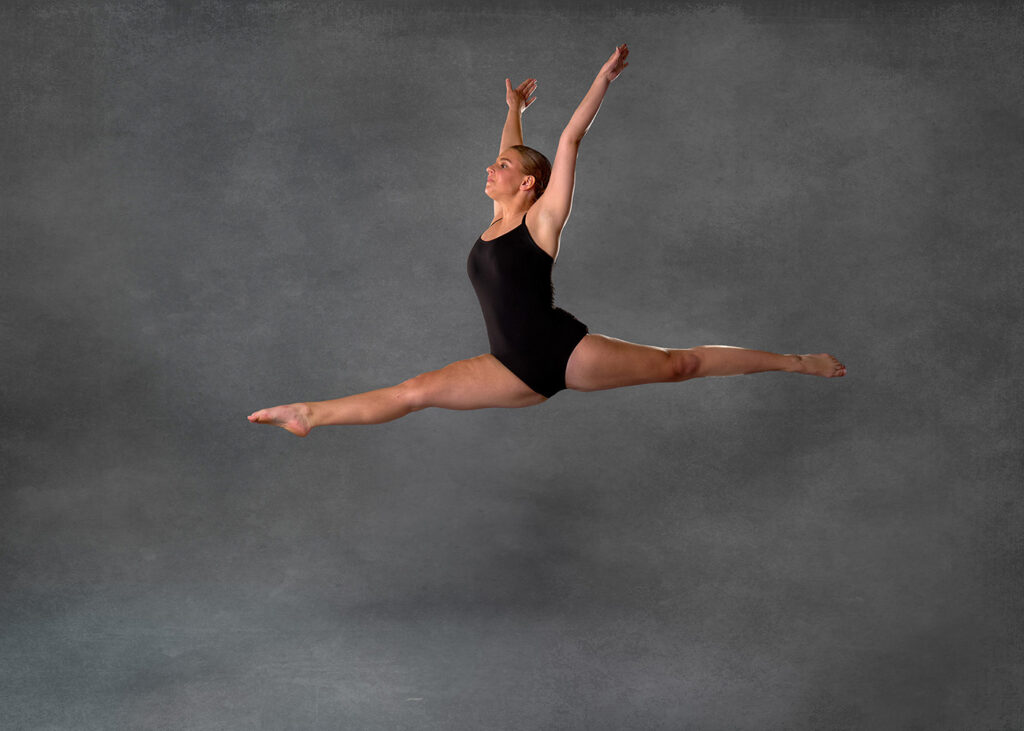
Inna’s technique is continuous rather than one shot at a time. Built on Swiss and German lighting with high speed flash, it records more than ten images per second, so a single takeoff produces the whole sequence: the preparation, the rise, the apex, the landing.
There’s a practical reason that matters. A ballet dancer has a limited number of clean grand jetes in her legs on any given day, often eight or ten before fatigue starts showing in the line. Spending those on a photographer’s guesswork is a waste of good legs.
Stage lighting is designed for an audience sitting forty feet back, not for a camera sensor. Modern LED washes push heavy magenta, amber, and green, and those casts land straight on skin. Recital shots often come back with a face reading one color and the arms reading another.
Studio strobes fix that by overpowering everything else in the room. Skin renders neutral, the costume keeps its real color, and a black or white seamless backdrop puts every line of the body on display. The same setup works for gymnastics portraits, where the timing problem is nearly identical.
There’s a tradeoff worth naming out loud. A studio portrait loses the theater. No marley floor, no wings, no audience. Some dancers want the stage in the frame, and for those we work on location instead. But if the goal is an image judged on line and technique, the studio wins almost every time.
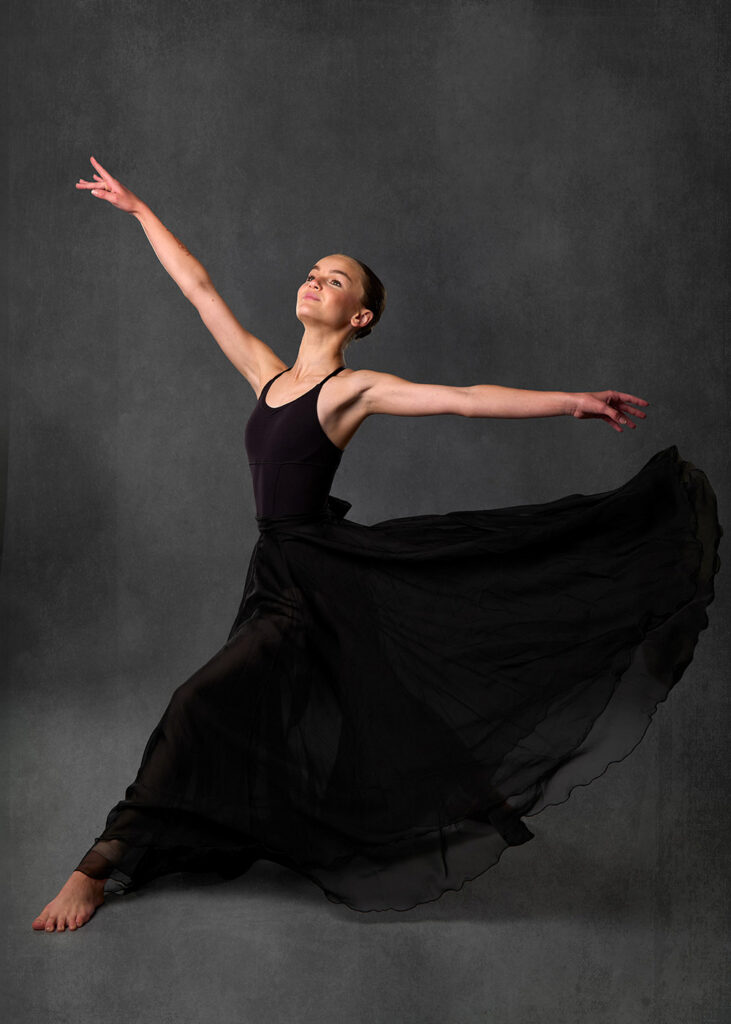
At the top of a jump the body is nearly weightless for roughly a tenth of a second. That’s the window where the legs are fully extended, the arms have arrived, and the face has caught up. Miss it by two frames and the shape reads as a stumble instead of a leap.
Four habits make that window easier to catch:
One thing we tell every dancer before a session is that the third or fourth attempt is usually the keeper, because the first two get spent finding the mark.
Bring more than the competition costume. Rhinestones look beautiful under studio light, but a heavily bedazzled bodice can also blow out into a white patch if it’s the only thing you shoot all session.
What earns its place in the bag:
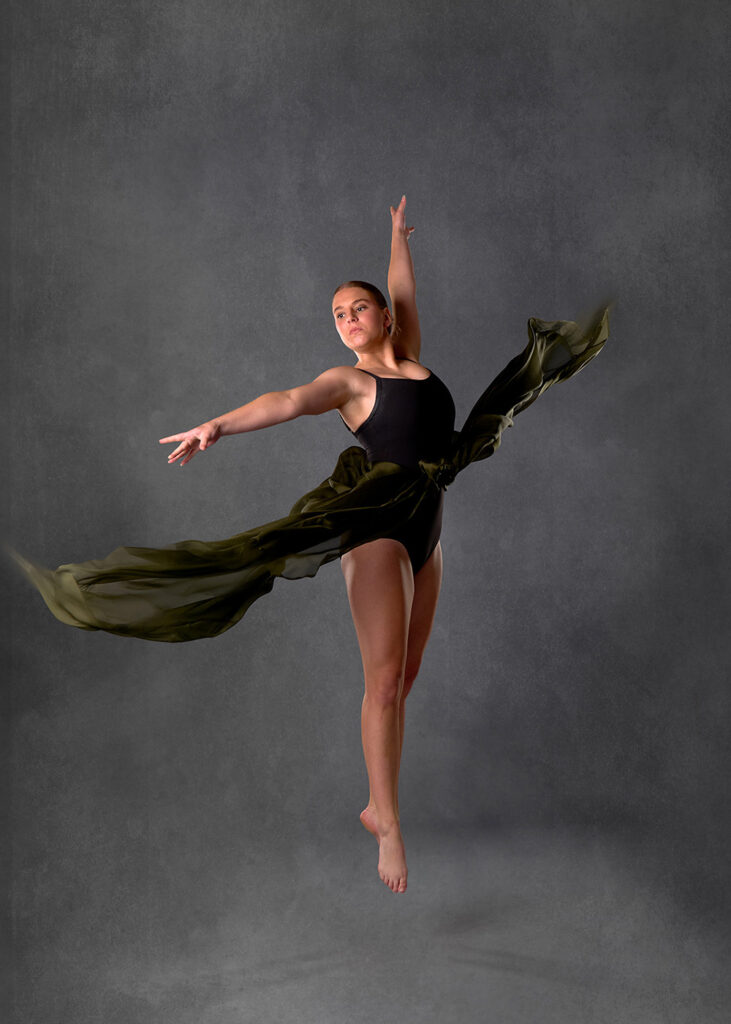
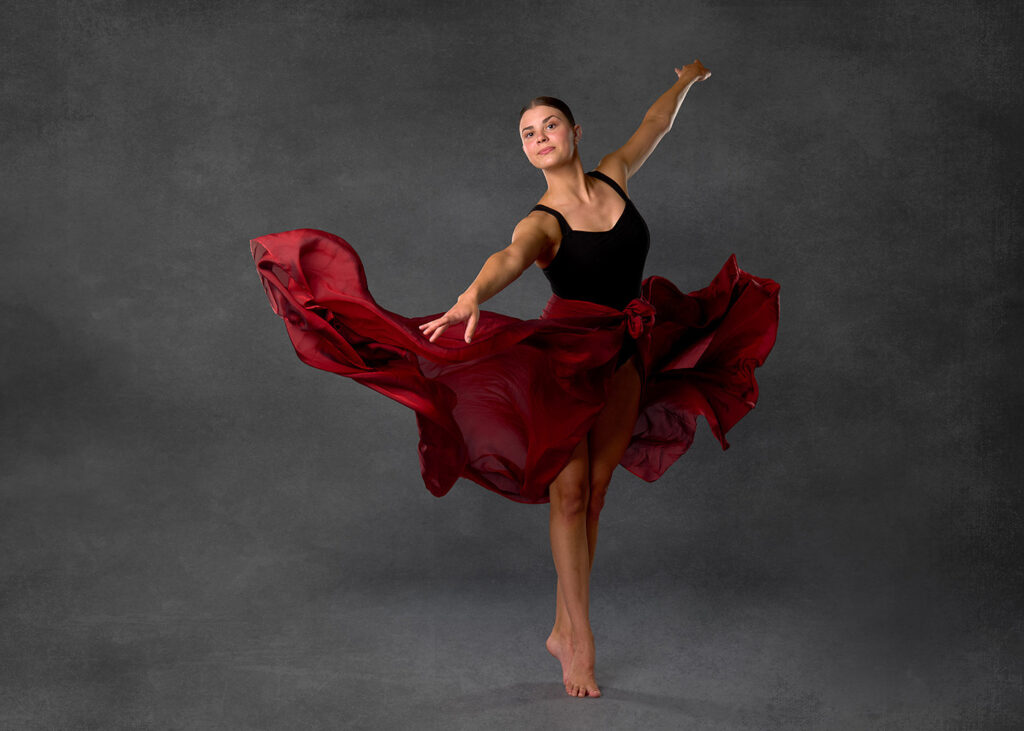
Inna also keeps a collection of custom handmade dresses at the studio, so a dancer who arrives with only a leotard still has options. Long skirts and loose silk are what make a fabric toss work, and a family member throwing fabric on a three count is how those floating cloth images actually get made.
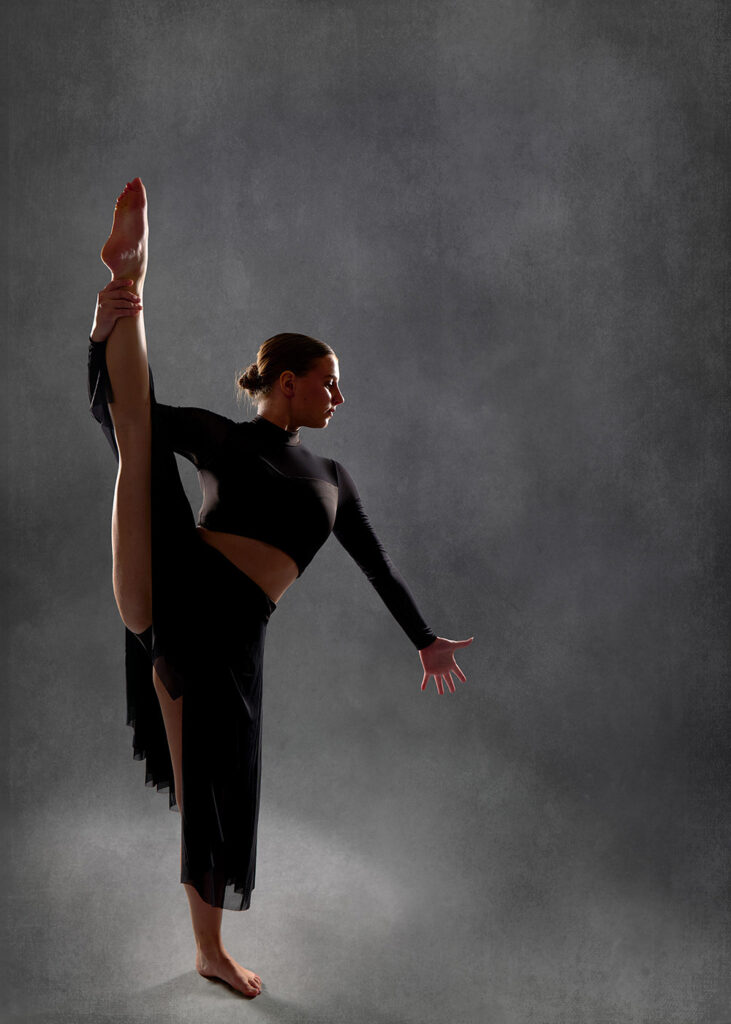
Audition and competition submissions follow rules. Artistic portraits follow taste. Trying to get both out of one setup usually produces a compromise that serves neither.
| Element | Audition and competition | Artistic portfolio |
|---|---|---|
| Background | Plain, usually white or light grey | Black, colored, or on location |
| Pose | First arabesque, tendu, clean head shot | Jumps, fabric, floor work, movement |
| Retouching | Minimal, body shape untouched | Full finishing for print quality |
| Output | Digital files sized to company specs | Large prints, canvas, framed wall art |
Professional dance companies and summer intensives publish their own file requirements, and they do reject submissions over formatting alone. Read the specs before the session, not after.
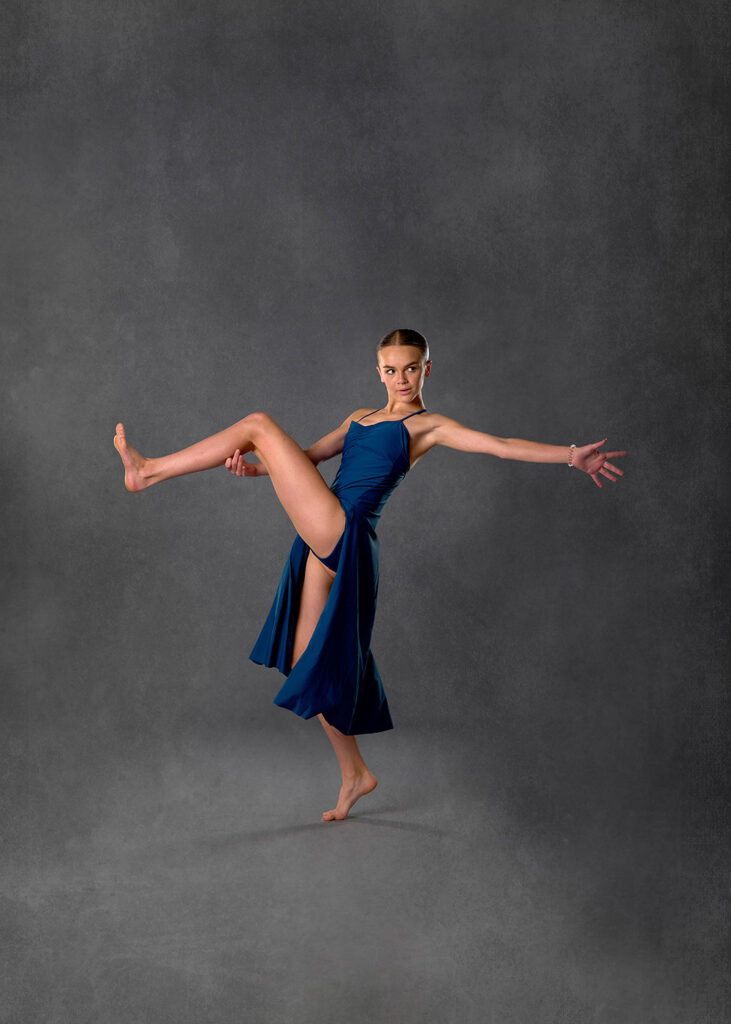
Right after the shoot, the take goes up on a large screen in the studio while the costume is still on. The moment we look forward to most is a young dancer seeing her own arabesque six feet wide for the first time.
Immediate review is also useful, not just fun. If a strap slipped or a foot cropped short, we reshoot it in the next five minutes instead of booking a second session. That’s an experience most studios save for a sales appointment two weeks later.
Yes. Group shots, small ensembles, and individual portraits can run in one block, though team days need a real schedule so nobody stands around in costume for two hours.
Often, yes. Plenty of graduating dancers want one set in costume and one set that matches the rest of their senior portraits. Mention it when you book so the wardrobe order gets planned.
Skin, stray hair, and distracting marks in the background are standard. We don’t reshape bodies. Dancers train for those lines, and the lines should stay in the picture.
Most run at the downtown Minneapolis studio. Location work around St. Paul, Minnesota and the wider metro is available when a piece needs architecture, a stage, or open sky.
Start with a phone call. Say what style you want, name the deadline (auditions and competition entries drive most calendars), and decide whether you need digital files, wall art, or both. The first consultation and session are complimentary, so you can see how the studio works before committing to prints.
Already scheduling family portraits or new business headshots? Ask about running them the same day. Call Inna Sumra, the dance photographer behind Inna Portraits in Minneapolis, MN, and put a date on the calendar before recital season fills it.